Tag: NIL

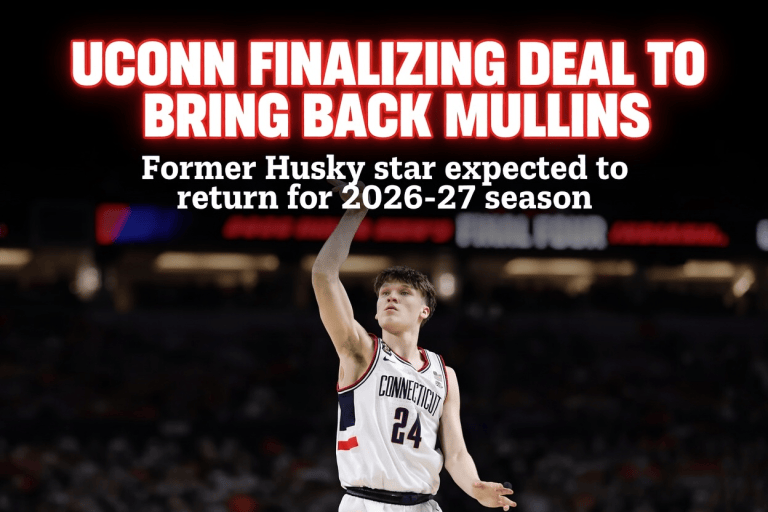
UConn basketball preparing massive NIL offer to keep Braylon Mullins

Braylon Mullins.

The UConn Huskies men’s basketball team is making a major push to retain one of its top stars.

According to Evan Sidery on X, formerly Twitter, the Huskies are preparing to offer Braylon Mullins a massive NIL package worth an estimated $4–5 million per year to keep him from entering the 2026 NBA Draft.

The reported deal would place the sharpshooter among the highest-paid players in college basketball.

The structure of the offer is designed to mirror what Mullins closely could earn as a mid-first-round pick, effectively removing the financial urgency to leave school early.

UConn’s goal is clear. Retain a pro-ready guard who projects as a lottery-to-mid-first-round selection and keep its championship window open for another season.

Timing critical for Mullins’ decision.

The timing of the reported offer is significant.

With the 2025-26 season complete, underclassmen across the country are weighing whether to declare for the NBA Draft. Mullins sits at the center of that decision cycle, with his stock firmly in first-round territory.

The report indicates the offer is imminent, signaling that UConn is acting quickly to influence his decision before draft declarations are finalized.

NIL landscape changing college basketball

This situation highlights the evolving reality of college basketball.

Top programs now operate in a space where they must financially compete with professional leagues to retain elite talent. UConn’s willingness to offer NBA-level compensation reflects how aggressive programs have become in the NIL era.

For players like Mullins, the decision is no longer strictly about development or draft positioning. It now includes a direct financial comparison between staying in college and turning professional.

What it means for UConn basketball

Retaining Mullins would be a major win for the Huskies.

The program has established itself as a national contender in recent seasons, and bringing back a player of his caliber would strengthen its chances of competing for another title.

Mullins’ scoring ability, versatility, and NBA-ready skill set make him a centerpiece-level player. Keeping him in Storrs for another year would provide both stability and star power to the roster.

Decision time

For Mullins, the choice now comes down to timing.

He can declare for the NBA Draft and begin his professional career, or he can return to UConn with a record-setting NIL deal and potentially elevate his draft stock even further.

Either way, Dan Hurley and the Huskies have made their position clear. The program will do anything to keep one of its best players for another season.


Thanks for reading. Make sure to check out the latest episode of the OutOfSightSports YouTube series below for more coverage, analysis, and the latest updates across the sports world.

Arkansas Lands Major Tyson Foods Partnership Featuring Jersey Patch Sponsorship

The Arkansas Razorbacks are stepping deeper into the modern business era of college sports.

Arkansas announced a five-year partnership with Tyson Foods that will place the company’s logo on uniforms across all Razorbacks athletic programs beginning in 2026, a move first noted by On3Sports’ Steve Samra. The agreement represents one of the most comprehensive jersey sponsorship deals in college athletics since the NCAA recently allowed programs to sell patch placements. (Source)

NIL Opportunities Central to the Agreement

Beyond uniform branding, the structure of the deal places a major emphasis on athlete compensation.

Arkansas athletic director Hunter Yurachek said approximately 90 percent of the revenue generated from the partnership is expected to flow directly to Razorbacks athletes through name, image and likeness opportunities tied to Tyson Foods.

“The intention is that every student-athlete will be positively impacted by this partnership,” Yurachek said. “That was really important to Mr. Tyson and Donnie King, their president and CEO, and Kristina Lambert, their chief growth officer. And it’s really important to us as well.”

Yurachek described the agreement as “the largest true sponsorship agreement in college athletics right now,” highlighting its potential impact across the department.

Financial Details Remain Private

Specific financial terms were not disclosed.

However, Tyson Foods chairman John Tyson addressed speculation about the value of the partnership.

“It’s not $100 million, let’s put it that way,” Tyson told CBS Sports.

Even without exact numbers publicly released, the structure of the agreement could make it one of the most influential NIL-driven sponsorship models currently operating in college sports.

“The game’s changing so quickly,” Tyson added. “NIL sponsorships, funding for universities — the model is moving really, really quickly.”

Branding Extends Beyond Jerseys

The partnership reaches far beyond uniform patches.

Tyson Foods will receive branding placements across Arkansas athletic facilities, including courts and playing fields, while also becoming the “Official Protein of the Razorbacks.”

The company also plans to involve Arkansas student-athletes in brand ambassador programs. Those marketing roles will serve as the primary vehicle for NIL compensation tied to the agreement.

A Growing Trend in College Athletics

Arkansas becomes only the second major college program to announce a comprehensive all-sport jersey sponsorship since the NCAA approved the concept earlier this year.

LSU Tigers reached a seven-year jersey patch agreement with Woodside Energy in February. Meanwhile, UNLV Rebels signed a five-year, $11 million deal with Accesso Biologics in December.

NCAA rules allow programs to sell up to two jersey patch sponsorships, though Yurachek indicated Tyson Foods will serve as the exclusive partner across all Razorbacks teams.

“Mr. Tyson and I had some conversations about how this might look specific to men’s basketball, and then that opened up a broader conversation for the inclusion of all 19 of our sports,” Yurachek said.

Local Ties Driving the Partnership

Tyson Foods, headquartered in nearby Springdale, has longstanding ties to Arkansas and the surrounding region.

Yurachek said the company’s involvement reflects both its regional connection and its commitment to supporting Razorbacks athletics.

“I think they’re stepping up and really want to show their support,” Yurachek added. “Hopefully, that support encourages others to continue to support at an even higher level than they already are.”

A Model for the Future

With NIL compensation, brand integrations and jersey patches spread across 19 sports, the Arkansas–Tyson partnership could serve as a blueprint for future sponsorship structures in college athletics.

As schools continue navigating the evolving NIL landscape, agreements like this highlight how universities and corporate partners are beginning to reshape the financial model supporting student-athletes.

Deion Sanders Calls for Oversight as NIL Reshapes College Football

College football’s postseason turbulence has reignited debate over the sport’s rapidly shifting power structure, with financial disparity now at the center of the conversation.

As NIL spending, revenue sharing, and the transfer portal continue to reshape roster construction, concerns have grown among coaches and administrators that the system lacks meaningful oversight. Accusations of tampering, contract disputes involving star quarterbacks, and ongoing legal challenges to NCAA eligibility rules have only amplified calls for reform.

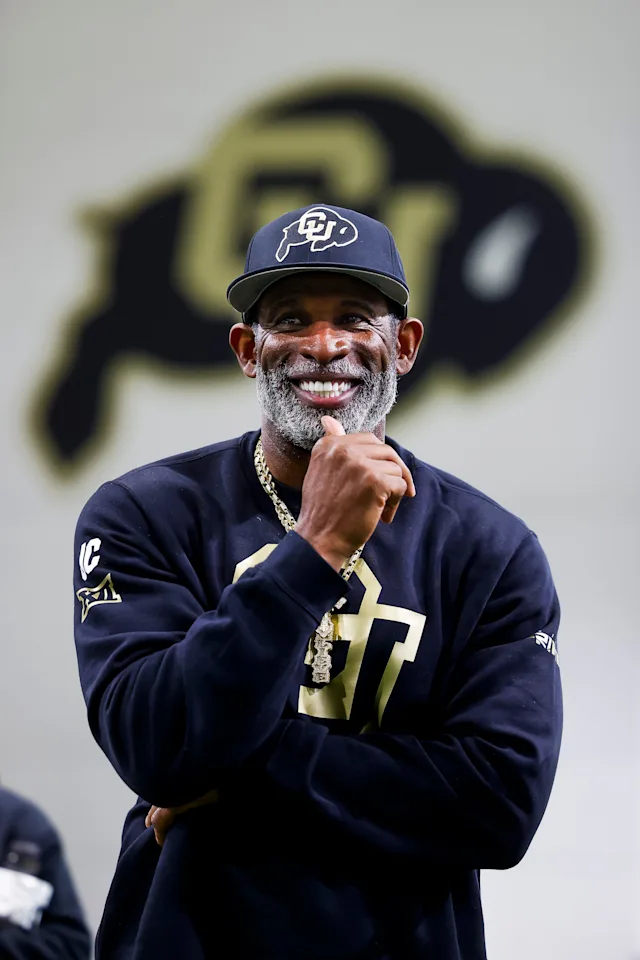
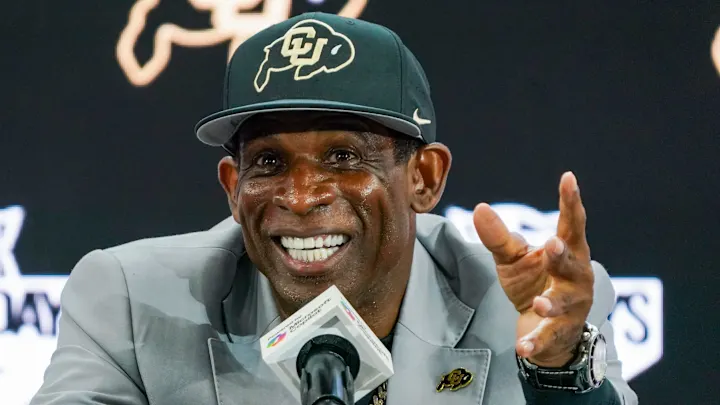
Deion Sanders added his voice to that growing chorus Friday, openly questioning the sustainability of the current NIL landscape during an appearance on First Take.

Sanders argued that unchecked NIL spending has created an uneven playing field, allowing a small group of well-funded programs to separate themselves from the rest of the sport.

“It’s tough, but I don’t think what NIL is presenting is sustainable,” Sanders said. “You see the same teams winning and winning because of the finances some boosters and donors can give. That needs to be fixed.”

The fourth-year head coach emphasized that while athlete compensation is long overdue, it requires structure and accountability to prevent competitive imbalance.

“I love it that the kids can be compensated,” Sanders added. “But there should be rules and guidelines for that compensation, to hold them accountable.”

Those concerns have intensified since last summer’s House settlement effectively dismantled the NCAA’s traditional amateurism model and ushered in direct revenue sharing. In the months since, the gap between college football’s financial elite and the rest of the field has widened dramatically.

Programs such as Indiana Hoosiers, Miami Hurricanes, and Texas Tech Red Raiders have leveraged massive NIL resources to aggressively rebuild rosters through the transfer portal. This offseason, Lane Kiffin reinforced his “Portal King” reputation by guiding LSU Tigers to the nation’s No. 2-ranked 2026 transfer class, featuring 40 incoming players.

Spending figures illustrate the divide. According to On3, 2024 CFP champion Ohio State Buckeyes operated with an NIL budget near $35 million. Miami followed at roughly $30 million, with Texas Tech exceeding $28 million. Even newly crowned national champion Indiana reportedly sat just under $20 million.

Where Colorado Buffaloes rank financially remains unclear, though Sanders’ comments suggested the program operates well below the sport’s biggest spenders.

Until formal governance or centralized oversight emerges, college football’s financial arms race shows little sign of slowing. For now, Sanders’ message reflects a growing belief across the sport: compensation is here to stay, but regulation may be the only path toward competitive balance.

Colorado Football Implements Player Fines Under Deion Sanders

In order to hold his players accountable, Deion Sanders has instituted a new system that involves taking their NIL money.  Colorado will now penalize those who fail to show up for class.

A $2,500 fine for missing practice is one of them. You will be charged $500 for being late. After the transfer portal closed, Coach Prime gave the team an introductory meeting, and you can view the complete list below.

  • Late to practice: $500
  • No show practice: $2,500
  • Late to meeting or film session: $400
  • No show meeting or film session: $2,000
  • Late to strength & conditioning: $1,000
  • No show strength & conditioning: $1,500
  • Late to treatment: $1,000
  • No show treatment: $1,500

Colorado players may also face fines of up to $5,000 for misconduct on social media or in public, and $2,500 for breaking team rules. Severity is the basis for both.

In addition to any early enrollees from the 2026 recruiting class, Colorado welcomes 41 new players into the program through the NCAA transfer portal. Since Sanders took over, the Buffs have consistently been active on the portal, and this year was no exception. But as a result, Colorado lost 34 players from the previous roster.

Brennan Marion and Robert Livingston, the coordinators, were among the coaches who were introduced to the players during the meeting. At the conclusion, Coach Prime addressed his team.

“I’m supposed to have 100-something men, but not everyone’s a man right now,” Sanders told his new team. “But through this process—and that’s what I love, the process. I’m really not in love with the results. I’m in love with the process. I like the struggle. I like the journey. … We’re in the process right now.

“But I need men. I don’t need boys. I don’t need blamers, or people that’s on a list. I don’t need naysayers. I don’t need people who sold this court amongst other men, who talk about program, who talk about this. And I’m not having it this year. Ain’t no way in the world, because we’re winning whether you like it or not.”

Colorado will be looking to greatly improve on their 3-9 finish in 2025. This came after a nine-win season the year before, quarterbacked by Shedeur Sanders and led on both sides by Heisman Trophy-winning two-way star Travis Hunter. The Buffs will kick their 2026 season off against Georgia Tech on Sept. 5.