Scott Van Pelt said what many sports fans have been thinking for years.
During ESPNâs draft-night coverage, Van Pelt reacted to one of the strangest recurring traditions in modern sports: players ending up in the wrong team hat during one of the biggest moments of their lives.
The clip surfaced Wednesday on X, formerly Twitter, after Oh No He Didnât shared the SportsCenter moment. In the video, Van Pelt appeared both amused and genuinely baffled by how often the same issue keeps happening.
âHow hard is this to fix?!â
SVP on players wearing the wrong hat on draft night lmao
That line landed because the problem feels so avoidable.
Draft nights move fast. Trades happen. Picks shift. Broadcasts race to keep up. Still, for leagues that operate billion-dollar events with massive production crews, the wrong-hat moment continues to look oddly outdated.
The mistake matters because the hat photo becomes part of a playerâs professional introduction. It is the image fans share, teams post, and players remember. When the wrong logo appears, the moment turns awkward fast.
Van Peltâs reaction worked because it was direct, funny, and relatable. He did not overcomplicate it. He simply called out a small but persistent flaw that fans notice every year.
That is why the clip quickly resonated online. It was not just about one player or one mistake. It was about a recurring draft-night issue that somehow still has not been solved.
For a night built around dreams, precision, and presentation, Van Peltâs question remains the obvious one.
How hard is the problem to fix?
Thanks for reading. Make sure to check out the latest episode of the OutOfSightSports YouTube series, where we break down the five most polarizing prospects in the 2026 NBA Draft.
The Pittsburgh Steelers have nearly their entire 2026 rookie class under contract, but one notable name remains unsigned.
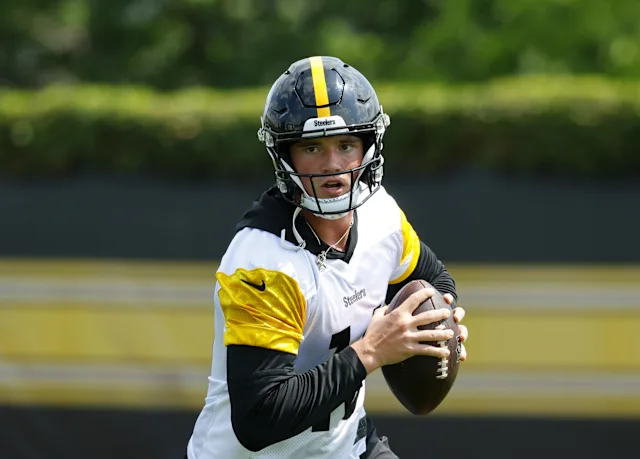
Drew Allar, Pittsburghâs third-round pick and one of the most important developmental players in the organization, has not yet finalized his rookie deal. WPXIâs Chris Ward reported the update, noting that Allar is the only member of the Steelersâ 10-player draft class still without a signed contract.
That may seem concerning at first. In reality, it looks far more procedural than problematic.
Allar has already taken part in Pittsburghâs offseason program. That includes rookie minicamp, OTAs, and mandatory minicamp. His full participation matters because it shows both sides are operating normally. This is not a holdout. This is not a standoff. This is a third-round rookie contract still moving through the final stages before training camp.
The Steelers have recent precedent for this type of timeline. Joey Porter Jr. did not sign his rookie contract until July 25, 2023, just one day before players reported for training camp. That situation did not become a major issue, and Porter quickly became an important piece of Pittsburghâs defense.
Allarâs case appears to be following a similar path.
The bigger story is not the paperwork. It is what Allar represents.
At 6-foot-5 and 228 pounds, Allar gives the Steelers one of the most physically gifted quarterback prospects they have added in years. His arm strength, size, and developmental upside made him a logical swing for a franchise still searching for its long-term answer at the position.
Allarâs 2024 season at Penn State showed why Pittsburgh invested a top-100 pick in him. He earned All-Big Ten honorable mention after throwing for 3,327 yards, 24 touchdowns, and eight interceptions. Those numbers came with flashes of poise, vertical passing ability, and improved decision-making.
For the Steelers, the priority is simple. They need Allar learning the offense, adjusting to NFL speed, and getting comfortable before training camp. The exact signing date matters less than his development.
The current CBA also heavily shapes rookie contracts for third-round picks. Negotiations usually center on bonus structure, payment timing, and guarantee language rather than dramatic financial gaps. That is why Allarâs unsigned status should not be treated like a major red flag.
If anything, the situation reinforces how closely Pittsburghâs future is tied to his growth. The Steelers are not drafting Allar for one offseason headline. They are betting on traits, patience, and quarterback development.
Allar may be the final unsigned rookie in Pittsburghâs class, but his most important work has already started.
The contract should come. The real question is whether the Steelers can turn his tools into their next long-term answer at quarterback.
For more draft coverage across the sports world, watch the full OutOfSightSports 2026 NBA Lottery Mock Draft on YouTube and subscribe for more prospect breakdowns, offseason analysis, and roster-building stories.
The Philadelphia Eagles could prioritize offense early in the 2026 NFL Draft as questions continue to build on that side of the ball.
With uncertainty surrounding A.J. Brown and the departure of Jahan Dotson in free agency to the Atlanta Falcons, Philadelphia faces a potential void at wide receiver heading into draft season.
Eagles offense facing key questions
Philadelphia enters the draft cycle with largely the same offensive group that struggled to produce consistently last season.
The Eagles ranked 24th in total yardage in 2025, while finishing 19th in scoring and 16th in EPA per play. That drop-off played a significant role in the team falling short of expectations following its Super Bowl run.
The organization is now looking for answers, both internally and through the draft.
Eagles likely to target wide receiver early
According to reporting from The Athletic’s Zack Berman, Philadelphia is expected to focus on adding offensive talent early in the draft. (source)
Wide receiver stands out as the most immediate need. If Brown departs, the Eagles would be tasked with replacing a top-tier playmaker, a challenge that may not be fully solved by a rookie in the short term.
Still, the team appears intent on adding talent to the position as part of a broader effort to elevate the offense.
Eagles leaning on continuity with room to improve
Despite the concerns, much of the core remains intact.
Philadelphia brings back most of the offensive starters from its Super Bowl LIX-winning group, with only a few changes along the offensive line and depth chart. The team will rely on internal development while seeking upgrades where possible.
General manager Howie Roseman emphasized the need for improvement moving forward.
âBringing the band back together was also a year ago, the team that won a world championship, the offense won a world championship,â Roseman said, via Berman. âBeing {19th) in points scored isnât really the standard that weâre looking to set. Thereâs a lot of growth in that area at the same time. Weâve got to continue to add, and I think that weâre looking at that group, and figuring out ways to add to every position group there. Some of those guys, we do think will be better here.
â⌠Weâll see how it all sorts out. But I understand, as it looks now⌠What Iâm saying is, you canât say weâre running it back until we actually do run it back. Letâs see how we add, and maybe thatâs how we end up doing.â
Draft capital and flexibility
The Eagles hold four selections within the first three rounds, including picks No. 23, 54, 68, and 98.
Philadelphia also maintains flexibility to move around the board, as Roseman has a well-established track record of making aggressive draft-day trades.
Pressure on new offensive direction
The teamâs offensive outlook also hinges on new coordinator Sean Mannion, who takes over with the expectation of revitalizing the unit.
With veteran linemen dealing with injuries and potential retirement considerations, and key skill positions in flux, the pressure will be on to deliver immediate improvement.
For the Eagles, the path forward is clear. Add talent, improve efficiency, and restore the offensive identity that fueled their championship run.
Thanks for reading. Make sure to check out the latest episode of the OutOfSightSports YouTube series below for more coverage, analysis, and the latest updates across the sports world.
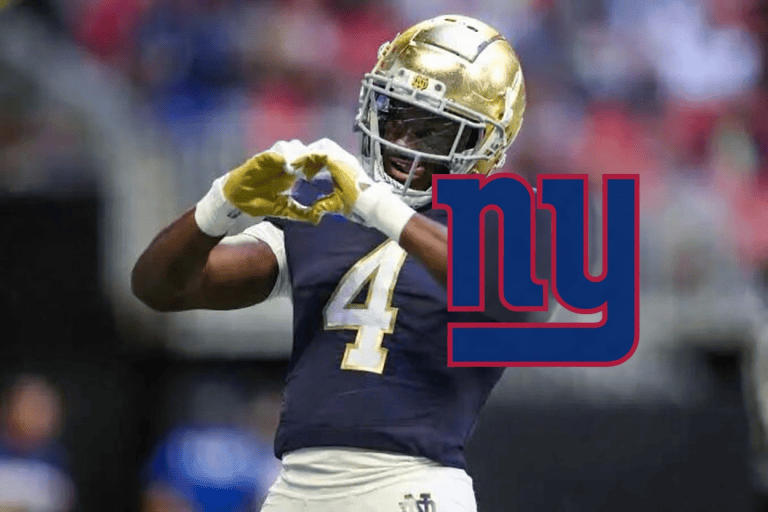
The Giants currently hold the No. 5 overall pick in the upcoming draft and appear to be exploring multiple options as they prepare to make one of the most important selections of the first round.
Giants evaluating offensive playmakers
New York enters the offseason with a new-look coaching staff and an offense that could benefit from additional playmaking talent.
The organization recently hired John Harbaugh as head coach while bringing in Matt Nagy as offensive coordinator.
Meanwhile, quarterback Jaxson Dart is coming off an impressive rookie season, making the possibility of adding another dynamic offensive weapon an intriguing option for the Giants at No. 5 overall.
Breakout season at Notre Dame
Love enters the draft following a dominant final season at Notre Dame.
The star running back rushed for 1,372 yards while setting a program record with 21 total touchdowns. Of those scores, 18 came on the ground while three came as a receiver.
His performance earned him a spot as a Heisman Trophy finalist while also securing the Doak Walker Award, given annually to the nationâs top running back.
Draft projections still evolving
Prior to NFL free agency, several mock drafts projected Love as a top-10 selection.
Some early projections placed him with the New Orleans Saints at No. 8 overall or the Kansas City Chiefs at No. 9. However, both teams recently addressed the running back position in free agency by signing Travis Etienne and Kenneth Walker III.
As a result, draft projections for Love have shifted.
In a recent mock draft, ESPN analyst Field Yates projected Love to be selected No. 7 overall by the Washington Commanders.
Meanwhile, the Giants were projected to select former Ohio State Buckeyes football safety Caleb Downs with the No. 5 pick.
One of the top prospects in the draft
Regardless of where he ultimately lands, Love remains one of the most highly regarded players in the 2026 draft class.
ESPN draft analyst Mel Kiper Jr. recently ranked Love as the No. 2 overall prospect on his latest big board behind Fernando Mendoza.
The 2026 NFL Draft will take place April 23â25 in Pittsburgh, giving teams several more weeks to evaluate prospects through visits, pro days and final scouting meetings.
Thanks for reading. Make sure to check out the latest episode of the OutOfSightSports YouTube series below for more coverage, analysis, and the latest updates across the sports world.
The offensive workouts took center stage at the 2025 NFL Scouting Combine on February 28, and several prospects used the national spotlight to significantly elevate their draft outlook.
Three players in particular left Indianapolis with momentum heading into draft season.
1. Taylen GreenâQuarterback, Arkansas
Few quarterbacks tested better in recent combine history than Taylen Green.
Measuring 6-foot-5 7/8 and 227 pounds, Green delivered elite athletic testing numbers that immediately turned heads. He posted a 43½-inch vertical jump and an 11-foot-2 broad jump â both the best marks recorded by a quarterback at the combine since at least 2003. He followed that up with a blazing 4.36-second 40-yard dash, the second-fastest time by a quarterback over that same span.
Those physical traits highlight why Green consistently stressed defenses during his college career. His size-speed combination is rare.
QB Taylen Green today at the combine:
– 43.5" QB vert jump record – 11'2" QB broad jump record – 4.37u 40-YARD DASH
However, his throwing session provided a reminder of why many evaluators still view him as a developmental prospect. Green appeared comfortable in rhythm, but when forced to speed up his mechanics, his footwork and release point wavered. Several passes came out late or off target.
Even so, his ceiling remains enticing. With NFL coaching, his combination of arm talent and athletic explosiveness gives teams something to mold. His workout likely solidified him as one of the most intriguing upside quarterbacks in the class.
2. Ja’Kobi LaneâWide Receiver, USC
Ja’Kobi Lane turned in one of the most complete wide receiver performances of the day.
At 80 3/4 inches in wingspan with 10 1/2-inch hands, Lane showcased his length throughout positional drills. He consistently extended away from his body to secure passes and delivered two impressive contested catches that stood out among the group.
Lane also tested well, running a 4.47-second 40-yard dash and posting a 40-inch vertical jump. Those numbers, paired with his smooth route work and strong hands, strengthened his case as a Day 2 prospect.
In a receiver class loaded with speed and versatility, Laneâs combination of size, body control, and reliable ball skills helped him separate himself.
3. Mike Washington Jr.âRunning Back, Arkansas
Mike Washington Jr. may have delivered the most eye-catching performance among running backs.
Standing 6-foot-1 and 223 pounds, Washington clocked a 4.33-second 40-yard dashâthe fastest time recorded by any running back at this yearâs combine. For a player with his size, that top-end speed immediately raises his draft profile.
.@RazorbackFB RB Mike Washington Jr. got emotional after running an incredible 4.33u. đĽ˛
These guys work so hard for this moment. @StaceyDales
He paired that speed with a 39-inch vertical jump and a 10-foot-8 broad jump, confirming the explosive traits that helped him average 6.4 yards per carry during his senior season.
Washington chose not to participate in additional on-field drills after testing, but he likely accomplished his goal. His athletic display alone may have pushed him into late Day 2 consideration.
Combine Momentum Matters
While pro days and interviews still lie ahead, February 28 provided clarity on several rising prospects.
Green flashed rare quarterback athleticism. Lane demonstrated refined receiving skills with high-end measurables. Washington confirmed he possesses elite speed for his frame.
For all three, the combine may have been the turning point that reshaped how teams view their draft value.
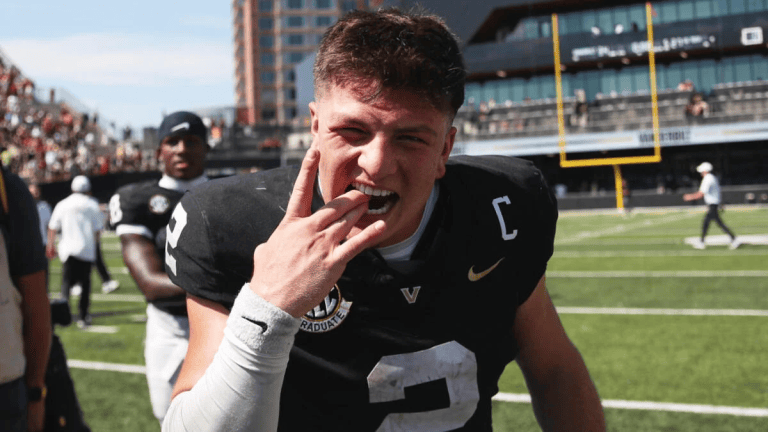
Former Vanderbilt Commodores quarterback Diego Pavia is not softening his stance as he transitions from college football to the NFL.
At the NFL Combine, Pavia made it clear that outside opinions do not shape his approach. The draft prospect confirmed he plans to throw for scouts Saturday and addressed the criticism that followed him throughout his college career.
âOne thing about me is I don’t care what people think about me,â Pavia told ESPN’s Stephen Holder.
Polarizing but Productive
Pavia led Vanderbilt to a 10-3 record in 2025 â the first 10-win season in program history. His play elevated the Commodores into national relevance, but his outspoken personality and social media presence drew attention as well.
After finishing as Heisman Trophy runner-up, Pavia faced backlash for posting a message that included âF-All THE VOTERSâ before later issuing an apology. He maintains that much of the criticism stems from media narratives designed for engagement.
Critics aside, Pavia believes his edge is part of what made him an effective leader.
âI feel like a lot of teams love the tenacity, the fight,â he said. âThe life of an underdog, that’s for sure. And, so, they ask questions. But you go back, you look at my record, ain’t nothing on my record.â
Size Questions Remain
NFL evaluators will also weigh Paviaâs physical profile. Measuring under 5-foot-10, he falls below traditional size benchmarks for the quarterback position.
Still, he dismissed concerns by pointing to his performance against elite competition.
âI would just say turn on the tape,â Pavia said. âIt’s not like we’re not playing these guys that are going first-round, second-round [picks] on Saturdays in the SEC. So, the SEC and the Big Ten probably have the most guys getting drafted in the first, second round. So, we’re playing those guys and ain’t nothing going to change.â
Built on Being Counted Out
Pavia credits his confidence to a career path that began in junior college before climbing to SEC prominence. He argues that being overlooked fueled his development.
âI just want everyone to know what’s true about me is I’m humble and I get my confidence from my process. And if you saw how much I put into this, you would see where I get my confidence.â
As draft boards take shape, Pavia remains unapologetically himself. For teams searching for competitiveness and resilience, that authenticity may matter as much as measurables.
The NFL Draft often brings out the starsâtop-tier talent thatâs heavily scouted, hyped, and expected to deliver. But just as often, itâs the sleepersâthe low-key picks with serious upsideâthat reshape rosters. In 2025, two such running backs stand out as wild cards worth tracking: Jaydon Blue (Dallas Cowboys) and Bhayshul Tuten (Jacksonville Jaguars).
Jaydon Blue, a 5th-round pick out of Texas, didnât have eye-popping college production, but his traits tell a different story. Heâs a burnerâposting a 4.38 40-yard dashâand showed excellent burst and balance in limited touches. His 85.1% catch rate and 3.8 yards after contact per carry make him a compelling third-down option. The knock? Heâs undersized at 196 lbs and struggled with fumbles. But in Dallas, where the backfield is in flux, Blue could force his way into meaningful snaps if he impresses early.
Bhayshul Tuten is another intriguing Day 3 pick. Drafted by Jacksonville in the 4th round, the Virginia Tech product turned heads at the combine with a 4.32 40 and a 40.5-inch vertical. His elite athleticism suggests home-run potential every time he touches the ball. Tuten averaged 6.3 yards per carry in college and excelled in open space. Still, he has tendencies to bounce runs outside and a high tackle-for-loss rate that could limit him early in the pros. But in Jacksonville, with Etienneâs injury history and Bigsby still unproven, thereâs a clear path to opportunity.
Both backs face uphill battles but land in systems where their skill sets fit. Blue brings versatility and receiving chops to Dallas, while Tuten adds speed and explosion to an offense that thrives on space and tempo.
What makes them wild cards? Theyâve got the toolsâspeed, burst, visionâbut their college resumes leave enough doubt to keep expectations modest. Still, history shows that running backs can break out quickly in the right situation.
Keep an eye on Blue and Tuten. In a league constantly searching for the next diamond-in-the-rough backfield star, these two have the tools to rise from sleeper to standout by seasonâs end.
Thanks for reading the OutOfSightSports Publication! It means more than you can imagine to us! Weâre grateful for your support. Follow us across our various social media platforms @OOSSports for the most âOutOfSightâ Sports Content on the web! Also, drop a subscription to our YouTube channel for highlights and more. Check out the OutOfSightShop for exclusive sports gear. Click the LinkMe below to find all our social media platforms. See you next time! đ
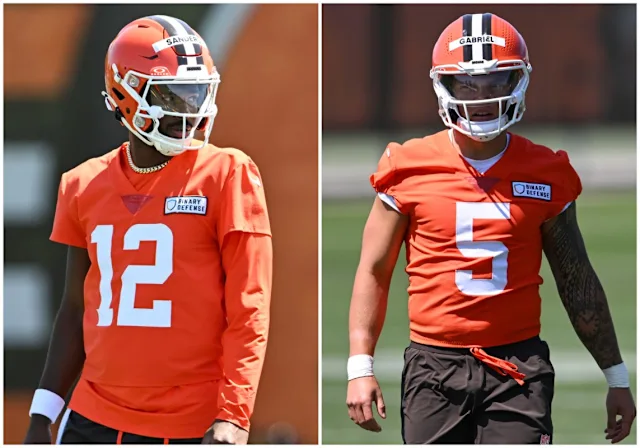
The Cleveland Browns find themselves at a pivotal juncture as they navigate the complexities of their quarterback roster. With Deshaun Watson sidelined due to injury, the team has turned its attention to a mix of seasoned veterans and promising rookies. Among the newcomers are Shedeur Sanders and Dillon Gabriel, both bringing unique skills and backgrounds to the table. Former NFL quarterback and current analyst Dan Orlovsky has weighed in on how the Browns should approach this situation, offering insights that could shape the team’s strategy moving forward.
The Browns’ Quarterback Conundrum
Deshaun Watson’s absence due to an Achilles injury has left the Browns in a state of flux. The team now boasts a diverse quarterback lineup, including veterans Joe Flacco and Kenny Pickett, alongside rookies Shedeur Sanders and Dillon Gabriel. This crowded room presents both opportunities and challenges as the Browns seek stability at the position. Historically, the franchise has struggled to find a consistent presence under center, with numerous quarterbacks cycling through the role over the years. This ongoing instability underscores the importance of making strategic decisions regarding the current roster.
Shedeur Sanders: The Underdog with a Legacy
Shedeur Sanders, son of Hall of Famer Deion Sanders, entered the NFL with high expectations following a stellar college career at Jackson State and Colorado. Despite projections placing him in the first round, Sanders experienced a surprising slide to the fifth round in the 2025 NFL Draft. This unexpected turn has fueled his determination to prove doubters wrong. Drawing parallels to Tom Brady’s journey, Sanders embraces the underdog role, aiming to make a significant impact in Cleveland. His performance in rookie minicamp has been noteworthy, with reports highlighting his impressive throws and leadership qualities. Sanders’ confidence and work ethic suggest he could be a transformative figure for the Browns.
Dillon Gabriel: The Experienced College Star
Dillon Gabriel brings a wealth of collegiate experience to the Browns, having started 63 gamesâthe most in FBS history for a quarterback. Selected in the third round, Gabriel’s accuracy and decision-making have been praised by analysts, including Dan Orlovsky. However, concerns about his performance under pressure and deep-ball accuracy have been noted. In early training sessions, Gabriel has demonstrated a strong grasp of the playbook and solid mechanics, positioning himself as a viable candidate for the starting role. His maturity and poise could provide the stability the Browns have long sought at the quarterback position.
Dan Orlovsky’s Analysis and Recommendations
Dan Orlovsky advocates for the Browns to consider starting either Shedeur Sanders or Dillon Gabriel, emphasizing the potential benefits of developing a young quarterback. He suggests that giving one of the rookies the opportunity to lead could inject fresh energy into the team and align with a long-term vision for success. Orlovsky’s analysis highlights the importance of evaluating both players’ performances in training and preseason games, allowing the most promising candidate to emerge naturally. This approach could foster healthy competition and ultimately lead to a more dynamic and resilient offense.
The Case for Letting the Rookies Compete
Let the best man win. Thatâs the crux of what Dan Orlovsky is really pushing for. The Browns have an opportunityâone thatâs rare in todayâs NFL landscape: a chance to organically test two young quarterbacks with drastically different playing styles and college trajectories. Letting Shedeur Sanders and Dillon Gabriel compete throughout training camp and the preseason could provide invaluable data to determine whoâs better equipped to lead the team.
Competition naturally brings out the best in athletes. Shedeur is a playmaker with a legacy behind him and an internal fire to silence critics. Gabriel, on the other hand, is the battle-tested general whoâs seen just about everything you can see at the college level. While their styles differ, the end goal remains the same: win football games.
If Cleveland goes the route of a quarterback competition, it gives the coaching staff flexibility. Injuries are always a concern, and having multiple QB-ready options with actual game experienceâeven if only from the preseasonâcould be the difference between a playoff run and an early exit. Plus, putting them through the wringer now avoids the issue of being unprepared later if Flacco or Watson go down again.
Why Joe Flacco Might Be the Perfect Bridge
Joe Flaccoâs return to Cleveland might feel like dĂŠjĂ vu, but thereâs a real reason why it makes sense. Last year, when thrust into action, Flacco performed at a level few expected, earning the NFL Comeback Player of the Year award and helping push the Browns to a playoff berth. His poise, arm strength, and ability to run Kevin Stefanskiâs system flawlessly made him a fan favorite and locker room leader.
Now back in Cleveland, Flaccoâs value could go beyond what he does on the field. He can serve as the perfect bridge quarterbackâstarting the season while mentoring the rookies. He knows the offense. Heâs seen every defensive scheme out there. And perhaps most importantly, he doesnât have anything to prove. Heâs not gunning for a long-term contract. Heâs just here to win.
This mentorship role could be a game-changer for Shedeur Sanders and Dillon Gabriel. Being able to watch how a Super Bowl MVP prepares, studies film, and executes a game plan could accelerate their development significantly. Itâs a win-win situation: the Browns get competent play while grooming their future signal-caller.
Kenny Pickett: The Forgotten Factor
Itâs easy to overlook Kenny Pickett in this equation, but that would be a mistake. A former first-round pick just a few years removed from being the Steelers’ presumed franchise quarterback, Pickettâs fall from grace has been sharpâbut not necessarily permanent.
Now with Cleveland, heâs flying under the radar. If used correctly, this could be a blessing in disguise. With significantly less pressure and a chip on his shoulder, Pickett could quietly work his way back into the conversation. He knows the AFC North. Heâs familiar with its defenses. And if he can iron out the inconsistencies that plagued him in Pittsburgh, he could suddenly become a dark horse to start.
Orlovsky, while not focusing heavily on Pickett, notes that the Browns should at least keep their minds open about how to use him. If nothing else, having a quarterback with starting experience behind Flacco and ahead of two rookies is smart insurance.
The Development Plan: Building for the Future
Dan Orlovsky emphasized something that resonates deeply in todayâs NFL: developing quarterbacks isn’t just about physical repsâit’s about giving them mental reps, too. The Browns should craft a development plan that includes game-day observation, simulated pressure situations in practice, and one-on-one film study with coaching staff and veteran quarterbacks.
For Sanders and Gabriel, development needs to be tailored. Sanders will benefit from pocket presence drills and working through progressions under duress, areas he struggled with against top-tier defenses. Gabriel, meanwhile, should work on improving his deep ball and reacting under pressure.
Investing in these aspects nowâeven if neither rookie starts in 2025âcould set the Browns up beautifully for 2026 and beyond. The goal isn’t just to have a QB for this season. Itâs to find the next guy to carry the franchise for a decade. A plan like this is how that starts.
FAQs
1. Will Shedeur Sanders start for the Browns in 2025? It’s unlikely he starts Week 1, but with a strong preseason and injuries or inconsistent play from veterans, there’s a real chance Sanders sees action this year.
2. What are Dillon Gabrielâs chances of becoming QB1? Gabrielâs experience gives him an edge in readiness, but heâll need to show he can translate his college success to the NFL. Heâs definitely in the mix.
3. Why did Shedeur Sanders fall to the fifth round? Analysts cite inconsistent performances against high-level defenses and questions about pocket presence. His slide was one of the draftâs biggest surprises.
4. Is Joe Flacco starting again this year? If Deshaun Watson isnât ready, Flacco is the most likely candidate to start the season based on last yearâs performance and system knowledge.
5. What role will Kenny Pickett play for the Browns? Heâs currently QB3 or QB4, but donât count him out. If injuries strike or rookies underperform, Pickett could be a key contributor.
Thanks for diving into the OutOfSightSports Publicationâââit means the world to us! Weâre thrilled to have your support. For the most jaw-dropping, âOutOfSightâ sports content around, follow us @OOSSports across all our social platforms. Want highlights and more? Hit that subscribe button on our YouTube channel. And donât miss the OutOfSightShop for exclusive sports gear you wonât find anywhere else. Click the LinkMe below to connect with us everywhere. Canât wait to see you back for more! đ
Best Fits of the 2025 NFL Draft: OOSSports’ Top 9 Rookie-Team Pairings
The 2025 NFL Draft has officially wrapped, and with 257 players hearing their names called, it was a weekend full of big-time moves, head-scratching picks, and franchise-altering decisions. Team grades and overall class breakdowns have their place. However, weâre kicking off the OutOfSightSports NFL Blog with a look at the 9 favorite fits of this yearâs draft. These are players whose selection wasnât just about value. It was about opportunity, system fit, and long-term upside.
These arenât necessarily the most hyped names or highest overall gradesâbut theyâre the prospects we believe landed in the perfect spot to succeed. Letâs get into it.
1. Luther Burden III, WR â Chicago Bears (2-39)
Burden was our WR1 in the class when evaluating pure offensive impact, and Chicago is an ideal landing spot. With new head coach Ben Johnson at the helm, the Bears’ offense will prioritize space and versatility. Burdenâs yards-after-catch ability and quick-twitch burst are tailor-made for the creative formations Johnson is known to run. With DJ Moore and Rome Odunze already in place, Burden can thrive in the slot. He can become an early mismatch nightmare.
2. Will Johnson, CB â Arizona Cardinals (2-47)
Johnsonâs drop to Round 2 was unexpectedâinjuries played a roleâbut donât let that distract from the fact that Arizona just landed a potential top-10 talent. Jonathan Gannonâs defense thrives with instinctive ball-hawks, and Johnson fits that mold perfectly. He plays with a smooth backpedal, elite ball skills, and has a high football IQ. If he stays healthy, this is a steal and a long-term cornerstone for the Cardinalsâ secondary.
3. Ashton Jeanty, RB â Las Vegas Raiders (1-6)
Many questioned the pick at first glance, but this was one of the cleanest scheme fits of the entire draft. Jeanty, the top back on our board, now lands in a Pete Carroll/Chip Kelly offense thatâs expected to lean heavily on tempo and downhill runs. Jeanty can carry the load and contribute as a pass-catcherâdonât be surprised if heâs a 1,500+ all-purpose yard guy as a rookie. This is a new identity for Vegas, and Jeanty is at the center of it.
4. Jihaad Campbell, LB â Philadelphia Eagles (1-31)
The Eagles did what the Eagles do: got great value at a premium defensive position. Campbell plays with violent speed and is a three-down threatâhe can blitz, cover, and read the run. He reminds many of Zack Baun, who had an All-Pro year in Philly, but Campbell might be more explosive. Even with an offseason surgery, his ceiling is through the roof. This is a long-term play that could pay off as early as midseason.
5. Jalon Walker, EDGE â Atlanta Falcons (1-15)
Walker had no business falling to 15, and Atlanta fans should be ecstatic. A hybrid front defender with sideline-to-sideline range, Walker can be deployed standing up or with his hand in the dirt. New DC Jimmy Lake will have a blast moving him around the formation. The Falcons needed speed and intensity off the edge, and Walker fits the billâheâll be a defensive anchor in year one.
Hunter is the ultimate chess piece. Jacksonville traded up aggressively to land him, and theyâll be using him early and often. Offensively, he gives Trevor Lawrence another electric playmaker alongside Brian Thomas Jr. Defensively, heâll likely rotate in as a nickel and boundary corner. The Jags’ willingness to fully utilize his versatility shows theyâre thinking big pictureâand Hunter has the talent to back it up.
7. Colston Loveland, TE â Chicago Bears (1-10)
The Bears double up on our list, and for good reason. Loveland was our TE1, and he lands with a coach who helped develop Sam LaPorta into a breakout star in Detroit. Lovelandâs fluidity as a route-runner and vertical threat separates him from his peers. Chicagoâs new-look offense is clearly prioritizing weapons with after-the-catch ability, and Loveland is going to be a mismatch machine against both linebackers and safeties.
8. Abdul Carter, EDGE â New York Giants (1-3)
Carter was our No. 1 overall player, and somehow the Giants got him at No. 3. Heâll slot in next to Brian Burns and Dexter Lawrence II, forming one of the most dangerous front sevens in the NFC. Carterâs role may vary depending on matchupâheâs that flexibleâbut expect him to generate pressure right away. His Micah Parsons-style hybrid usage will make the Giants defense more dynamic and harder to gameplan for.
9. Malaki Starks, S â Baltimore Ravens (1-27)
Malaki Starks was born to play in this Ravens defense. Pairing him with Kyle Hamilton creates arguably the leagueâs most versatile safety duo. Starks is instinctive, fast, and doesnât hesitate to strike. Heâll play single-high, in the box, and even man coverage against slot receivers. Baltimore prioritizes smart, adaptable defenders, and Starks checks every box.