Tag: College Basketball

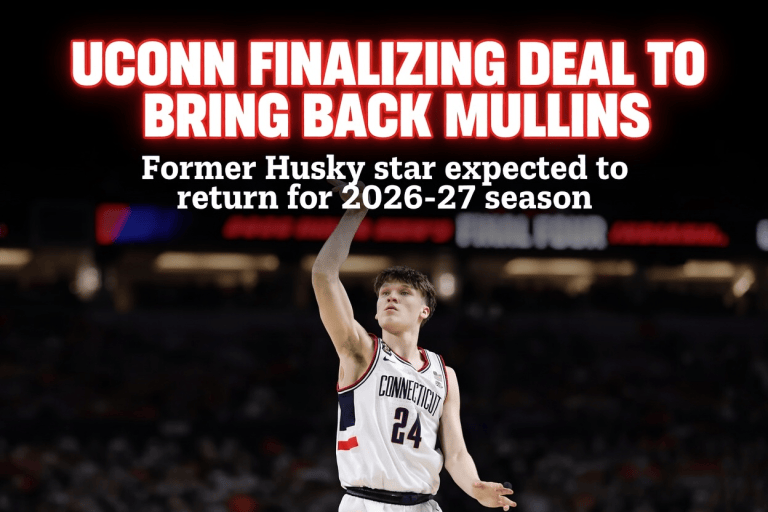
UConn basketball preparing massive NIL offer to keep Braylon Mullins

Braylon Mullins.

The UConn Huskies men’s basketball team is making a major push to retain one of its top stars.

According to Evan Sidery on X, formerly Twitter, the Huskies are preparing to offer Braylon Mullins a massive NIL package worth an estimated $4–5 million per year to keep him from entering the 2026 NBA Draft.

The reported deal would place the sharpshooter among the highest-paid players in college basketball.

The structure of the offer is designed to mirror what Mullins closely could earn as a mid-first-round pick, effectively removing the financial urgency to leave school early.

UConn’s goal is clear. Retain a pro-ready guard who projects as a lottery-to-mid-first-round selection and keep its championship window open for another season.

Timing critical for Mullins’ decision.

The timing of the reported offer is significant.

With the 2025-26 season complete, underclassmen across the country are weighing whether to declare for the NBA Draft. Mullins sits at the center of that decision cycle, with his stock firmly in first-round territory.

The report indicates the offer is imminent, signaling that UConn is acting quickly to influence his decision before draft declarations are finalized.

NIL landscape changing college basketball

This situation highlights the evolving reality of college basketball.

Top programs now operate in a space where they must financially compete with professional leagues to retain elite talent. UConn’s willingness to offer NBA-level compensation reflects how aggressive programs have become in the NIL era.

For players like Mullins, the decision is no longer strictly about development or draft positioning. It now includes a direct financial comparison between staying in college and turning professional.

What it means for UConn basketball

Retaining Mullins would be a major win for the Huskies.

The program has established itself as a national contender in recent seasons, and bringing back a player of his caliber would strengthen its chances of competing for another title.

Mullins’ scoring ability, versatility, and NBA-ready skill set make him a centerpiece-level player. Keeping him in Storrs for another year would provide both stability and star power to the roster.

Decision time

For Mullins, the choice now comes down to timing.

He can declare for the NBA Draft and begin his professional career, or he can return to UConn with a record-setting NIL deal and potentially elevate his draft stock even further.

Either way, Dan Hurley and the Huskies have made their position clear. The program will do anything to keep one of its best players for another season.


Thanks for reading. Make sure to check out the latest episode of the OutOfSightSports YouTube series below for more coverage, analysis, and the latest updates across the sports world.

NCAA proposes major eligibility rule changes with new five-year window

NCAA sports story 4/8

The NCAA is considering one of the most significant rule changes in modern college athletics.

According to a report from Ross Dellenger of Yahoo, the NCAA is proposing a new eligibility structure that would dramatically alter how long student-athletes can compete at the collegiate level. (Source)

NCAA explores strict five-year eligibility window

An NCAA committee will meet next week to discuss implementing an age-based eligibility model.

Under the proposal, athletes would receive five full years of eligibility, beginning with either the player’s 19th birthday or their high school graduation, whichever comes first. The rule would eliminate redshirts, waivers, and most exceptions, creating a more rigid and standardized system.

Only limited circumstances, such as maternity leave, military service, or religious missions, would allow for exceptions.

If approved quickly, the new structure could take effect as early as the fall season.

NCAA proposal aligns with recent executive order

The proposal closely mirrors a recent executive order signed by Donald Trump, which outlined a “five-year participation window” and called for more structured transfer rules. (Source)

Dellenger reported that the NCAA had already been working on these changes prior to the executive order, though the two now align in principle.

NCAA aims to simplify current eligibility system

Current NCAA rules allow athletes to compete in four seasons over a five-year period, with opportunities to extend eligibility through redshirts and waiver requests.

That system has led to increasing legal challenges, as athletes have pursued additional eligibility through the courts. The proposed changes would eliminate those pathways and replace them with a fixed eligibility timeline.

The goal is to create a clearer and more enforceable framework that reduces ambiguity and potential litigation.

Impact on future athletes and recruiting

The proposal could significantly alter decision-making at the high school level.

Families and prospects often reclassify or delay enrollment to maximize eligibility windows. Jonathan Givony has noted that some players enter college at 20 years old, which under the new system would reduce their available eligibility.

This change could reshape recruiting strategies and player development timelines across multiple sports.

The new rules would also impact athletes currently navigating eligibility disputes.

Cases involving players such as Trinidad Chambliss, Joey Aguilar, and Chandler Morris highlight the growing tension between athletes and the NCAA over eligibility extensions.

Under the proposed system, additional years through waivers or court rulings would become far less likely.

The same applies to situations involving players attempting to return from professional stints, such as James Nnaji and Charles Bediako.

What comes next

The NCAA will review the proposal in the coming days, but approval remains uncertain.

Conference leaders and stakeholders must weigh the benefits of a simplified system against the potential impact on athletes and recruiting pipelines.

If adopted, the rule would represent a fundamental shift in how college sports operate, bringing an end to the extended eligibility era and introducing a stricter, more defined structure moving forward.


Thanks for reading. Be sure to check out the latest episode of the OutOfSightSports YouTube series below for more coverage, analysis, and the latest updates across the sports world. 🎥 ⬇️

Xavier Edmonds hits late winner as TCU edges Ohio State in NCAA Tournament

Xavier Edmonds

TCU survived a late push and delivered in the biggest moment when it mattered most.

Xavier Edmonds scored the game-winning layup with 4.3 seconds remaining as No. 9 seed TCU held off No. 8 seed Ohio State for a 66-64 win in the opening round of the NCAA Tournament.

The final sequence unfolded after David Punch created space in the halfcourt and found Edmonds inside. Edmonds converted the go-ahead basket, and Ohio State’s final attempt came up short when Bruce Thornton’s half-court heave hit the backboard at the buzzer.

Punch had already added fuel to the matchup earlier in the week, telling the Columbus Dispatch that TCU would beat Ohio State “nine times out of 10.” On Thursday night, the Horned Frogs backed it up. (Source)

“I felt like it kind of put a little more pressure on us, but at the same time, I know his words were just a little bit misconstrued and a little twisted,” Edmonds said. “That’s not 100 percent how he meant it. Still we seen it, and we felt like we had to stand on it. So we wanted to go out there and make sure we won nine out of 10 times.”

Edmonds finished with 16 points, while Punch recorded a double-double with 16 points and 13 rebounds. Micah Robinson led TCU with 18 points, knocking down four three-pointers in a key offensive performance.

The Horned Frogs appeared in control early, building a 15-point lead by halftime. However, the second half told a different story. TCU missed 18 of its first 22 shots after the break, allowing Ohio State to rally and take a 55-50 lead with seven minutes remaining.

John Mobley Jr. led the Buckeyes with 15 points and sparked the comeback effort.

“I just thought, I’m not going home like that,” Mobley said. “I’m not going home without putting my all to it. I had a talk at halftime, I’ve just got to do better. I was a little sluggish in the first half, can’t do that.”

TCU responded late, regaining a 64-61 lead on a Robinson three-pointer with under a minute remaining. Thornton answered with a clutch three of his own to tie the game before the Horned Frogs set up their final possession.

“We got it to Punch, and he created some space,” Edmonds said. “He didn’t have a shot he wanted, so he kicked it out to me, and I had a good seal and I just went up with it. Credit to him for making a better pass.”

Head coach Jamie Dixon emphasized his team’s composure down the stretch after nearly losing control of the game.

“What a character check for us down the stretch and just going and executing on every play,” Dixon said. “It was multiple guys in a variety of ways.”

With the win, TCU advances to face No. 1 seed Duke in the next round after the Blue Devils narrowly avoided an upset earlier in the day.

Ohio State, meanwhile, sees its season end after returning to the NCAA Tournament for the first time since 2022.

“There is a motivation now of getting back here,” Mobley said. “Ohio State has a great repertoire to come here. We want to keep building that. … When the guys come in, we’re going to have that and be ready to go for the summer.”


Thanks for reading. Make sure to check out the latest episode of the OutOfSightSports YouTube series below for more coverage, analysis, and the latest updates across the sports world.

Nebraska finally earns historic NCAA Tournament win over Troy

Nebraska Cornhuskers tournament win

For decades, it wasn’t just a stat — it was a weight that followed Nebraska everywhere in March. Now, it’s gone.

This Nebraska NCAA Tournament win reflected more than one dominant performance. It captured a transformation years in the making under Fred Hoiberg, who has steadily reshaped the culture inside the program. After early struggles in his tenure, Nebraska now stands with a school-record 27 wins and a team that believes it belongs on this stage.

“It’s been a special group since the beginning,” as noted in a piece by The Athletic’s Mitch Sherman.

The game itself never turned into a fight. Nebraska seized control early, building an 18-point lead in the first half and never allowing Troy to recover. By halftime, the outcome already felt decided, and the second half only confirmed it.

This Tournament win reflected more than one dominant performance. It captured a transformation years in the making under Fred Hoiberg, who has steadily reshaped the culture inside the program. After early struggles in his tenure, Nebraska now stands with a school-record 27 wins and a team that believes it belongs on this stage.

“It’s been a special group since the beginning.”

That belief showed up in every phase of the game. The Huskers’ defense created separation, while their offense flowed through confident shot-making, highlighted by a 20-4 run in the first half that broke the game open. Sam Hoiberg, who experienced the program at its lowest points, described the moment in simple terms.

“It’s what I dreamed of.”

The impact extended far beyond the court. Nebraska fans filled the arena, turning a neutral site into what felt like a home environment. For a program that had carried the label of never winning in the tournament, the support reflected how much this breakthrough meant across generations.

“All of it means way more than makes sense to people who aren’t a part of it.”

That emotional release had been building for years. Nebraska had made multiple tournament appearances without a win, with each loss reinforcing a narrative that became difficult to escape. This time, the Huskers didn’t just win — they dominated.

The roster itself explains why this team feels different. It’s not built on one star, but on cohesion and shared purpose. Players move with confidence, trust each other, and execute a system that prioritizes collective success over individual numbers.

That identity has carried Nebraska through its best season in program history. Three straight 20-win seasons and a dramatic rise under Hoiberg have turned what was once a rebuilding project into a legitimate contender.

Now, the conversation changes. Nebraska is no longer chasing history — it has made it.

And with the Round of 32 ahead, this group has a chance to do something even more significant: prove that this moment is not the peak, but just the beginning.

Midwest Region chaos brewing ahead of March Madness

Midwest region oossports march madness

The spotlight on the March Madness Midwest region intensifies as the tournament begins, with Michigan positioned at the center of the conversation. Expectations are high, but history suggests stability rarely lasts in this part of the bracket. What appears clear on paper often unravels quickly once games tip off.

Michigan enters the NCAA Tournament with one of the most complete profiles in the field. The Wolverines rely on interior dominance and frontcourt depth that consistently creates mismatches. Their ability to control the paint gives them a structural advantage, especially against teams that lack comparable size. Combined with a favorable draw, Michigan has a legitimate pathway to the Final Four and carries some of the strongest title expectations in the region.

Still, the Midwest region presents far more resistance than a top-heavy outlook suggests. Iowa State has emerged as a serious threat, driven by perimeter shooting and growing confidence. The Cyclones’ offense can shift momentum rapidly, particularly when Milan Momcilovic finds consistency from beyond the arc. In a tournament setting where runs define outcomes, that shooting profile makes Iowa State dangerous in any matchup.

Virginia stands out as a potential disruptor among the top seeds. The Cavaliers bring a defensive identity that can dictate tempo and limit scoring opportunities. Ugonna Onyenso anchors the interior, forcing opponents into difficult possessions and slowing games into half-court battles. That style often proves effective in March, where execution and patience become critical late in games.

The volatility of the March Madness Midwest region becomes even more apparent beyond the top seeds. Santa Clara’s perimeter-heavy offense introduces immediate upset potential, particularly against a Kentucky squad that has struggled to maintain consistency. Akron enters the tournament with momentum, creating pressure on a Texas Tech team dealing with rotation concerns and limited depth.

Miami of Ohio adds another layer of intrigue. If the RedHawks advance out of the First Four, their disciplined structure and near-flawless regular season performance suggest they are capable of competing beyond expectations. That kind of profile often produces early-round surprises in March.

Coaching trends and recent tournament history further complicate the bracket. Tennessee has faced recurring challenges in translating regular-season success into deep tournament runs, while Alabama enters with uncertainty following late developments affecting its roster. Both situations create openings for unexpected outcomes.

As the tournament unfolds, attention will remain fixed on Michigan and whether it can convert its advantages into sustained success. The Wolverines have the roster balance, physical presence, and bracket positioning to control the region. However, March Madness consistently rewards adaptability over projections.

The Midwest region is structured for volatility. A single shooting surge or defensive sequence can redefine the bracket in an instant. Michigan may set the standard entering the tournament, but the margin for error remains thin, and the narrative is likely to shift quickly as results come in.


Enjoy the content? Stay locked in with OutOfSightSports for daily highlights, real talk, and bold takes that keep the game alive. 🗣️

Catch more action and insight on our YouTube channel below ⬇️ 🚀

These 2 teams got snubbed from the 2026 NCAA Tournament

Selection Sunday always produces celebration and heartbreak across college basketball, and the 2026 NCAA Tournament bracket delivered both.

While 68 teams secured spots in March Madness, several programs that hoped to hear their name called were left out of the field. Among the most notable omissions were the Auburn Tigers men’s basketball and the Seton Hall Pirates men’s basketball.

Both teams entered Selection Sunday with realistic hopes of earning an at-large bid but ultimately fell short of the committee’s final cut.

Auburn Tigers

Auburn’s NCAA Tournament hopes came to an end after its loss to the Tennessee Volunteers men’s basketball in the quarterfinals of the SEC Tournament.

Without the automatic bid, Auburn had to rely on the selection committee to extend an at-large invitation. That opportunity never came.

The Tigers finished the season 17-16 overall and 7-11 in SEC play while navigating one of the most difficult schedules in the country. According to KenPom, Auburn played the third-toughest schedule in Division I basketball this season.

The year presented challenges from the start.

After reaching the Final Four in 2025, Auburn lost five starters from that team. The program also experienced a leadership change when longtime head coach Bruce Pearl stepped aside before the season and handed the program to his son, Steven Pearl.

Despite the roster turnover, Auburn delivered some impressive moments during the season. The Tigers’ biggest victory came on January 24 when they defeated then-No. 4 Florida Gators men’s basketball in Gainesville.

However, Auburn struggled to maintain consistency late in the year. The Tigers lost nine of their final 12 games, a stretch that ultimately derailed their postseason hopes.

The absence from the NCAA Tournament marks Auburn’s first time missing March Madness in four years.

Seton Hall Pirates

The Seton Hall Pirates men’s basketball also came up short in their bid to reach the 2026 NCAA Tournament.

Seton Hall finished the season 21-12 and made a late push to strengthen its résumé. The Pirates battled top competition in the closing weeks of the year, including competitive games against UConn Huskies men’s basketball and St. John’s Red Storm men’s basketball in the Big East Tournament.

Despite those efforts, the selection committee ultimately left the Pirates out of the 68-team field.

One factor working against Seton Hall was the overall strength of the Big East this season. With fewer opportunities to secure marquee wins, the margin for error shrank significantly.

As a result, each loss carried greater weight in the committee’s evaluation.

The exclusion extends Seton Hall’s NCAA Tournament drought to two seasons.

Selection Sunday debate continues

Every year, the NCAA Tournament selection process sparks debate over which teams deserved inclusion.

For Auburn and Seton Hall, the 2026 bracket announcement brought disappointment. Both programs showed flashes of tournament-level play during the season but ultimately fell just short of securing a spot in March Madness.

Thanks for reading. Make sure to check out the latest episode of the OutOfSightSports YouTube series below for more coverage, analysis, and the latest updates across the sports world.

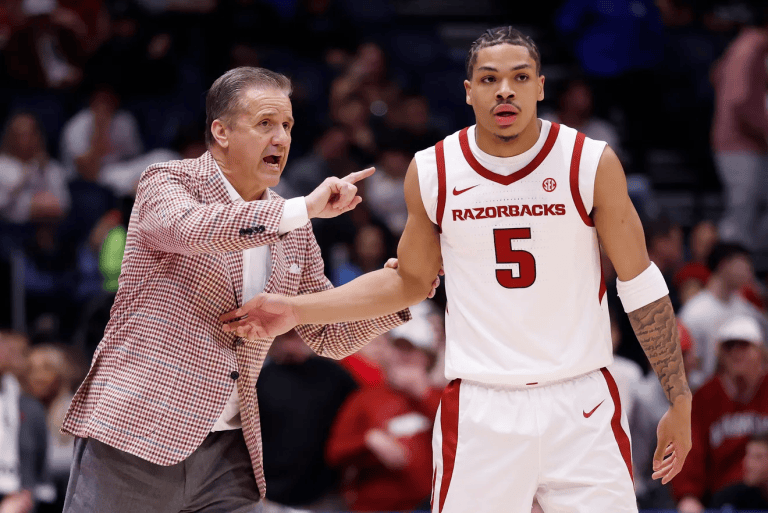
Darius Acuff Jr. erupts for 37 as Arkansas survives Oklahoma to reach SEC semifinals

Darius Acuff Jr. erupts for 37 as Arkansas survives Oklahoma to reach SEC semifinals

The Arkansas Razorbacks men’s basketball are headed to the SEC Tournament semifinals thanks to a massive performance from their star guard.

Darius Acuff Jr. poured in 37 points Friday night as No. 17 Arkansas held off the Oklahoma Sooners men’s basketball for an 82-79 victory.

The Razorbacks, seeded third in the tournament, improved to 24-8 on the season and advanced to their 17th semifinal appearance in the conference tournament.

Acuff carries Arkansas offense

Acuff, the SEC’s scoring leader and both the conference’s Player of the Year and Freshman of the Year, led the way from the opening tip.

He scored 21 points in the first half alone, keeping Arkansas within striking distance as the teams battled to a 39-37 halftime score in favor of Oklahoma.

The back-and-forth contest featured 16 lead changes and 11 ties, highlighting just how evenly matched the teams were throughout the night.

Trevon Brazile added 12 points for Arkansas, while Meleek Thomas struggled offensively, finishing with eight points on 2-of-10 shooting despite entering the game averaging 15.4 points per contest.

Razorbacks take control late

The game remained tight deep into the second half.

Dayton Forsythe’s layup tied the score at 67 with 5:38 remaining before Malique Ewin’s dunk gave Arkansas the lead for good with just over five minutes left.

The Razorbacks then surged with nine of the next 11 points, capped by an Acuff three-pointer with 2:27 remaining that pushed the lead to 76-69 — their largest advantage of the night.

Oklahoma had one final opportunity in the closing seconds after Acuff missed the second of two free throws with 10 seconds remaining.

However, Nijel Pack’s potential game-tying three-point attempt missed, and Arkansas secured possession with just 0.6 seconds left to seal the win.

Sooners fall just short

Pack led Oklahoma with 19 points, while Derrion Reid and Tae Davis each added 17 points. Mohamed Wague contributed 13 points for the Sooners.

The loss snapped Oklahoma’s six-game winning streak and left the Sooners at 19-15 overall. After an early nine-game skid in conference play, Oklahoma had rallied late in the season and hoped a tournament upset could strengthen its NCAA Tournament résumé.

What’s next

Arkansas will now face the Ole Miss Rebels men’s basketball in the SEC Tournament semifinals after the Rebels upset Alabama earlier Friday.

Meanwhile, Oklahoma must now wait to see whether its late-season surge will be enough to secure a spot in the NCAA Tournament field.

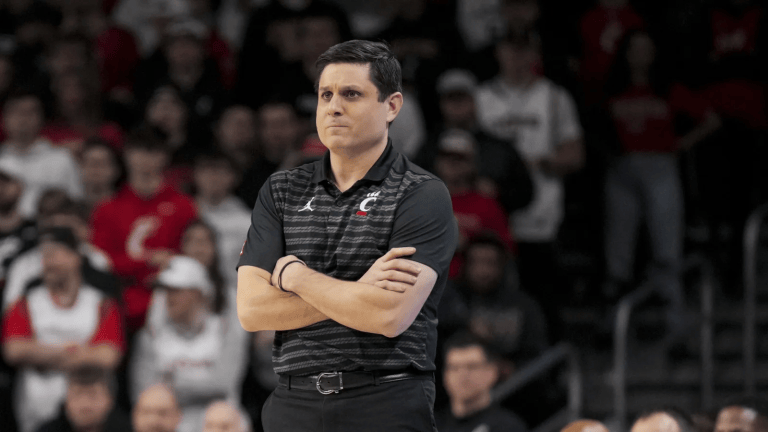
Cincinnati basketball will move on from Wes Miller after five seasons without an NCAA Tournament appearance

The Cincinnati Bearcats men’s basketball are making a major change within the program.

Cincinnati has fired head coach Wes Miller on Friday after five seasons leading the program, according to reports from On3Sports’ Pete Thamel, with additional credit to Jeff Borzello.

Miller failed to lead the Bearcats to the NCAA Tournament during his tenure despite compiling a respectable overall record during his five years at the helm.

Cincinnati era ends after five seasons

Miller finished his Cincinnati tenure with an overall record of 100–74.

His time with the Bearcats spanned two seasons in the American Athletic Conference before the program transitioned to the Big 12 Conference.

Despite flashes of competitiveness, the program never broke through to reach March Madness under Miller’s leadership.

The inability to secure an NCAA Tournament berth ultimately proved decisive in the university’s decision to move in a new direction.

Bearcats seek new direction

Cincinnati’s expectations remain high as one of the historic programs in college basketball.

The Bearcats now begin the search for a new head coach who can guide the program back into postseason contention and establish stability in the highly competitive Big 12.

With the program entering another offseason at a crossroads, leadership will look for a candidate capable of restoring Cincinnati’s presence on the national stage.


Thanks for reading. Make sure to check out the latest episode of the OutOfSightSports YouTube series below for more coverage, analysis, and the latest updates across the sports world. 🚀 ⬇️

Arkansas star Darius Acuff Jr. wins SEC Player of the Year

Arkansas guard Darius Acuff Jr. added a major accolade to his breakout campaign after being named SEC Player of the Year. The Razorbacks standout emerged as one of the most dynamic guards in the conference, leading Arkansas with consistent offensive production and playmaking throughout the season.

Acuff delivered a dominant freshman regular season while establishing himself as one of the SEC’s premier playmakers. He closed the year averaging 22.2 points, 3.0 rebounds, and 6.3 assists while shooting 49% from the field and an impressive 43% from three-point range. His ability to score efficiently while creating opportunities for teammates made him a centerpiece of Arkansas’ offense during conference play.

The news of Acuff’s honor quickly spread across social media following the official announcement. College Basketball Report shared the update on X, formerly Twitter, confirming the Arkansas guard’s recognition as the conference’s top player.

“Darius Acuff Jr. wins SEC Player of the Year!”

Acuff’s combination of scoring, pace, and court vision made him one of the most difficult matchups in the SEC. Night after night, the freshman guard delivered clutch performances that helped Arkansas remain competitive against some of the nation’s toughest opponents. His leadership on the court quickly elevated him into one of the conference’s most impactful players.

The award places Acuff among an elite list of SEC standouts who have earned the honor over the years. For Arkansas, it also highlights the emergence of a new star capable of carrying the program deep into postseason play. As the Razorbacks prepare for the SEC Tournament and March Madness, Acuff’s continued production could prove crucial in determining how far Arkansas can advance.

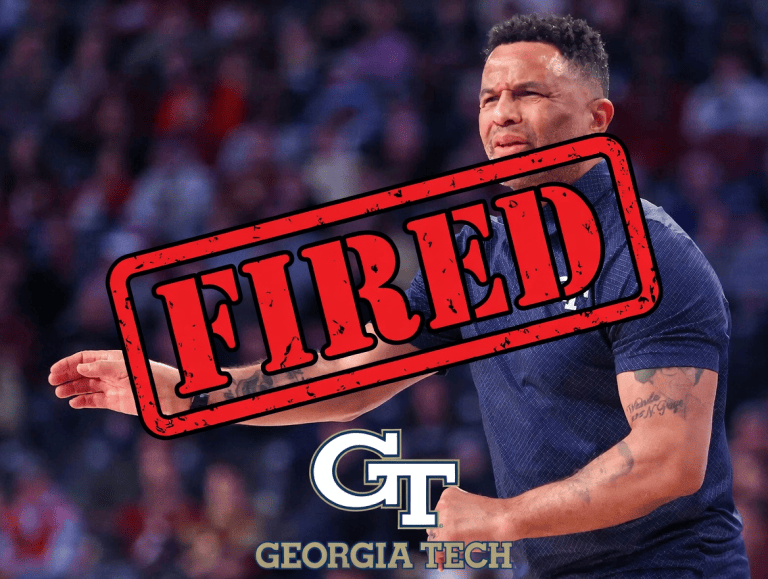
Georgia Tech Fires Damon Stoudamire After Three Seasons

The Georgia Tech Yellow Jackets men’s basketball are moving in a new direction.

Georgia Tech has dismissed head coach Damon Stoudamire after three seasons leading the program, according to reports from On3Sports’ Pete Nakos on Sunday morning. (Source)

The decision comes after the Yellow Jackets failed to reach the NCAA Tournament during Stoudamire’s tenure and never posted a winning season under his leadership.

Program Regressed in 2026

Georgia Tech showed some signs of improvement during the 2024–25 campaign, finishing 17–17 overall with 10 wins in ACC play.

However, the program took a step backward this season.

The Yellow Jackets finished the year with an 11–20 record and managed just two victories in conference play, ultimately prompting the program to make a coaching change.

Coaching Background

Stoudamire arrived at Georgia Tech after spending three seasons as an assistant coach with the Boston Celtics.

Before that, he served as the head coach at Pacific Tigers men’s basketball, where he built a competitive program and earned West Coast Conference Coach of the Year honors in the 2019–20 season.

During his time at Pacific, Stoudamire compiled a 71–77 overall record, including a 23–10 season in 2020 and a combined 32–19 record across his final two years.

Prior to his head coaching career, Stoudamire held assistant coaching roles at several programs, including Arizona Wildcats men’s basketball, Memphis Tigers men’s basketball and Rice Owls men’s basketball.

Program Looking for Stability

Stoudamire originally replaced former Georgia Tech coach Josh Pastner, who led the Yellow Jackets to one NCAA Tournament appearance during his seven-year tenure.

Georgia Tech has struggled to find sustained success in the NCAA Tournament era. The program has not reached the tournament in consecutive seasons since 2004 and 2005.

The decision to fire Stoudamire marks the first major coaching move for new Georgia Tech athletic director Ryan Alpert. Stoudamire had been hired by former athletic director J Batt, who departed for Michigan State last June.

NBA Career

Before entering coaching, Stoudamire enjoyed a lengthy professional career.

The former guard was selected No. 7 overall in the 1995 NBA Draft and went on to win NBA Rookie of the Year honors. Across 13 seasons, he averaged 13.4 points per game while playing for the Toronto Raptors, Portland Trail Blazers, Memphis Grizzlies and San Antonio Spurs.

Georgia Tech will now begin its search for the next coach tasked with rebuilding the program in the competitive ACC.