Category: Sports Crime

Judge Sets New Retrial Date in Former Miami Hurricanes Player Murder Case

A Florida judge has scheduled a new trial in the long-running murder case involving a former Miami Hurricanes football player.

Prosecutors will retry Rashaun Jones on May 18 after a mistrial was declared earlier this week when jurors were unable to reach a verdict in the second-degree murder case tied to the death of teammate Bryan Pata, according to information obtained by ESPN’s Paula Lavigne on Wednesday. (Source).

Judge Orders Retrial Following Hung Jury

The State of Florida 11th Circuit Court Judge Cristina Miranda set the new trial date during a hearing Wednesday after the previous proceedings ended with a hung jury.

Miranda also ruled on Jones’ bond, lowering it from $850,000 to $500,000. Defense attorney Sara Alvarez had requested the amount be reduced to $50,000, but the court declined that request.

Even with the reduction, Alvarez said Jones would still be unable to afford the amount required for release, which would be approximately $50,000 through a bondsman.

During the hearing, Miranda also asked Jones whether he would consider accepting a plea deal. Jones declined, repeating a stance he had taken earlier in the case.

At a previous hearing, Jones also rejected a plea offer that included a proposed 15-year sentence with credit for time served. That offer was below the standard sentencing guidelines tied to second-degree murder convictions. If found guilty at trial, Jones could face a life sentence.

Case Dates Back Nearly Two Decades

Jones has remained in custody since his arrest in August 2021 in connection with the 2006 killing of Pata.

Pata, a defensive lineman for Miami, was shot outside his apartment complex on Nov. 7, 2006, after returning home from football practice. He was killed by a gunshot wound to the head.

Prosecutors argued that tension between the two players escalated due to jealousy involving a woman and a history of confrontations between the teammates.

According to the state’s case, Jones was also upset after learning he would be suspended for two games following a failed drug test, a development prosecutors suggested contributed to the events leading up to the shooting.

Testimony Central to the Case

The prosecution relied heavily on witness testimony during the trial. One former University of Miami writing instructor testified that he saw a man he later identified as Jones leaving the apartment complex shortly after the shooting occurred.

However, several jurors who spoke after the trial said they believed the evidence presented by the state did not definitively prove Jones was responsible for the killing.

Jurors also cited concerns about the reliability of eyewitness testimony as a key factor in their inability to reach a unanimous verdict.

What Comes Next

With the new trial scheduled for May 18, the case surrounding Pata’s death—one of the most widely discussed tragedies in Miami football history—will return to court.

Nearly two decades after the shooting, the retrial will once again attempt to determine whether Jones was responsible for the killing of his former teammate.

Former MLB Pitcher Daniel Serafini Sentenced to Life in 2021 Lake Tahoe Murder Case

Former MLB Pitcher Dan Serafini Sentenced to Life Without Parole in Lake Tahoe Case

Former Major League Baseball pitcher Daniel Serafini was sentenced Friday in Placer County to life in prison without the possibility of parole for his role in the 2021 shooting at his in-laws’ Lake Tahoe-area home, according to reports from MyNews4.

The sentence follows a jury verdict delivered 193 days earlier, when Serafini was found guilty of first-degree murder, lying in wait and first-degree burglary in the death of 70-year-old Gary Spohr. He was also convicted of attempted murder in the shooting of 68-year-old Wendy Wood, who survived the attack but later died by suicide.

Prosecutors said Serafini entered the Homewood residence in June 2021 and waited for the couple to return from a boating trip before opening fire.

Serafini Maintains Innocence

During Friday’s hearing, Serafini addressed the court and continued to deny responsibility. He said he was out partying with his wife the night of the shooting and described himself as a “broken, imperfect man that makes mistakes.” He did not accept responsibility for the killings.

In issuing the life-without-parole sentence, the judge dismissed prior arguments from Serafini that he had been denied due process. The court stated that Serafini had due process “before, during and after the trial” and received “vigorous advocacy throughout the whole process.” The judge said there had been no violation of Serafini’s rights and that the jury’s decision was grounded in the evidence presented during trial.

Addressing the former MLB veteran’s request for a new trial, the judge referenced claims that he had received poor legal advice not to testify. The judge said Serafini came across as a “shot caller” and “key holder,” adding that the decision not to testify did not constitute ineffective assistance of counsel.

Court’s Criticism and Community Impact

The court encouraged Serafini to use his time in prison for reflection and personal growth, suggesting he should seek to improve himself and help others while incarcerated. However, the judge sharply criticized his sentencing remarks.

“What I heard today was not reflection, it was deflection,” the judge said, roasting him, noting the absence of remorse toward the victims and instead a focus on himself.

Victim impact statements described the crime as driven by “pure hate,” saying it devastated the family and shook the surrounding community. The judge characterized the case as a tragedy affecting everyone involved.

Serafini will serve the remainder of his life in prison without the possibility of parole.

Ex-NFL RB convicted on Federal Dogfighting charges

Former NFL running back LeShon Johnson has been convicted on federal charges tied to a large-scale dogfighting operation in Oklahoma, federal prosecutors confirmed.

A jury found Johnson guilty on six felony counts of possessing dogs for use in an animal-fighting venture. He was acquitted of 17 other related counts. The 54-year-old now faces up to five years in prison for each conviction and fines of up to $250,000 per count. His sentencing date has not yet been scheduled, according to an article written by Yahoo Sports’s Sean Leahy.

“This conviction sends a strong message that those who abuse animals for entertainment and profit will face serious consequences under federal law,” said Assistant Attorney General Adam Gustafson of the Justice Department’s Environment and Natural Resources Division (ENRD). “We are committed to aggressively prosecuting individuals who perpetuate the brutal practice of dog fighting.”

According to court records, Johnson operated an illegal dogfighting ring under the name “Mal Kant Kennels” out of Broken Arrow and Haskell, Oklahoma. Prosecutors say he bred “champion” and “grand champion” pit bulls, marketing their bloodlines for fighting purposes.

Johnson was arrested in March 2025 following a months-long investigation. A week after his arrest, he was indicted by a federal grand jury after 190 dogs were seized from his properties in October 2024 under the Animal Welfare Act.

Johnson’s defense attorney, Billy Coyle, argued that his client was simply a breeder of American pit bull terriers. “Obviously the jury found that some of his dogs bred were probably or were used in dog fighting, and those were difficult charges to fight,” Coyle said following the verdict.

This is not Johnson’s first legal issue tied to dogfighting. In 2004, he pleaded guilty to state charges in Oklahoma after running “Krazyside Kennels.” He received a five-year deferred sentence according to public record.

Johnson played five seasons in the NFL between 1994 and 1999 after being drafted in the third round out of Northern Illinois. He spent time with the Green Bay Packers, Arizona Cardinals, and New York Giants.

The Justice Department emphasized that this conviction is part of a broader crackdown on illegal animal fighting operations across the country.

What Is CTE? NYC Shooter May Have Targeted NFL Over Brain Trauma Concerns

A gunman who opened fire inside a Midtown Manhattan office building on Monday afternoon—killing four people including an NYPD officer—may have been specifically targeting the NFL over its long-standing controversies surrounding CTE and brain trauma in football.

The incident occurred at 345 Park Avenue, the building that houses the NFL’s league headquarters on its fifth floor. According to multiple reports including CNN, ABC News, and NY1, the suspect, Shane Devon Tamura, entered the lobby armed with an M4 rifle and opened fire before taking an elevator to the 33rd floor, where he shot another victim and then died by suicide.

Gunman Allegedly Motivated by NFL-Related CTE Grievances

A law enforcement official briefed on the investigation told CNN that Tamura left behind writings suggesting he had deep grievances with the NFL regarding its handling of chronic traumatic encephalopathy, or CTE. Sources say Tamura was a former competitive football player in his youth and may have believed that long-term head trauma had affected his mental health.

What Is CTE?

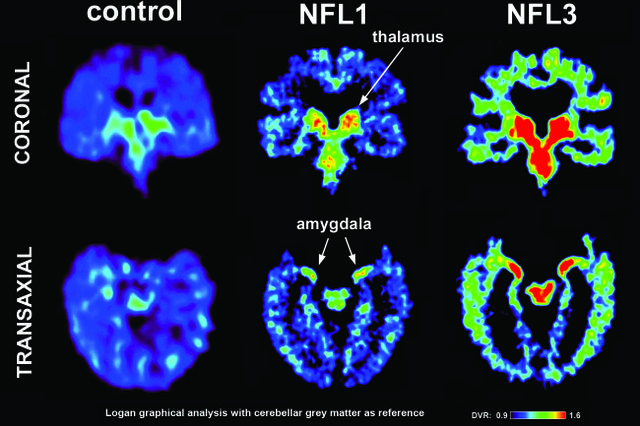
What is CTE is a question many are asking following the shooting. Chronic Traumatic Encephalopathy (CTE) is a degenerative brain condition caused by repeated blows to the head. It has been found in athletes—especially football players—even in those who have never been formally diagnosed with a concussion.

According to the Concussion Legacy Foundation, symptoms typically begin years or even decades after the brain has been exposed to trauma. These symptoms can include:

  • Memory loss

  • Confusion

  • Impaired judgment

  • Impulse control problems

  • Aggression

  • Depression

  • Suicidal thoughts

  • Progressive dementia

Dr. Ann McKee, director of the UNITE Brain Bank at Boston University, has conducted pioneering research into CTE. She notes that the condition closely resembles early-onset Alzheimer’s in its cognitive and behavioral impact.

NFL Players Diagnosed With CTE

CTE has been at the heart of some of the NFL’s most public health controversies. According to Boston University’s CTE Center, as of 2023, 345 out of 376 former NFL players studied—over 91%—were posthumously diagnosed with CTE.

Prominent NFL players diagnosed with or linked to CTE include:

  • Junior Seau – Hall of Fame linebacker

  • Aaron Hernandez – Former Patriots tight end

  • Demaryius Thomas – Pro Bowl wide receiver

  • Frank Wycheck – Former Oilers/Titans tight end

  • Irv Cross – Defensive back and TV analyst

  • Vincent Jackson – Former Chargers and Bucs wideout

  • Chris Henry, Terry Long, Jovan Belcher, and Conrad Dobler, among others

NFL’s Controversial History With CTE

The NFL has faced criticism for decades over how it handled brain injuries and downplayed the long-term risks of repeated hits. A landmark class-action lawsuit in 2013 led to a settlement that has paid out over a billion dollars to former players suffering from CTE-related conditions, though critics argue the league has not done enough.

While the motives behind Monday’s shooting are still under investigation, the potential CTE connection underscores the ongoing mental health and safety issues tied to football’s violent nature.

More updates will follow as law enforcement confirms further details in this tragic case.