Category: MLB History

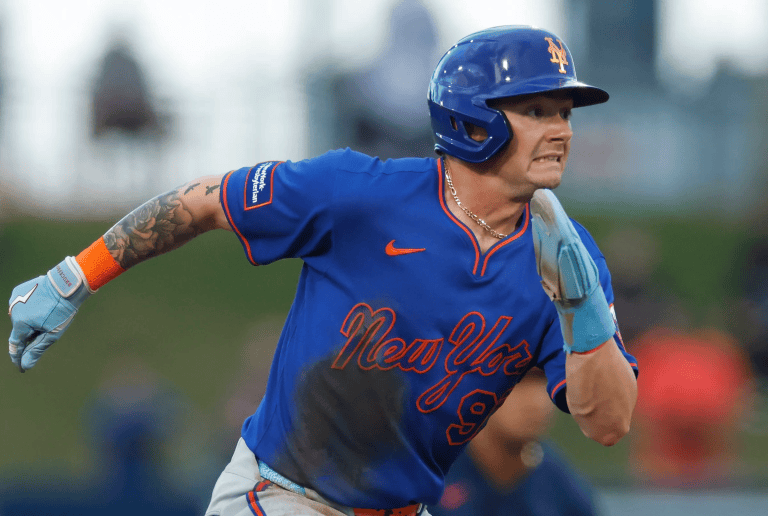
Mets rookie AJ Ewing makes bittersweet New York history in brutal Royals loss

By: @OOSSports

AJ Ewing

Talk about a brutal way to make baseball history.

New York Mets rookie A.J. Ewing delivered one of the most complete offensive games a player can have Tuesday night, but the final score turned his breakout performance into something far more painful. The Mets lost 16-12 to the Kansas City Royals at Citi Field, wasting a night that placed Ewing beside a Hall of Fame legend.

OptaSTATS shared on X, formerly Twitter, noting the Mets rookie outfielder and Joe Morgan are the only modern-era MLB players to produce the combination of offense in a loss.

“Only two MLB players in the modern era (since 1900) have done the following in a loss: 4-for-4 or better 4+ runs scored 1+ HR 1+ SB Those players are Joe Morgan for the Astros on July 8, 1965, and AJ Ewing for the Mets last night.”

That is an incredible individual achievement. It is also a perfect snapshot of how frustrating New York’s 2026 season has become.

Ewing did everything possible to push the Mets across the finish line. He went 4-for-4, reached base safely in every plate appearance, scored four runs, homered, stole a base, and gave New York the kind of dynamic offensive performance that should almost always lead to a win.

Instead, the Mets found another way to lose.

The Royals erased a 9-4 deficit, scored 12 unanswered runs at one point, and turned a wild night into another disaster for a New York pitching staff that has repeatedly failed to protect leads. Juan Soto also went deep for the Mets, but even that was not enough to overcome the bullpen collapse.

That is what makes Ewing’s history so bitter.

The stat line itself belongs in a museum. The team result belongs in a season-long autopsy.

Morgan’s historic game in 1965 came in a 9-8 Astros loss to the Milwaukee Braves in 12 innings. Ewing’s came 61 years later in a 16-12 Mets loss that felt like a full summary of New York’s year. Big offense. Young talent. Star power. Then pitching problems that erased all of it.

The Mets are now 38-54, buried at the bottom of the NL East, and facing a season that has already included a managerial change. Carlos Mendoza was fired in late June, Andy Green took over as interim manager, and the club still has not found a way to stabilize.

Tuesday’s loss only added another layer.

The Mets had never lost a home game when scoring 12 or more runs before this collapse. That kind of mark says plenty about how rare this game was. It also says plenty about how badly New York’s pitching staff let down an offense that produced enough to win most nights.

Ewing should still be the story, though.

For a rookie, this kind of game matters. It showed contact ability, power, speed, confidence, and a knack for impacting the game in different ways. Even in a loss, Ewing gave Mets fans a reason to look beyond the standings and see part of a future worth building around.

That does not make the loss easier. It may actually make it more frustrating.

When a 21-year-old rookie joins Joe Morgan in modern-era MLB history, that should feel like a franchise moment. Instead, it became another example of how the Mets have wasted individual brilliance during a disappointing season.

Ewing made history.

The Mets turned it into heartbreak.

And for New York, that might be the most 2026 Mets sentence possible.


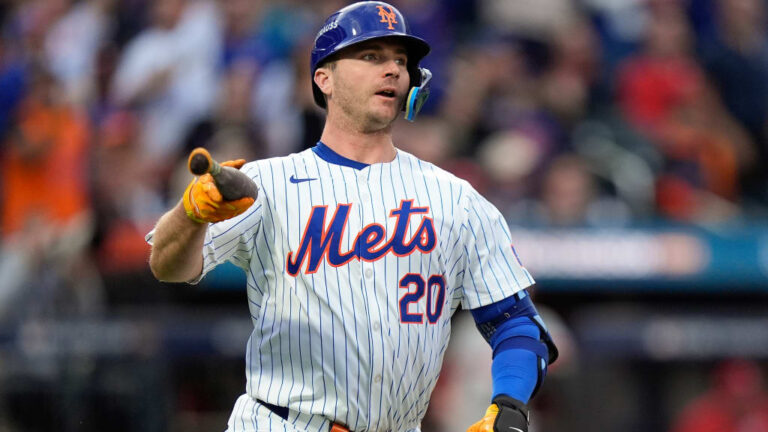
Pete Alonso closing in on Mets history

Pete Alonso is one swing away from rewriting the New York Mets record books.

The slugging first baseman launched his 251st career home run on Monday night, a three-run blast against the Cleveland Guardians that brought him within one of Darryl Strawberry’s all-time franchise mark.

Strawberry set the record of 252 home runs in 1,109 games from 1983–1990. Alonso, who debuted in 2019, has reached 251 in fewer than 1,000 games—a pace that underscores just how dominant he’s been since joining the league.

Alonso’s sixth-inning homer wasn’t just historic—it was also the spark that ignited a comeback effort for a struggling Mets offense. Trailing 5-0, the Mets finally got on the board thanks to Alonso’s swing. He went on to finish the night 4-for-5 with four RBIs.

He added an RBI single in the eighth inning that trimmed the deficit to one. In the ninth, with the bases loaded and a chance to end the game, Alonso struck out swinging.

“To be honest, it’d be more frustrating if we didn’t do anything,” Alonso told the New York Post’s Ryan Giancola. “If we just kind of lay down right there. So I think it would be more frustrating that way.”

Despite the missed opportunity, Mets manager Carlos Mendoza praised his first baseman’s performance.

“It’s a perfect night for Pete, all the way until that last at bat,” Mendoza said. “They threw fastballs by him there and they got him.”

Alonso’s pursuit of history comes at a critical time for the Mets, who are trying to stay in the postseason race. His production remains crucial—and with the franchise record now within reach, Mets fans have even more reason to stay locked in.

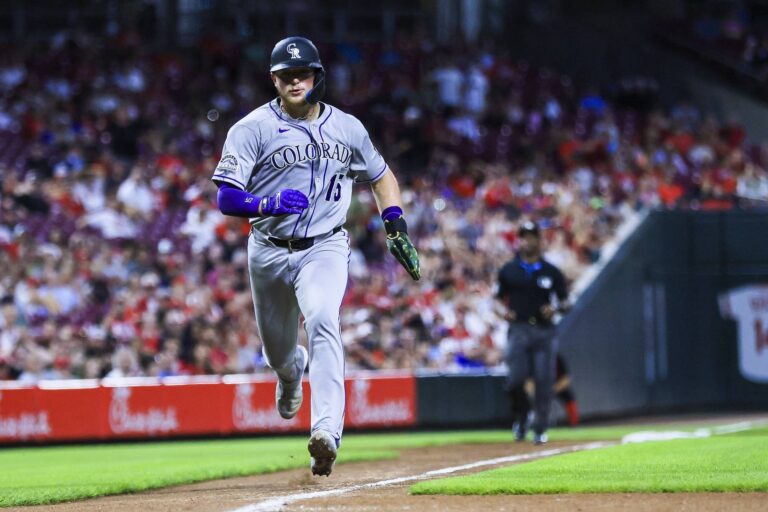
Rockies make INSANE MLB History against Pirates

The Colorado Rockies did what no team in Major League Baseball history had done before.

In a wild 17-16 victory over the Pittsburgh Pirates on Friday night at Coors Field, the Colorado Rockies became the first team ever to win a game after allowing 15 or more runs, surrendering a single inning of nine or more runs, and facing a deficit of at least nine runs in the same contest, according to OptaSTATS.

This improbable win wasn’t just a comeback—it was a defiance of baseball logic.

A Nightmare Start

The Rockies trailed 9-0 after the first inning.

Pittsburgh’s opening barrage included a grand slam from Oneil Cruz and a three-run homer from Andrew McCutchen, part of a nine-run frame that seemed to bury Colorado before it could blink.

By the eighth inning, the Pirates led 16-10. The game appeared finished.

The Comeback Begins

Colorado chipped away with runs in the middle innings, but the defining moment came in the bottom of the ninth. Down six, the Rockies erupted for five runs in a furious rally.

Hunter Goodman launched a 425-foot solo homer. Warming Bernabel ripped an RBI triple. Thairo Estrada knocked in another run. Then, with one out and a runner on, Brenton Doyle crushed a walk-off two-run homer—406 feet to left field—capping a stunning reversal.

Final score: Rockies 17, Pirates 16.

Previous high-scoring comeback wins, such as the Red Sox’s 19-17 win over Texas in 2008, did not include all three of those criteria. The Rockies’ performance stands alone.

Peak Coors Field

The 33 combined runs fit the narrative of Denver’s elevation-driven offensive outbursts. The thin air at Coors Field has long made it a launchpad for hitters, and Thursday’s game delivered yet another classic.

Observers online dubbed it “Peak Coors,” and for good reason.

A Rare Bright Spot

It’s been a difficult season in Denver. The Rockies became the first team to reach 50 losses before 10 wins earlier this year. Their record still sits among the worst in baseball.

But this win gave fans a reason to believe—and reminded everyone that even in a lost season, baseball has a way of delivering unforgettable moments.

League Context

The Rockies’ comeback was part of a rare offensive explosion across MLB. Aug. 1 featured three different games with 25+ combined runs—the first time that’s happened since June 23, 1930.

But no other team did what Colorado did. No one else won while giving up 15 runs, a 9-run inning, and trailing by nine runs.

Final Word

This wasn’t just a win—it was history.

It may not save the Rockies’ season, but it will live in MLB lore. A reminder that in baseball, the improbable is always possible.

Orioles crush Rockies 18-0 in largest shutout in history

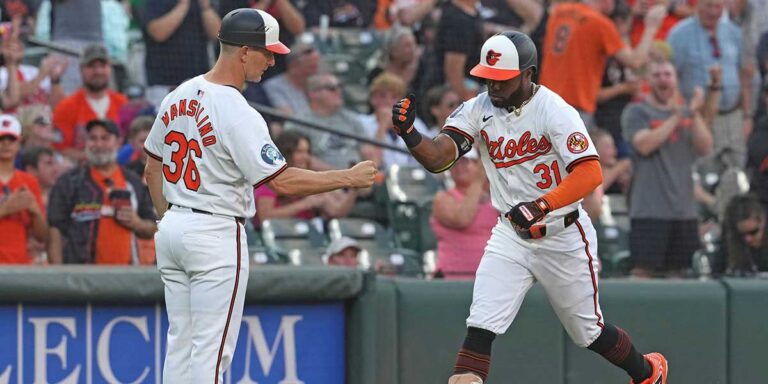
A July afternoon at Camden Yards turned historic as the Baltimore Orioles delivered a record-setting 18-0 blowout over the Colorado Rockies. It was the largest shutout in franchise history, surpassing a 17-0 win from 1969. Behind a dominant start from Trevor Rogers and an electric performance from the lineup, Baltimore gave fans a rare glimpse of complete dominance in a challenging season.

Rogers, acquired in a midseason trade, was flawless through seven innings. The left-hander allowed just one hit, walked none, and struck out five, shutting down a Rockies offense that never found its rhythm.

Gunnar Henderson led the offensive charge with three hits and two RBI, while Ryan O’Hearn added two hits and two RBI of his own. Tyler O’Neill homered for a second straight game and drove in three runs. Cedric Mullins delivered the signature moment of the afternoon, blasting his 100th career home run and finishing with three RBI. His diving catch in center field later in the game robbed Colorado of one of its few chances to break through.

The biggest eruption came in the seventh inning, when Baltimore sent 13 batters to the plate and scored nine runs without hitting a single home run. Coby Mayo came off the bench with a two-run single, and Alex Jackson added a solo blast to punctuate the rally.

Here’s how Baltimore’s offense performed:

Player AB R H RBI HR BB AVG
Jackson Holliday 6 1 2 0 0 0 .263
Jordan Westburg 5 2 1 1 0 0 .255
Gunnar Henderson 4 2 3 2 0 1 .281
Ryan O’Hearn 5 1 2 2 0 0 .282
RamĂłn Laureano 3 1 1 0 0 0 .273
Coby Mayo 1 1 1 2 0 1 .213
Colton Cowser 3 3 1 0 0 2 .217
Tyler O’Neill 2 3 2 3 1 2 .211
Alex Jackson 1 1 1 1 1 0 .304
Cedric Mullins 3 1 2 3 1 0 .219
Dylan Carlson 2 1 1 1 0 0 .231
Jacob Stallings 5 1 1 1 0 0 .134

In total, the Orioles posted 18 hits, 6 walks, and only 5 strikeouts. Every starter reached base, and six different players drove in at least one run. The Rockies committed two errors and cycled through five pitchers, none of whom could stop the bleeding.

With the trade deadline looming and Baltimore buried in the AL East standings, this win may not shift postseason odds. But it delivered something more meaningful to fans: a reminder of what the team can do when everything clicks.

It was a game of milestones, memories, and muscle. And it proved that even in a lost season, history can still be made.