The Big 12 did more than show up during the 2026 NBA Draft.
It owned the night.
The conference produced 13 total selections, the most by any league in this year’s draft and the Big 12’s highest single-draft total of the modern era, which dates back to 1966.
ESPN Insights highlighted the milestone on X, formerly Twitter, noting that the Big 12 had 13 players selected in the 2026 NBA Draft.
The Big 12 had 13 players selected, their most in a single draft in the Modern Draft Era (since 1966) 📈 pic.twitter.com/AWmqtTG2az
The record-breaking showing reflected the conference’s rising place in college basketball’s talent hierarchy. Programs such as BYU, Kansas, and Houston helped headline the surge, with the league dominating the first round and carrying that momentum into the second night in Brooklyn.
The top of the draft made the statement even louder.
AJ Dybantsa went No. 1 overall out of BYU, while Kansas star Darryn Peterson followed at No. 2. That gave the Big 12 the top two picks in the same draft, a historic marker for a conference that has steadily turned into one of college basketball’s strongest NBA pipelines.
The depth mattered just as much as the star power.
The Big 12’s 13 selections surpassed its previous high of 10, proving this was not just about two elite prospects carrying the conference’s reputation. The league sent talent throughout the draft, reinforcing the strength of its player development, recruiting reach, and competitive weekly grind.
For years, the Big 12 has carried a reputation as one of the toughest basketball conferences in America. The 2026 NBA Draft put hard numbers behind that claim.
The Barclays Center stage became a showcase for how much the league has grown. From top-end franchise prospects to later-round developmental bets, the Big 12 placed fingerprints across the entire draft board.
This class may be remembered as a turning point.
With Dybantsa and Peterson leading the way, the Big 12 did not just break a record. It sent a clear message about where NBA-ready talent is being built.
Thanks for reading. Make sure to check out the latest episode of the OutOfSightSports YouTube series, where we break down the five most intriguing prospects in the 2026 NBA Draft.
Scott Van Pelt said what many sports fans have been thinking for years.
During ESPN’s draft-night coverage, Van Pelt reacted to one of the strangest recurring traditions in modern sports: players ending up in the wrong team hat during one of the biggest moments of their lives.
The clip surfaced Wednesday on X, formerly Twitter, after Oh No He Didn’t shared the SportsCenter moment. In the video, Van Pelt appeared both amused and genuinely baffled by how often the same issue keeps happening.
“How hard is this to fix?!”
SVP on players wearing the wrong hat on draft night lmao
That line landed because the problem feels so avoidable.
Draft nights move fast. Trades happen. Picks shift. Broadcasts race to keep up. Still, for leagues that operate billion-dollar events with massive production crews, the wrong-hat moment continues to look oddly outdated.
The mistake matters because the hat photo becomes part of a player’s professional introduction. It is the image fans share, teams post, and players remember. When the wrong logo appears, the moment turns awkward fast.
Van Pelt’s reaction worked because it was direct, funny, and relatable. He did not overcomplicate it. He simply called out a small but persistent flaw that fans notice every year.
That is why the clip quickly resonated online. It was not just about one player or one mistake. It was about a recurring draft-night issue that somehow still has not been solved.
For a night built around dreams, precision, and presentation, Van Pelt’s question remains the obvious one.
How hard is the problem to fix?
Thanks for reading. Make sure to check out the latest episode of the OutOfSightSports YouTube series, where we break down the five most polarizing prospects in the 2026 NBA Draft.
The Minnesota Timberwolves may have one of the NBA offseason’s more fascinating trade packages if they decide to get aggressive around Anthony Edwards.
LeagueAlerts shared a post to Instagram, citing ClutchPoints’ Brett Siegel, that rival scouts believe the Timberwolves could package Julius Randle, Donte DiVincenzo, and the No. 28 pick to pursue an established All-Star talent to pair with Edwards. It is not a guarantee Minnesota will make that kind of move, but the idea signals how other evaluators view the Timberwolves’ offseason flexibility.
That matters because Minnesota is not operating like a rebuilding team. The Timberwolves have a franchise centerpiece in Edwards, a defensive foundation, and enough veteran salary to explore significant roster changes. The question is whether the front office believes this current version has already hit its ceiling or still has enough internal upside to justify patience.
Randle is the obvious centerpiece of any hypothetical package. He gives Minnesota proven scoring, physicality, rebounding, and half-court creation. However, his salary also makes him a logical trade-matching piece if the Timberwolves chase a higher-end star. In the modern NBA, salary structure matters almost as much as talent when teams explore major trades.
DiVincenzo would also carry value in that type of framework. He is a playoff-tested guard who can shoot, defend, move without the ball, and fit into different lineup combinations. For a team trading away an All-Star, a useful rotation player like DiVincenzo can make a package more realistic than one built only around contracts and draft assets.
The No. 28 pick gives the Timberwolves another lever. Late first-round selections do not usually headline blockbuster deals, but they still matter. They give trade partners a cost-controlled prospect, flexibility on draft night, or another asset that can be moved in a larger construction.
The bigger issue is the target.
Minnesota would not make this type of move simply for the sake of making one. If the Wolves put Randle, DiVincenzo, and a first-round pick on the table, the return would need to clearly raise their ceiling around Edwards. That likely means a player who can create offense, defend at a high level, or solve a specific postseason weakness.
Edwards is the reason this conversation exists. The Timberwolves have to build with urgency because he is already good enough to anchor a serious contender. When a team has a player like Edwards, every offseason becomes about maximizing the window before roster costs, injuries, and missed opportunities start closing doors.
Still, Minnesota has to be careful. Randle and DiVincenzo are not throw-in pieces. Moving both would change the Timberwolves’ depth, shot creation, and offensive balance. If the All-Star return is not a clean fit, the Timberwolves could risk creating a different problem while trying to solve the biggest one.
That is why this rumor is less about one specific trade and more about Minnesota’s direction. The Timberwolves can stay patient, keep their core intact, and use the No. 28 pick to add another young piece. They can atry to place another established star next to the former Georgia standout.
Either path comes with risk.
But if rival scouts are already viewing Randle, DiVincenzo, and the No. 28 pick as a realistic All-Star trade framework, the Timberwolves may be one of the most compelling teams to watch as the offseason unfolds.
Minnesota has the star. Now comes the harder part.
Finding the move that turns Edwards’ era from promising to championship-level.
For more NBA Draft and offseason coverage, watch the full OutOfSightSports 2026 NBA Lottery Mock Draft on YouTube and subscribe for more trade rumors, prospect breakdowns, and roster-building stories.
The Washington Wizards officially won the biggest prize of the NBA offseason.
During Sunday’s 2026 NBA Draft Lottery in Chicago, the Wizards secured the No. 1 overall pick after finishing the season tied for the league’s worst record at 18-64.
The result marks the first time under the current lottery system that the team with the NBA’s worst record successfully landed the top overall selection after seven straight failures.
Wizards headline surprising top four
The final top four featured several unexpected jumps.
The Utah Jazz landed the No. 2 overall pick despite entering with tied fourth-best odds. The Memphis Grizzlies jumped to No. 3, while the Chicago Bulls secured the fourth pick.
Meanwhile, the Indiana Pacers and Brooklyn Nets—both tied with Washington for the best odds entering the night—dropped to fifth and sixth.
For Indiana, the lottery outcome carried additional consequences. Because the Pacers failed to move into the top four, their first-round pick transfers to the Los Angeles Clippers as part of the Ivica Zubac trade completed earlier this season.
Wizards positioned to accelerate rebuild
Washington now sits in position to add a franchise-changing prospect to a roster that already underwent major transformation this season.
The Wizards aggressively reshaped the roster during the year by acquiring Trae Young and Anthony Davis, moves designed to accelerate the organization’s rebuild and return to contention.
“It’s our fans that have endured the most,” Wizards executive Michael Winger said. “And to me, this No. 1 pick is for them. It’s a reward for hanging in there with us. It’s a reward to continue to support us despite sometimes really bad basketball. They knew and they supported a multiyear teardown, a multiyear reinvention of the franchise.”
Loaded draft class draws massive attention
The 2026 class is widely viewed as one of the strongest in recent years.
AJ Dybantsa and Darryn Peterson have emerged as the leading candidates for the No. 1 overall pick throughout the season.
Dybantsa averaged 25.5 points per game at BYU, becoming the first freshman to lead the nation in scoring since Trae Young in 2018. Peterson, meanwhile, averaged 20.2 points per game at Kansas despite missing significant time because of injuries.
The class also includes elite forward prospects such as Cameron Boozer and Caleb Wilson, along with a deep group of guards featuring Darius Acuff Jr., Kingston Flemings, Mikel Brown Jr., and Keaton Wagler.
NBA lottery changes looming
Sunday’s lottery may also mark the final year of the NBA’s current system.
The league is expected to vote later this month on major changes designed to reduce the effectiveness of tanking after multiple seasons saw teams aggressively positioning themselves for elite draft classes.
For now, though, the focus belongs to Washington.
The Wizards endured another difficult season, but they now control the top pick in a draft many around the league believe can reshape a franchise for the next decade.
Thanks for reading. Make sure to check out the latest episode of the OutOfSightSports YouTube series below for more coverage, analysis, and the latest updates across the sports world.
The Golden State Warriors may have struck gold late in the 2025 NBA Draft.
Guard Will Richard, selected 56th overall out of the University of Florida, is making a strong case as Golden State’s biggest Summer League success—and possibly the only player on the roster ready to push for real NBA minutes right away.
Through six games between the California Classic and Las Vegas Summer League, Richard leads the team in minutes (23.9), scoring (11.5 points), and steals (1.7) per game. While his three-point shot is still finding consistency (20.7 percent), his inside-the-arc efficiency (63.3 percent) and near-perfect free-throw shooting (92.9 percent) suggest real scoring tools.
His overall field goal percentage has climbed as the weeks have gone on. After a rocky 9-of-26 start in the California Classic, Richard is now shooting 48.5 percent in Vegas—80 percent inside the arc.
“It’s clear he’s starting to look a little more comfortable,” Summer League coach Lainn Wilson said this week in Las Vegas, per NBCS Sports Bay Area’s Monte Poole.
What makes Richard especially valuable is his energy and defensive versatility. At 6-foot-4 with a 6-foot-10 wingspan, he brings length and toughness that the NBA roster lacks—especially with Gary Payton II still unsigned and De’Anthony Melton working back from injury.
Golden State’s limited cap space puts an even brighter spotlight on young players. With Stephen Curry, Draymond Green, and Jimmy Butler III combining for over 80% of the team’s payroll, the Warriors are counting on rookie-scale talent like Richard to provide real impact.
The front office is still exploring options—Al Horford has been mentioned as a potential veteran addition—but it’s clear Richard is already playing himself into the conversation for a roster spot.
His two-way potential, poise, and college experience (105 starts at Florida) make him a strong candidate to earn rotation minutes under Steve Kerr. For a team with minimal flexibility and limited depth at point-of-attack defense, Richard might be more than a feel-good Summer League story—he might be a keeper.
Every team in the Southwest division is having a great offseason. All 5 NBA teams have created a distinct gap from their goals and identity now (2025-26), compared to the previous season (2024-25). Let’s go over the Southwest division season so far.
Memphis Grizzlies
The Grizzlies and the Magic had the very first trade of the offseason:
Grizzlies Receive: Kentavious Caldwell Pope, Cole Anthony (gone), Four UNPROTECTED first round picks (2025, 2026, 2028, 2030) and a 2029 top 2 protected first sound pick swap. That 2025 pick ended up being Cedric Coward.
Magic Receive: Desmond Bane
I give this trade a strong B+. KCP would give them the needed perimeter defense. But taking on that contract for the production he’ll give you is certainly a con of this trade. However, getting five first round picks and drafting two-way rebounding forward Cedric Coward is what makes them the winners of this trade. Aside from the trade, what offseason signings have they made, and who did they let walk?
Category
Player(s)
🔁 Trades In
Kentavious Caldwell-Pope, Cole Anthony, Marvin Bagley III, Cedric Coward, four first round draft picks
🔁 Trades Out
Desmond Bane, Marcus Smart, Jake LaRavia, Yang Hansen
📝 Signings
Jock Landale, Lamar Stevens, Zyon Pullin (Two-way), Ty Jerome
✍️ Extensions
Cam Spencer, Santi Aldama
🧑🎓 Draft Picks
Javon Small (#48), Will Richard (#56)
❌ Departures
Luke Kennard, David Roddy, Johnny Davis
I think overall, the Grizzlies deserve a B this offseason; they got better as a team and better trade assets, but not anything that would move the needle much further.
New Orleans Pelicans
The Pelicans made a trade to acquire Jordan Poole, Saddiq Bey, and the draft rights to Micah Peavy. They sent the Wizards CJ McCollum, Kelly Olynyk, draft rights to Mojave King, and a future second-round pick. Pairing up Jordan Poole and Zion Williamson for the foreseeable future will be must-see entertainment. This pairing should put Poole in conversations for potential Most Improved Player talks. Moving McCollum for a younger promising guard was certainly a move that will help them push for a potential top 8 seeding in the west. Let’s look at the offseason acquisitions and departures so far.
Herb Jones (3-year, $68M extension with player option)
1
Departures
Brandon Ingram (traded), Antonio Reeves, Jalen Crutcher, Javonte Green, Trey Jemison III (waived), Bruce Brown
Trades
Jordan Poole, Saddiq Bey (acquired)
The Pelicans have had the most underrated offseason so far. Extending elite 3&D wing Herb Jones and drafting 2 of the top 10 players in this year’s draft class are S-tier moves. The Pelicans deserve an A- currently. Though they are still not contenders, their roster has improved greatly.
Houston Rockets
The largest trade ever was the 7-team Kevin Durant trade.
Although it was a 7-team trade, the Rockets individually traded with the Suns to acquire KD. They sent out Jalen Green, Dillon Brooks, a 2025 first (Khaman Maluach) and five second round picks. With that trade, they’ve also made more signings and have let people walk.
Category
Player(s)
Acquisitions
Kevin Durant, Clint Capela
Re-signings
Fred VanVleet (2 yrs, $50M), Steven Adams (3 yrs, $39M)
The Rockets deserve a A+ for the offseason, although they let Cam Whitmore go, they still brought in Kevin Durant and Dorian Finney Smith who is a premier 3&D wing and locked in their best role players to re-signings and extensions.
Dallas Mavericks
After trading Luka Doncic, miraculously they won the Cooper Flagg sweepstakes and attained the first overall pick in the 2025 NBA Draft.
Category
Player(s)
Signings
Ryan Nembhard (2-way), Miles Kelly (2-way), Kylor Kelley (2-way) Dante Exum
Re-signings
Brandon Williams (rest-of-season contract)
Extensions
Daniel Gafford (3 yrs, $54M)
1
, Jaden Hardy (3 yrs, $18M)
1
Trades
Received: Anthony Davis, Max Christie, 2029 1st-round pick Sent: Luka Dončić, Maxi Kleber, Markieff Morris (to Lakers)
Received: Caleb Martin (from 76ers) Sent: Quentin Grimes, draft considerations
Departures
Luka Dončić, Maxi Kleber, Markieff Morris, Quentin Grimes
The Mavericks haven’t made many offseason moves but that’s reasonable because they already have a championship level roster. Now with the addition of Cooper Flagg, they are poised to be a top 3 seed in the Western Conference. The league has been put on notice.
San Antonio Spurs
The Spurs have the best young core in the league:
– Victor Wembanyama
– Stephon Castle
– Dylan Harper
– Carter Bryant
– Jeremy Sochan
– Keldon Johnson
– Devin Vassell
It’s hard not to look at this list and not be worried for the rest of the league in about 3-5 years. Although they still can’t contend for a title or even a playoff spot, they have had a terrific offseason.
Category
Player(s)
Signings
Luke Kornet (1-year deal), Jordan McLaughlin (1-year deal), Harrison Ingram (2-way), David Duke Jr. (2-way)
Re-signings
Tre Jones (3-year deal)
Extensions
Devin Vassell (5 yrs, $146M), Keldon Johnson (4 yrs, $74M)
Trades
Received: De’Aaron Fox, Harrison Barnes Sent: 2027 1st-round pick
Departures
Chris Paul, Bismack Biyombo, Sandro Mamukelashvili (all UFAs)
The Spurs do have a logjam in the guard position, but this could work for their benefit due to the play style diversity. Signing Luke Kornet to put next to Wembanyama will put the paint on lock. It will be very difficult to score on them because of this. They also have the personnel to switch on to different defenders. I give the Spurs an A for the offseason they are having.
Conclusion
The offseason for the Southwest division has been great. Is there more to come or could this be it?
The 2025 NBA Draft landscape has been significantly shaped by the evolving dynamics of college basketball, particularly the influence of Name, Image, and Likeness (NIL) deals. With the deadline for players to withdraw from the NBA draft and retain college eligibility now passed, several notable prospects have chosen to return to college, altering the depth and composition of this year’s draft class.
Players like Michigan’s Yaxel Lendeborg, Alabama’s Labaron Philon, and Auburn’s Tahaad Pettiford have opted to capitalize on lucrative NIL opportunities, providing them with financial incentives to continue their collegiate careers. This shift has led to a draft class that, while still rich in talent, presents a different landscape compared to previous years.
Despite these changes, the 2025 NBA Draft remains a pivotal event, with teams looking to secure the next generation of basketball stars. Our Mock Draft 2.0 delves into the potential selections and strategic moves teams might make, highlighting the prospects poised to make an immediate impact in the league.
1. Dallas Mavericks – Cooper Flagg, F, Duke
The Dallas Mavericks, defying the odds with a 1.8% chance, secured the first overall pick and are expected to select Duke’s Cooper Flagg. Flagg has been the consensus top prospect, showcasing exceptional versatility, defensive prowess, and a high basketball IQ. His ability to impact the game on both ends of the floor makes him an ideal fit for the Mavericks, who are looking to build a new era post-Luka Doncic. Pairing Flagg with veteran Anthony Davis provides Dallas with a formidable frontcourt, blending youth and experience.
2. San Antonio Spurs – Dylan Harper, G, Rutgers
The Spurs, continuing their trend of acquiring top-tier young talent, are projected to pick Rutgers’ Dylan Harper. Harper’s dynamic playmaking and scoring ability complement the Spurs’ existing backcourt, featuring De’Aaron Fox and Stephon Castle. His versatility allows him to adapt to various roles, making him a valuable asset as the Spurs aim to return to playoff contention.
3. Philadelphia 76ers – Ace Bailey, F, Rutgers
Philadelphia, despite speculations of trading this pick, stands to benefit from selecting Ace Bailey. Bailey’s scoring acumen and athleticism address the 76ers’ need for offensive firepower. His potential to develop into a two-way player adds depth to a roster that has struggled with injuries and consistency in recent seasons.
4. Charlotte Hornets – V.J. Edgecombe, G, Baylor
The Hornets are in dire need of perimeter scoring, and Baylor’s V.J. Edgecombe fits the bill. Known for his athleticism and defensive tenacity, Edgecombe brings energy and versatility to Charlotte’s backcourt. With LaMelo Ball’s injury history, Edgecombe’s ability to handle the ball and create plays adds a layer of security and dynamism to the team’s offense.
5. Utah Jazz – Jeremiah Fears, G, Oklahoma
Utah’s selection of Jeremiah Fears reflects a strategic move to bolster their backcourt. Fears’ quickness, scoring ability, and defensive potential make him a promising prospect. The Jazz are betting on their coaching staff’s ability to refine his three-point shooting and decision-making, aiming to develop him into a cornerstone of their rebuilding efforts.
6. Washington Wizards – Derik Queen, C, Maryland
The Washington Wizards are in a full-scale rebuild and need foundational pieces to complement their recent draft picks. Enter Derik Queen, a bruising yet nimble big man out of Maryland. Queen reunites with childhood friend Bub Carrington in Washington, which adds a layer of familiarity and chemistry to their young core. Standing at 6’10” with a solid frame, Queen brings an old-school interior presence but has also showcased a modern offensive toolkit that includes mid-range shooting and passing out of the post.
He complements Alex Sarr exceptionally well—Sarr thrives on mobility and perimeter defense, while Queen can dominate the paint, clean the glass, and establish low-post positioning. Together, they could form one of the more intriguing young frontcourt tandems in the league. While his athletic ceiling might not be sky-high, Queen’s feel for the game and polished interior footwork could make him an immediate contributor for the Wizards, who desperately need reliability down low.
7. New Orleans Pelicans – Khaman Maluach, C, Duke
Khaman Maluach’s size alone makes him a tantalizing NBA prospect. Measuring nearly 7-foot-1 without shoes and armed with length and mobility, he’s a shot-blocking force with untapped potential. The Pelicans, who drafted Yves Missi just last year, are unlikely to pass up on Maluach’s ceiling. Still just 18 and turning 19 this fall, Maluach is far from a finished product, but he has the tools to be special.
The Pelicans are in a bit of a flux as they continue to explore options with their current core of Zion Williamson and Brandon Ingram. Maluach adds a new dimension—he’s a rim protector who doesn’t clog the lane offensively, and his developing jump shot offers hope that he could become a stretch five in due time. It’s a pick for the future, but with enough upside to get fans in New Orleans excited about their long-term prospects.
8. Brooklyn Nets – Kon Knueppel, G, Duke
The Nets go for one of the safest picks in the draft with Kon Knueppel, arguably the best pure shooter in this class. After a tumultuous season filled with injuries and instability, Brooklyn needs a floor-spacer who can play off the ball and stretch defenses. Knueppel’s high basketball IQ, shooting versatility, and calm demeanor under pressure make him a perfect fit.
His game might lack the athletic flash of other prospects, but Knueppel is an efficient scorer who knows his role. He shot over 40% from three during his freshman year at Duke and has the strength to handle physical NBA defenders. With Brooklyn in rebuild mode and likely exploring trade packages for their surplus of picks, Knueppel is a player who could immediately help the team’s offensive structure, regardless of whether the roster stays the same or changes significantly.
9. Toronto Raptors – Tre Johnson, G, Texas
Tre Johnson brings microwave scoring ability to the Toronto Raptors—a franchise that’s looking for young stars to develop around Scottie Barnes. Johnson isn’t a perfect prospect, but he has one of the highest offensive upsides in the class. A pure scorer from all three levels, he can create his own shot and is fearless when it comes to attacking defenders.
Though defense and efficiency are areas he’ll need to improve, Johnson’s offensive ceiling is too good for the Raptors to pass on. He can start off as a sixth man while growing into a bigger role. The Raptors have a strong player development program, and if Johnson buys in, he could become a dynamic guard who shifts the culture in Toronto.
With a surplus of young talent, the Rockets can afford to take a flyer on high-upside international guard Kasparas Jakucionis. Though he only shot 31.8% from three at Illinois, his court vision and size (6’6″) give him a unique profile as a jumbo playmaker. Jakucionis has drawn comparisons to Tyrese Haliburton due to his unorthodox but effective offensive flow.
Houston doesn’t need an immediate contributor but would benefit from grooming Jakucionis behind Fred VanVleet and pairing him in practice with last year’s standout, Reed Sheppard. While he’s a bit of a project, Jakucionis offers the combination of length, vision, and poise that’s increasingly valuable in today’s NBA. If the shooting comes around, he could be a major steal at this point in the draft.
11. Portland Trail Blazers – Collin Murray-Boyles, C, South Carolina
The Trail Blazers are clearly still in rebuilding mode, and they continue their strategy of selecting high-upside, high-risk prospects with Collin Murray-Boyles. The South Carolina big man is raw but extremely intriguing. He’s a physical specimen—athletic, strong, and surprisingly nimble for his size. Portland has a recent history of investing in developmental players, and Murray-Boyles fits that mold perfectly.
His jump shot is far from reliable, but the Trail Blazers are confident they can turn him into at least a league-average floor spacer. He’s a shot-blocking presence and a rim-runner, both traits Portland could use in their frontcourt. If the shooting ever catches up, he could become a dominant two-way player. With Scoot Henderson and Shaedon Sharpe forming the backcourt of the future, adding a defensive-minded, athletic big man is a sensible move.
12. Chicago Bulls – Noa Essengue, F, Ratiopharm Ulm, France
Chicago has been hovering in NBA purgatory for several seasons—never quite bad enough to tank, but nowhere near contention. Noa Essengue could be the beginning of a new direction. The French forward brings length, defensive potential, and a motor that never stops. He’s the type of player who thrives in transition and provides energy off the bench immediately.
Essengue is still learning the game at a high level, but he has a natural feel on defense, often disrupting passing lanes and protecting the rim. His offensive game needs refinement, particularly his shooting mechanics, but if the Bulls are patient, they may be rewarded with a versatile two-way forward. In a weak forward market, Essengue stands out as one of the more intriguing long-term plays.
13. Atlanta Hawks – Danny Wolf, F, Michigan
With Clint Capela likely on his way out and Onyeka Okongwu transitioning into a full-time starting role, the Hawks use this pick to add frontcourt depth. Danny Wolf may not be a traditional big man, but his skill set fits the modern NBA. At 6’10.5”, he has legit stretch-four potential with range extending beyond the three-point line.
Wolf’s passing is what separates him—he has excellent vision for a big and can facilitate offense from the high post. While his athleticism is below average, his basketball IQ and offensive versatility make him a valuable asset. Atlanta’s offense has been stale at times, and Wolf could help unlock new looks, particularly in lineups with Trae Young or Jalen Johnson.
14. San Antonio Spurs – Carter Bryant, F, Arizona
The Spurs double down on upside with Carter Bryant, a long, raw wing out of Arizona. Bryant doesn’t have the polish of other lottery picks, but he’s dripping with potential. Standing at 6’8” with a plus wingspan and a smooth shooting stroke, Bryant is the kind of swing the Spurs have historically been good at developing.
With Victor Wembanyama anchoring the franchise, San Antonio can afford to be patient with prospects like Bryant. His frame suggests he could guard multiple positions, and if his offensive game matures, he could become a starting-caliber forward in a few years. In a wing-hungry league, this is a high-upside pick late in the lottery.
15. Oklahoma City Thunder – Thomas Sorber, C, Georgetown
What do you give the team that has everything? For the Thunder, the answer is depth and versatility, especially in the frontcourt. Thomas Sorber fits the Thunder’s defensive identity perfectly. With a 7’6” wingspan and a 6’10.5” frame, Sorber is a physical, tough-nosed center who excels on defense and on the boards.
He’s not just a shot blocker—Sorber can switch onto guards, hold his own in the post, and even make smart passes out of double teams. He’s showcased soft hands and potential touch around the rim, making him a potential two-way threat. For a team on the verge of championship contention, Sorber’s readiness and defensive prowess make him a perfect complementary piece.
16. Orlando Magic – Jace Richardson, G, Michigan State
Orlando continues its pursuit of perimeter scoring by adding Jace Richardson. The Magic have focused heavily on length and defense in recent drafts, but Richardson is a pure shooter who can stretch the floor and play off Paolo Banchero and Franz Wagner. His height (6’3”) may not wow anyone, but his shooting mechanics and on-ball defense are strong.
Richardson moves well without the ball and is confident spotting up from deep. While his playmaking is still a work in progress, his defensive engagement and shot-making ability make him a nice fit in Orlando’s rotation. He’s one of the safer bets in this range due to his shooting and intensity.
17. Minnesota Timberwolves – Nolan Traore, G, Saint-Quentin, France
With Mike Conley nearing the end of his career, the Timberwolves take a smart gamble on French point guard Nolan Traore. He’s still just 18, but his feel for the game, smooth handle, and creative passing are undeniable. Traore has already faced professionals in France, giving him an edge in terms of maturity and experience.
He’ll need time to adjust to NBA speed and improve his outside shot, but Minnesota is in a great position to bring him along slowly. Backing up Conley and potentially taking over down the road, Traore could be the next international success story in a Wolves uniform.
18. Washington Wizards – Egor Demin, G, BYU
Demin is a mystery box with tantalizing potential. At 6’9.5” with guard skills, he offers an unusual blend of size and vision that few players possess. Though he had an inconsistent year at BYU, the flashes were enough to intrigue scouts and GMs.
The Wizards, in full rebuild mode, can afford to swing on upside. Demin will need significant development, particularly in scoring efficiency and decision-making, but if he puts it together, he could be a unicorn-style guard-forward hybrid. His height alone gives him defensive switchability and rebounding potential.
After missing time due to an ankle injury, Liam McNeeley rebounded with a strong combine showing, reasserting himself as a first-rounder. McNeeley is a versatile wing who can shoot, pass, and defend multiple positions. Brooklyn, with four first-round picks, uses this one to bolster their wing depth with a plug-and-play contributor.
He may not become a star, but his high floor and adaptability make him a safe pick. As the Nets begin to retool their roster, McNeeley could step in and contribute right away as a glue guy.
20. Miami Heat – Nique Clifford, G, Colorado State
Clifford screams “Miami Heat culture.” He’s disciplined, gritty, and does all the little things well. At 6’6” with a strong frame, Clifford is a tenacious on-ball defender who’s also developed into a reliable three-point shooter.
With Jimmy Butler aging and Tyler Herro’s future unclear, Miami can use a guard like Clifford who thrives in pressure situations. He’s likely to find minutes early in his career, and it wouldn’t be surprising if he becomes a Heat rotation mainstay in short order.
21. Utah Jazz – Ben Saraf, G, Ratiopharm Ulm, Israel
Ben Saraf enters the NBA with the kind of international seasoning that has helped players like Luka Dončić and Josh Giddey transition smoothly. A 6’6” left-handed guard with a high IQ and a crafty game, Saraf has already shown promise against pro competition in Europe. Utah grabs him as part of their continuing rebuild, hoping he can grow into a foundational piece.
Saraf’s vision and composure make him a potential long-term answer at point guard. Though he’s not elite athletically, his size helps him make plays in the half-court and defend bigger guards. The Jazz have had a revolving door at the point, and Saraf gives them a young, cost-controlled option with significant upside if the shooting develops.
22. Atlanta Hawks – Joan Beringer, C, Cedevita Olimpija, France
This is one of the biggest gambles of the first round. Joan Beringer, a former soccer player turned basketball project, is still very raw—but at 6’11” with agility and great instincts, he’s worth the risk. The Hawks are looking for long-term frontcourt reinforcements, and Beringer’s upside on defense is enormous.
He’s got a nose for blocking shots, switches well for a big man, and plays with a competitive fire. Offensively, he’s still catching up, but the framework of a rim-runner and offensive rebounder is already there. In a couple of years, this pick could be viewed as a steal—or a bust—but the risk is justified this late in the first round.
23. Indiana Pacers – Asa Newell, F/C, Georgia
Newell’s slide stops here, and it might be the perfect landing spot. The Pacers don’t need him to be a star right away—they just need his athleticism and energy off the bench. Newell is a springy forward who rebounds, defends, and can run in transition. His motor is relentless, and in Indiana’s fast-paced system, he’ll thrive in short bursts.
While his offensive game needs refinement (especially his shot), the Pacers have the depth and development staff to be patient. He’s a great insurance policy for Indiana’s frontcourt and could become a rotation piece as he learns to harness his tools.
24. Oklahoma City Thunder – Rasheer Fleming, F, Saint Joseph’s
This is the kind of pick that championship teams make—smart, versatile, and ready to contribute. Rasheer Fleming isn’t a flashy name, but his combination of size (6’9.5”), length (7’5” wingspan), and shooting touch makes him an ideal fit for OKC’s system. He plays with grit, defends multiple positions, and can space the floor.
For the Thunder, who have already built one of the league’s deepest rosters, Fleming provides low-maintenance, two-way production. He fits right in with their defensive mindset and should be able to guard both forward spots. He’s also shown the ability to hit from deep, making him a rare 3-and-D big.
25. Orlando Magic – Maxime Raynaud, F/C, Stanford
Raynaud was one of the most improved players in college basketball last year, and his game is NBA-ready. A 7-footer who can shoot the three, defend pick-and-rolls, and rebound effectively, Raynaud gives the Magic much-needed frontcourt depth behind Wendell Carter Jr., who has had trouble staying healthy.
He isn’t flashy but makes the right plays, spaces the floor, and sets solid screens—think of him as a stretch five with a high basketball IQ. In a draft thin on true bigs, getting a polished contributor like Raynaud at 25 is great value for the Magic.
Picks 26–30 Recap
26. Brooklyn Nets – Walter Clayton Jr., PG, Florida
After making a name for himself in the NCAA tournament, Clayton’s stock rose significantly. The Nets capitalize on his microwave scoring and confidence in isolation settings. While he may not have elite size or defense, he knows how to get buckets, especially in clutch moments.
Clayton can be an excellent bench scorer for Brooklyn, who needs playmakers and floor spacers in their rebuild. His ability to hit tough shots off the dribble will be an asset in tight games, and he has the mindset of a closer, which can’t be taught.
27. Brooklyn Nets – Cedric Coward, G, Washington State
This is a high-upside pick based almost entirely on combine performance and potential. Coward, who played just six games due to injury, surprised scouts with his athleticism—boasting a 7’2” wingspan and a 38.5” vertical. He also shot the ball well, both off the dribble and in spot-up situations.
The Nets, having a surplus of picks, can afford to swing for the fences. Coward offers rare defensive tools on the wing and has shown glimpses of offensive polish. If healthy, he could develop into a two-way menace. Think of him as a project who could yield major dividends.
28. Boston Celtics – Noah Penda, F, Le Mans, France
The Celtics don’t often pick this late without already having a deep, veteran-heavy roster. So it makes sense they target Penda, a role player who thrives on hustle, defense, and effort. He’s 6’7”, versatile, and not afraid to do the dirty work.
While Penda’s offensive game is raw—especially his jump shot—his basketball IQ and ability to fit into team schemes make him a nice stash-and-develop option. Boston needs cheap, reliable rotation pieces due to cap constraints, and Penda could be one in 1–2 years.
29. Phoenix Suns – Hugo Gonzalez, G/F, Real Madrid, Spain
A classic draft-and-stash candidate, Gonzalez is a long-term project. He’s physically ready—standing 6’8” with elite agility—but lacks polish on both ends of the court. He’s shown enough flashes to stay on draft boards, especially in terms of shooting and transition play.
For Phoenix, who desperately need youth and upside, Gonzalez represents a low-risk, high-reward investment. Whether they have the patience to wait on him is another question, but the talent is undeniable. If he’s developed properly, he could become a rotational wing in 2–3 years.
30. Los Angeles Clippers – Drake Powell, G, North Carolina
Powell was somewhat hidden in UNC’s system, but scouts have long loved his defensive tools and effort. At the combine, he turned heads with a 43” vertical and a seven-foot wingspan. He’s a glue guy who can defend 1–3 and rebound well for a guard.
The Clippers are aging quickly and need an injection of youth, particularly on the wing. Powell isn’t going to wow anyone with scoring, but his effort, IQ, and defensive capabilities make him an immediate asset off the bench. He could eventually be a Marcus Smart-type impact player if his offense develops.
Conclusion
The 2025 NBA Draft highlights a league at the intersection of tradition and transformation. With NIL reshaping the college landscape and a deeper emphasis on versatility and defense, teams have been forced to adjust their strategies. While this class may lack generational superstar depth beyond Cooper Flagg, it offers an abundance of solid role players and developmental prospects.
Organizations like the Thunder and Nets took advantage of multiple picks, while teams like the Mavericks and Spurs made foundational selections. As always, the draft is only the beginning—the true measure of success will be how these players grow within their new homes.
FAQs
1. How has NIL influenced the 2025 NBA Draft? NIL deals have allowed college stars to delay NBA entry for financial and developmental reasons, thinning out the draft class depth but increasing the readiness of those who do declare.
2. Which teams had the most impactful draft picks? Oklahoma City and Brooklyn stood out for volume and quality, while Dallas and San Antonio may have landed franchise-altering players in Cooper Flagg and Dylan Harper.
3. Are there any notable international prospects in this draft? Yes, players like Kasparas Jakucionis, Noa Essengue, Ben Saraf, and Joan Beringer represent a strong international presence, many with pro experience abroad.
4. How did the combine affect player draft stocks? Several players—like Cedric Coward, Liam McNeeley, and Drake Powell—boosted their stock significantly with standout combine performances.
5. What are the expectations for the top 5 picks? Cooper Flagg is expected to be an immediate star, while Harper, Bailey, and Edgecombe bring major upside and versatility to teams in transition.
One of the defining strengths of Jeremiah Fears is his advanced ability to penetrate defenses and finish around the basket. His 56.4% two-point field goal percentage is a clear indicator of his effectiveness as a slasher, and his impressive 64.0% scoring rate out of pick-and-roll scenarios highlights his efficiency when operating as a primary ball-handler.
Fears consistently showcases an elite ability to change pace and direction. His footwork and timing allow him to keep defenders off-balance, and once he gets into the paint, he displays remarkable touch and creativity. He’s adept at using euro-steps, hesitation moves, and floaters to get around rim protectors. Despite his lighter frame, he demonstrates a fearlessness in attacking the basket, often absorbing contact and finishing acrobatically.
Furthermore, his 85.1% free-throw shooting underscores his ability to draw fouls and convert when he gets to the line. He doesn’t shy away from physicality and consistently forces defenders to react to his aggression. This combination of aggression, touch, and body control makes him one of the most dangerous young guards in transition and in half-court slashing situations.
This slashing ability is complemented by his knack for capitalizing on broken plays and transition opportunities. In the open floor, his acceleration allows him to separate from defenders quickly. Once he’s downhill, it’s difficult to contain him without sending help, which opens up passing lanes for teammates.
Jeremiah Fears’ slashing and rim-finishing prowess are cornerstones of his offensive arsenal. These traits will translate effectively at the NBA level, particularly in systems that rely on guard penetration to collapse defenses and create open looks.
Isolation Scoring and Pick-and-Roll Mastery
Another area where Jeremiah Fears shines is in isolation and pick-and-roll situations. He thrives when given the ball with space to operate. During the 2024-25 season, he shot 45.7% in pick-and-roll ball-handler situations and 41.5% in isolation, elite marks for a college freshman. These stats not only highlight his scoring efficiency but also underline his ability to manipulate defenders with poise and control.
In the pick-and-roll, Fears displays a veteran-level feel. He knows how to read the defender on the screen, whether to snake the dribble into the paint, pull up for a midrange jumper, or hit the roller or weakside shooter. His footwork and understanding of angles make him difficult to contain. He changes speeds effortlessly—one moment slowing down to lull defenders to sleep, the next exploding into an open lane.
What sets him apart in isolation is his ability to create space. He uses hesitation dribbles, crossovers, and body feints to get his defender leaning. Then, with a quick burst or step-back, he creates enough room to rise and fire. Although his long-range shooting is inconsistent, his comfort pulling up from midrange or driving hard left or right forces defenses to pick their poison.
This isolation and pick-and-roll skillset is perfectly tailored for today’s NBA, where shot creation from guards is a premium. Teams crave guards who can break down defenses without needing complex plays—and Fears fits that mold. His ability to operate with the ball in his hands gives him clear upside as a lead guard or high-usage offensive engine.
Shot Creation and Midrange Excellence
Jeremiah Fears has a natural gift for creating his own shot. While his three-point numbers might raise concerns, his midrange game is among the best in his draft class. Whether it’s a pull-up off a screen, a floater off a one-legged plant, or a quick stop-and-pop jumper, Fears gets to his spots with confidence and converts with regularity.
One of the most underrated aspects of his game is his touch. He doesn’t rely solely on power or speed; instead, he knows how to float the ball over outstretched arms, kiss it high off the glass, or softly land a floater through contact. This finesse makes him a reliable scorer inside the arc—even when defenders anticipate the drive.
Another element of his shot creation is his willingness to take big shots. Fears has shown a clutch gene, knocking down key baskets late in games. Whether pulling up from the elbow or curling into a floater, he wants the ball when the game is on the line. This confidence, even as a freshman, speaks volumes about his mindset.
Though his perimeter shot still needs refinement, his comfort level from 10 to 18 feet gives him a reliable scoring base while he works on expanding his range. In the NBA, where defenses often switch and give up midrange looks, players like Fears who can exploit those windows are incredibly valuable.
Defensive Tools and Instincts
Defensively, Jeremiah Fears is a mixed bag—but the tools and instincts are promising. He averaged 1.6 steals per game, largely due to his active hands and anticipation in passing lanes. His high motor on the defensive end is immediately noticeable. He stays engaged, moves laterally with quickness, and often disrupts plays by jumping into passing lanes or stripping unsuspecting ball-handlers.
Fears doesn’t shy away from defending bigger guards, and despite his size, he competes with energy. His foot speed helps him stay in front of his man, especially on the perimeter, and he understands how to use angles to funnel players into help defenders. His anticipation is also strong—he reads plays a step ahead, which helps him make timely rotations or closeouts.
However, his defense isn’t flawless. He tends to gamble, which can leave his team exposed if he misses. And while his effort is commendable, his 182-pound frame often struggles against more physical opponents. Still, the building blocks are there. With added strength and better discipline, he can become a reliable two-way guard.
His defensive upside makes him more than just a scorer. In a league where two-way guards are becoming the norm, Fears’ potential to impact the game on both ends could elevate him into a starting-caliber role sooner rather than later.
Areas Needing Development
Perimeter Shooting Consistency
If there’s one glaring hole in Jeremiah Fears’ offensive profile, it’s his perimeter shooting. He shot just 28.4% from three on nearly four attempts per game—a number that simply won’t cut it at the next level if he wants to be a lead guard. The issue isn’t just about percentage, but also shot selection. Fears has a tendency to take tough pull-ups early in the shot clock, which drags down his efficiency.
His mechanics aren’t broken, but they could use refinement. At times, his release is inconsistent, and he fades away unnecessarily. He often takes contested threes off the dribble instead of catching and shooting in rhythm. This leads to predictable cold stretches where defenders dare him to shoot and focus instead on cutting off his drive.
That said, there’s hope. His 85.1% free-throw percentage suggests he has solid touch, which is usually a good indicator of future shooting development. If he can become more selective and tighten his footwork, he could become a passable shooter from deep.
The NBA will demand that he improve here. Defenses will sag off him in pick-and-rolls until he proves he can punish them from range. Whether it’s through a refined catch-and-shoot approach or improved off-the-dribble balance, his perimeter game needs to evolve to complement his slashing and midrange skills.
Ace Bailey NBA Draft Profile 2025: Scouting Report, Strengths, Weaknesses & Pro Projection
Overview
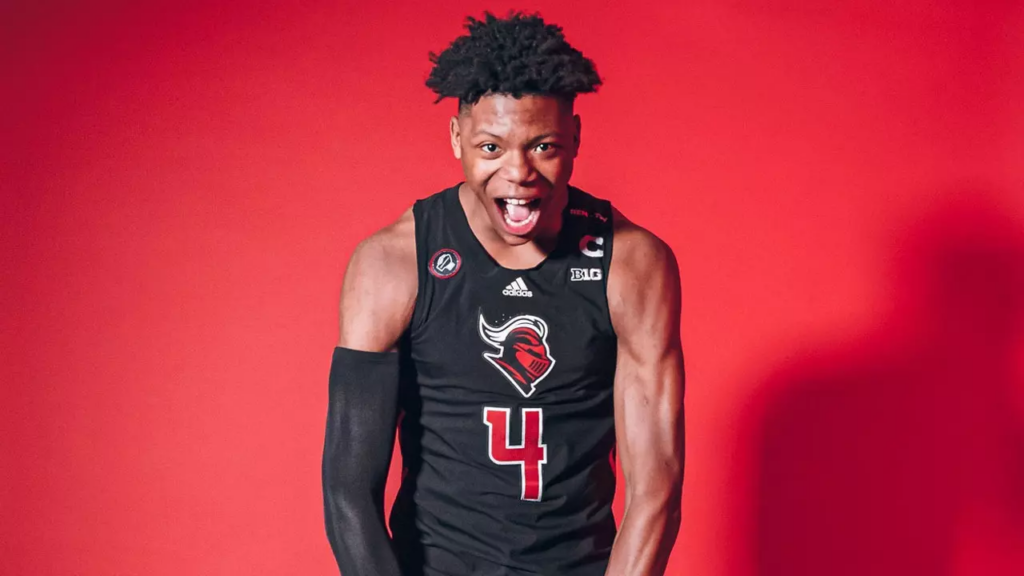
Ace Bailey is one of the most electrifying prospects in the 2025 NBA Draft class. A 6’10” wing with a guard’s skillset and the physical tools to defend multiple positions, Bailey entered college as a consensus top-2 recruit and has lived up to the hype individually — even as Rutgers has struggled as a team. Known for his explosive athleticism, shot-making range, and sky-high upside, Bailey is widely projected to be a top-5 pick, with serious buzz surrounding his chances to go No. 2 overall.
High School Resume and Background
Bailey rose to prominence at McEachern High School in Georgia, earning Mr. Basketball honors, and selection to the McDonald’s All-American Game, Jordan Brand Classic, and Nike Hoop Summit. As a senior, he was one of the most dominant two-way players in the country, establishing himself as a premier name in the 2024 recruiting class. His commitment to Rutgers—alongside fellow top recruit Dylan Harper—made headlines as one of the biggest recruiting coups in Big Ten history.
Strengths
1. Elite Physical Tools and Versatility
Bailey’s 6’10” frame, fluid mobility, and long wingspan make him a rare specimen. He can guard four positions and switch defensively while covering massive ground on closeouts and in transition. His long strides, leaping ability, and quick second jump give him an edge on both ends of the court.
2. Scoring Arsenal & Shooting Efficiency
Bailey is one of the most polished scorers in the class:
20.7 PPG (as of January)
48% FG, 41% 3PT on 5.1 attempts/game
He scores in a variety of ways — from catch-and-shoot threes, isolation midrange pull-ups, post-ups, and fast breaks. His high release point and touch make his jumper difficult to contest. He has logged 8 games with 9+ made field goals and three 30-point games, showing the ability to take over offensively.
3. Transition Weapon
An elite open-court player, Bailey thrives in transition. He fills lanes, elevates quickly, and finishes above the rim with authority, including put-back dunks and lobs. His speed and explosiveness make him a constant threat on fast breaks.
4. Defensive Impact and Rebounding
Bailey leads Rutgers in both rebounds (7.8 RPG) and blocks (1.4 BPG). He uses his length to alter shots, rotate as a help defender, and wall up in the post. His perimeter mobility and anticipation have also resulted in 1.1 steals per game, highlighting his upside as a two-way force.
5. Untapped Potential
Bailey is still just scratching the surface. Despite raw moments, his production and flashes of polish hint at a ceiling that could reach franchise cornerstone territory. His ability to guard multiple positions, space the floor, and impact both ends sets the foundation for stardom.
Weaknesses
1. Shot Creation & Ball Handling
While Bailey is a strong shooter, his ability to create off the dribble is limited. He lacks advanced handle and burst, especially in tight spaces. As a result, he often settles for contested jumpers instead of attacking the rim consistently.
2. Playmaking & Decision-Making
Bailey’s assist numbers are low (0.8 APG) and he tends to develop tunnel vision when looking to score. His reads in double-teams are inconsistent, and he struggles to make plays for others, reflected in a poor assist-to-turnover ratio (0.4/1).
3. Defensive Discipline
Though a high-motor player, Bailey sometimes gambles for steals or gets out of position. He’s prone to biting on fakes, playing too upright, and drawing unnecessary fouls (2.8 FPG). He’s fouled out of multiple games and must improve his defensive fundamentals.
4. Physical Strength & Maturity
Bailey has a wiry frame and will need to add strength to handle NBA physicality. He can be bumped off his spots and doesn’t always finish through contact. Additionally, he’s picked up three technical fouls, suggesting he needs to better manage emotions and composure.
NBA Comparisons
Player
Similarity
Brandon Ingram
Lengthy wing scorer with three-level potential and developing strength
Michael Porter Jr.
Elite shot-making at size, but needs to improve defense and playmaking
Jonathan Isaac (healthy)
Defensive versatility with stretch potential and size
Draft Projection and Team Fit
Ace Bailey is a near-lock to be drafted in the top 5 of the 2025 NBA Draft, with many projecting him to go as high as No. 2 overall or No. 3 overall in the 2025 NBA Draft. His blend of size, skill, and scoring makes him an ideal fit for rebuilding teams in need of a long-term two-way forward.
Ideal Fits:
San Antonio Spurs – Ideal stretch wing next to Victor Wembanyama
Washington Wizards – High-upside foundational piece with positional versatility
Portland Trail Blazers – Fits the timeline and complements guards with length and shot-making
Conclusion
Ace Bailey may be raw in some areas, but the flashes are undeniable. He’s a 6-foot-10 wing who shoots 40% from the arc, blocks shots, leads fast breaks, and dominates mismatches with his size and skill. While his handle, passing, and consistency need improvement, his ceiling is among the highest in the class. For teams betting on upside with a foundation of elite production, Bailey is a lottery-level talent with All-Star potential.
Thanks for diving into the OutOfSightSports Publication — it means the world to us! We’re thrilled to have your support. For the most jaw-dropping, “OutOfSight” sports content around, follow us @OOSSports across all our social platforms. Want highlights and more? Hit that subscribe button on our YouTube channel. And don’t miss the OutOfSightShop for exclusive sports gear you won’t find anywhere else. Click the LinkMe below to connect with us everywhere. Can’t wait to see you back for more! 🚀
Dylan Harper enters the 2025 NBA Draft as one of the most well-rounded and NBA-ready guards in his class. A consensus top-3 recruit in the 2024 high school class, Harper chose to stay home and play for Rutgers, forming a historic recruiting duo with fellow elite prospect Ace Bailey. While Rutgers has underachieved as a team, Harper has delivered a standout freshman campaign—highlighted by a triple-double (Rutgers’ first since 1983), multiple 30+ point games, and an elite level of consistency and poise rare for a college freshman.
Backed by a stellar pre-college résumé, including MVP performances at the McDonald’s All-American Game and Jordan Brand Classic, Harper has firmly cemented himself as a projected top-5 pick, with rising momentum suggesting he could go as high as No. 2 overall.
Strengths
1. Elite Basketball IQ and Feel for the Game
Harper plays with the poise of a seasoned pro. His understanding of spacing, angles, and decision-making stands out, especially in pick-and-roll situations. As the son of five-time NBA champion Ron Harper, he benefits from pro-level instincts and composure.
At 6’6″ with solid length and strength, Harper can initiate offense as a lead guard or play off-ball. He can guard multiple positions and switch defensively, giving him flexibility in a modern NBA backcourt.
3. Playmaking and Court Vision
Harper excels as a distributor. He consistently makes the right read, whether threading passes through tight windows or setting up shooters. He’s equally effective creating for others out of the half-court or transition.
4. Physical Tools and Strength
NBA-ready frame with broad shoulders, strong base, and great balance. He’s tough to bump off his line when driving and can finish through contact. Defensively, his size allows him to contest shots and navigate screens effectively.
5. Leadership and Composure
Even amid Rutgers’ struggles, Harper has been a steady presence. His ability to control tempo, stay calm in late-game situations, and make winning plays speaks volumes about his maturity and leadership potential at the next level.
Weaknesses
1. Perimeter Shooting Consistency
The biggest area for improvement is his jump shot, particularly from deep. He’s a capable shooter off the bounce and mid-range, but his three-point consistency (both catch-and-shoot and pull-up) needs refinement for spacing purposes at the next level.
2. Explosiveness in Tight Spaces
While Harper is strong and shifty, he doesn’t possess elite first-step explosiveness. This could affect his ability to create separation at the NBA level without advanced counters or improved shooting gravity.
3. Ceiling as a Scorer
Though productive in college, there are questions about how his scoring translates. Can he be a 20+ PPG player in the NBA or will he settle into more of a balanced, secondary creator role? Much of that hinges on his shooting development and ability to finish over elite rim protectors.
NBA Comparison
Player
Similarity
Tyrese Haliburton
Court vision, pace control, combo guard instincts
Jalen Suggs
Defensive upside, strength, competitiveness
Devin Booker (early-career)
Balanced scoring/playmaking guard, still refining outside shot
Projection and Team Fit
Harper is widely expected to go within the top 5 and has a strong chance of landing in the top 2–3 range, depending on team needs. He’s an ideal fit for franchises looking to add a versatile, high-IQ guard who can run an offense, defend multiple positions, and contribute immediately.
Ideal Fits:
Washington Wizards: Rebuilding team with a need for a floor general and culture-setter.
Detroit Pistons: Pairing Harper with Cade Cunningham gives them dual initiators.
San Antonio Spurs: A smart backcourt mate for Victor Wembanyama with long-term upside.
Draft Outlook: Rising Blue-Chip Prospect
Despite Rutgers’ underwhelming team success, Dylan Harper’s stock has only grown thanks to his steady production, leadership, and all-around skill set. His ceiling may hinge on how far his jumper develops, but his floor as a winning player and NBA contributor is extremely high.
Expect Harper to hear his name very early on draft night—possibly as the second player off the board.





 Memphis Grizzlies