
By: OutOfSightSports
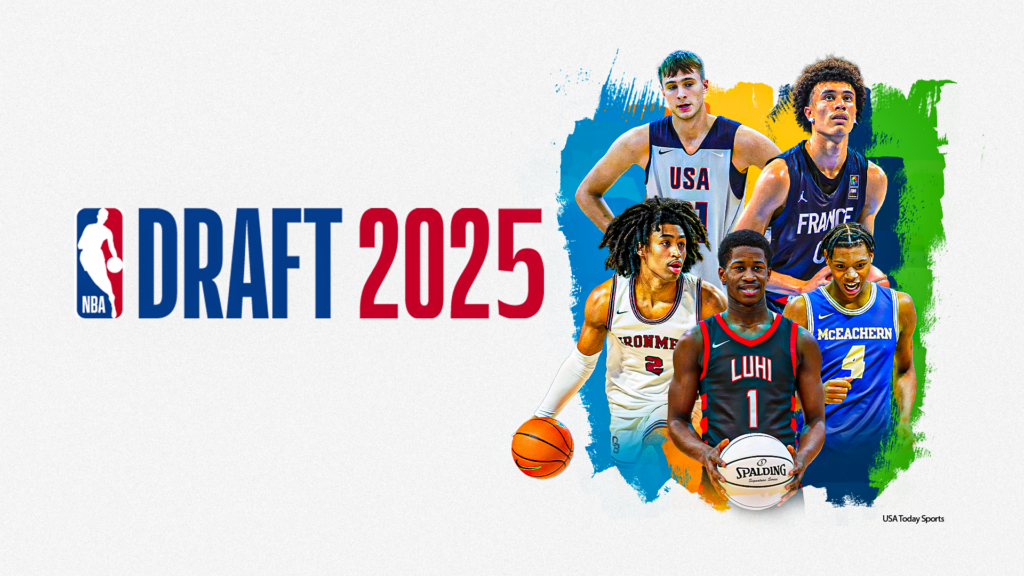
The 2025 NBA Draft landscape has been significantly shaped by the evolving dynamics of college basketball, particularly the influence of Name, Image, and Likeness (NIL) deals. With the deadline for players to withdraw from the NBA draft and retain college eligibility now passed, several notable prospects have chosen to return to college, altering the depth and composition of this year’s draft class.
Players like Michigan’s Yaxel Lendeborg, Alabama’s Labaron Philon, and Auburn’s Tahaad Pettiford have opted to capitalize on lucrative NIL opportunities, providing them with financial incentives to continue their collegiate careers. This shift has led to a draft class that, while still rich in talent, presents a different landscape compared to previous years.
Despite these changes, the 2025 NBA Draft remains a pivotal event, with teams looking to secure the next generation of basketball stars. Our Mock Draft 2.0 delves into the potential selections and strategic moves teams might make, highlighting the prospects poised to make an immediate impact in the league.

1. Dallas Mavericks – Cooper Flagg, F, Duke
The Dallas Mavericks, defying the odds with a 1.8% chance, secured the first overall pick and are expected to select Duke’s Cooper Flagg. Flagg has been the consensus top prospect, showcasing exceptional versatility, defensive prowess, and a high basketball IQ. His ability to impact the game on both ends of the floor makes him an ideal fit for the Mavericks, who are looking to build a new era post-Luka Doncic. Pairing Flagg with veteran Anthony Davis provides Dallas with a formidable frontcourt, blending youth and experience.
2. San Antonio Spurs – Dylan Harper, G, Rutgers
The Spurs, continuing their trend of acquiring top-tier young talent, are projected to pick Rutgers’ Dylan Harper. Harper’s dynamic playmaking and scoring ability complement the Spurs’ existing backcourt, featuring De’Aaron Fox and Stephon Castle. His versatility allows him to adapt to various roles, making him a valuable asset as the Spurs aim to return to playoff contention.
3. Philadelphia 76ers – Ace Bailey, F, Rutgers
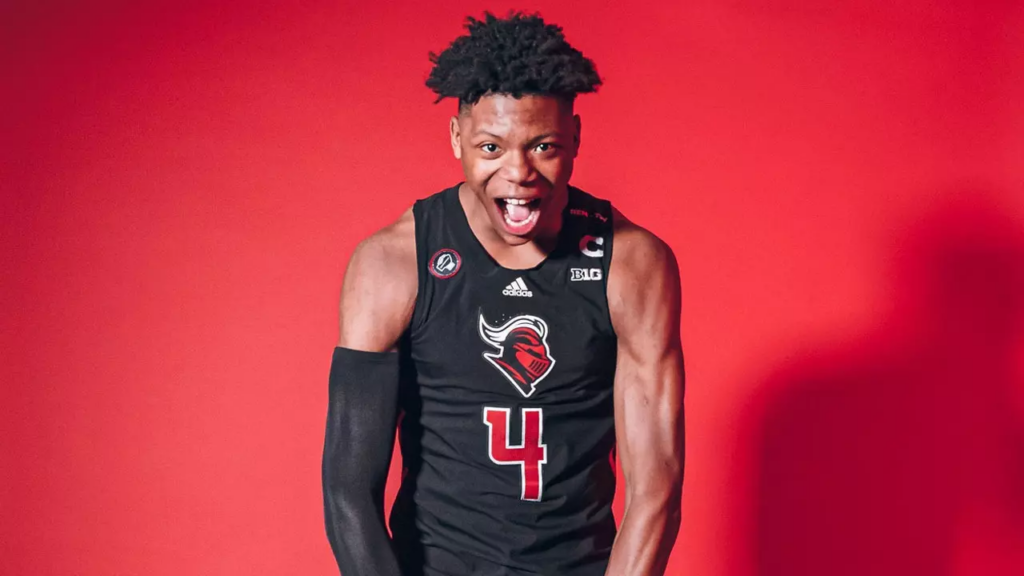
Philadelphia, despite speculations of trading this pick, stands to benefit from selecting Ace Bailey. Bailey’s scoring acumen and athleticism address the 76ers’ need for offensive firepower. His potential to develop into a two-way player adds depth to a roster that has struggled with injuries and consistency in recent seasons.
4. Charlotte Hornets – V.J. Edgecombe, G, Baylor
The Hornets are in dire need of perimeter scoring, and Baylor’s V.J. Edgecombe fits the bill. Known for his athleticism and defensive tenacity, Edgecombe brings energy and versatility to Charlotte’s backcourt. With LaMelo Ball’s injury history, Edgecombe’s ability to handle the ball and create plays adds a layer of security and dynamism to the team’s offense.
5. Utah Jazz – Jeremiah Fears, G, Oklahoma
Utah’s selection of Jeremiah Fears reflects a strategic move to bolster their backcourt. Fears’ quickness, scoring ability, and defensive potential make him a promising prospect. The Jazz are betting on their coaching staff’s ability to refine his three-point shooting and decision-making, aiming to develop him into a cornerstone of their rebuilding efforts.
6. Washington Wizards – Derik Queen, C, Maryland
The Washington Wizards are in a full-scale rebuild and need foundational pieces to complement their recent draft picks. Enter Derik Queen, a bruising yet nimble big man out of Maryland. Queen reunites with childhood friend Bub Carrington in Washington, which adds a layer of familiarity and chemistry to their young core. Standing at 6’10” with a solid frame, Queen brings an old-school interior presence but has also showcased a modern offensive toolkit that includes mid-range shooting and passing out of the post.
He complements Alex Sarr exceptionally well—Sarr thrives on mobility and perimeter defense, while Queen can dominate the paint, clean the glass, and establish low-post positioning. Together, they could form one of the more intriguing young frontcourt tandems in the league. While his athletic ceiling might not be sky-high, Queen’s feel for the game and polished interior footwork could make him an immediate contributor for the Wizards, who desperately need reliability down low.
7. New Orleans Pelicans – Khaman Maluach, C, Duke
Khaman Maluach’s size alone makes him a tantalizing NBA prospect. Measuring nearly 7-foot-1 without shoes and armed with length and mobility, he’s a shot-blocking force with untapped potential. The Pelicans, who drafted Yves Missi just last year, are unlikely to pass up on Maluach’s ceiling. Still just 18 and turning 19 this fall, Maluach is far from a finished product, but he has the tools to be special.
The Pelicans are in a bit of a flux as they continue to explore options with their current core of Zion Williamson and Brandon Ingram. Maluach adds a new dimension—he’s a rim protector who doesn’t clog the lane offensively, and his developing jump shot offers hope that he could become a stretch five in due time. It’s a pick for the future, but with enough upside to get fans in New Orleans excited about their long-term prospects.
8. Brooklyn Nets – Kon Knueppel, G, Duke

The Nets go for one of the safest picks in the draft with Kon Knueppel, arguably the best pure shooter in this class. After a tumultuous season filled with injuries and instability, Brooklyn needs a floor-spacer who can play off the ball and stretch defenses. Knueppel’s high basketball IQ, shooting versatility, and calm demeanor under pressure make him a perfect fit.
His game might lack the athletic flash of other prospects, but Knueppel is an efficient scorer who knows his role. He shot over 40% from three during his freshman year at Duke and has the strength to handle physical NBA defenders. With Brooklyn in rebuild mode and likely exploring trade packages for their surplus of picks, Knueppel is a player who could immediately help the team’s offensive structure, regardless of whether the roster stays the same or changes significantly.
9. Toronto Raptors – Tre Johnson, G, Texas
Tre Johnson brings microwave scoring ability to the Toronto Raptors—a franchise that’s looking for young stars to develop around Scottie Barnes. Johnson isn’t a perfect prospect, but he has one of the highest offensive upsides in the class. A pure scorer from all three levels, he can create his own shot and is fearless when it comes to attacking defenders.
Though defense and efficiency are areas he’ll need to improve, Johnson’s offensive ceiling is too good for the Raptors to pass on. He can start off as a sixth man while growing into a bigger role. The Raptors have a strong player development program, and if Johnson buys in, he could become a dynamic guard who shifts the culture in Toronto.
10. Houston Rockets – Kasparas Jakucionis, G, Illinois
With a surplus of young talent, the Rockets can afford to take a flyer on high-upside international guard Kasparas Jakucionis. Though he only shot 31.8% from three at Illinois, his court vision and size (6’6″) give him a unique profile as a jumbo playmaker. Jakucionis has drawn comparisons to Tyrese Haliburton due to his unorthodox but effective offensive flow.
Houston doesn’t need an immediate contributor but would benefit from grooming Jakucionis behind Fred VanVleet and pairing him in practice with last year’s standout, Reed Sheppard. While he’s a bit of a project, Jakucionis offers the combination of length, vision, and poise that’s increasingly valuable in today’s NBA. If the shooting comes around, he could be a major steal at this point in the draft.
11. Portland Trail Blazers – Collin Murray-Boyles, C, South Carolina
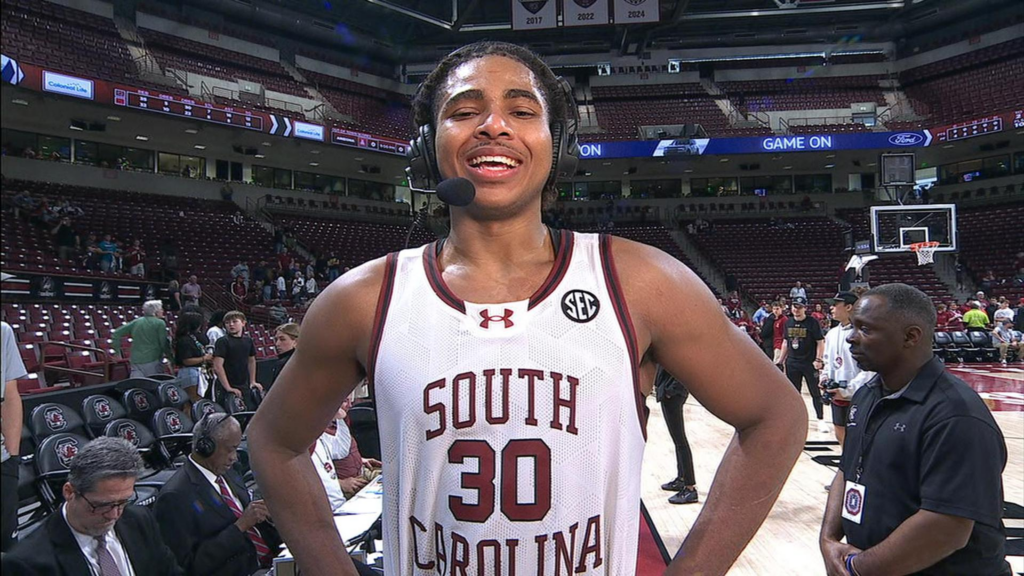
The Trail Blazers are clearly still in rebuilding mode, and they continue their strategy of selecting high-upside, high-risk prospects with Collin Murray-Boyles. The South Carolina big man is raw but extremely intriguing. He’s a physical specimen—athletic, strong, and surprisingly nimble for his size. Portland has a recent history of investing in developmental players, and Murray-Boyles fits that mold perfectly.
His jump shot is far from reliable, but the Trail Blazers are confident they can turn him into at least a league-average floor spacer. He’s a shot-blocking presence and a rim-runner, both traits Portland could use in their frontcourt. If the shooting ever catches up, he could become a dominant two-way player. With Scoot Henderson and Shaedon Sharpe forming the backcourt of the future, adding a defensive-minded, athletic big man is a sensible move.
12. Chicago Bulls – Noa Essengue, F, Ratiopharm Ulm, France
Chicago has been hovering in NBA purgatory for several seasons—never quite bad enough to tank, but nowhere near contention. Noa Essengue could be the beginning of a new direction. The French forward brings length, defensive potential, and a motor that never stops. He’s the type of player who thrives in transition and provides energy off the bench immediately.
Essengue is still learning the game at a high level, but he has a natural feel on defense, often disrupting passing lanes and protecting the rim. His offensive game needs refinement, particularly his shooting mechanics, but if the Bulls are patient, they may be rewarded with a versatile two-way forward. In a weak forward market, Essengue stands out as one of the more intriguing long-term plays.
13. Atlanta Hawks – Danny Wolf, F, Michigan
With Clint Capela likely on his way out and Onyeka Okongwu transitioning into a full-time starting role, the Hawks use this pick to add frontcourt depth. Danny Wolf may not be a traditional big man, but his skill set fits the modern NBA. At 6’10.5”, he has legit stretch-four potential with range extending beyond the three-point line.
Wolf’s passing is what separates him—he has excellent vision for a big and can facilitate offense from the high post. While his athleticism is below average, his basketball IQ and offensive versatility make him a valuable asset. Atlanta’s offense has been stale at times, and Wolf could help unlock new looks, particularly in lineups with Trae Young or Jalen Johnson.
14. San Antonio Spurs – Carter Bryant, F, Arizona
The Spurs double down on upside with Carter Bryant, a long, raw wing out of Arizona. Bryant doesn’t have the polish of other lottery picks, but he’s dripping with potential. Standing at 6’8” with a plus wingspan and a smooth shooting stroke, Bryant is the kind of swing the Spurs have historically been good at developing.
With Victor Wembanyama anchoring the franchise, San Antonio can afford to be patient with prospects like Bryant. His frame suggests he could guard multiple positions, and if his offensive game matures, he could become a starting-caliber forward in a few years. In a wing-hungry league, this is a high-upside pick late in the lottery.
15. Oklahoma City Thunder – Thomas Sorber, C, Georgetown
What do you give the team that has everything? For the Thunder, the answer is depth and versatility, especially in the frontcourt. Thomas Sorber fits the Thunder’s defensive identity perfectly. With a 7’6” wingspan and a 6’10.5” frame, Sorber is a physical, tough-nosed center who excels on defense and on the boards.
He’s not just a shot blocker—Sorber can switch onto guards, hold his own in the post, and even make smart passes out of double teams. He’s showcased soft hands and potential touch around the rim, making him a potential two-way threat. For a team on the verge of championship contention, Sorber’s readiness and defensive prowess make him a perfect complementary piece.
16. Orlando Magic – Jace Richardson, G, Michigan State
Orlando continues its pursuit of perimeter scoring by adding Jace Richardson. The Magic have focused heavily on length and defense in recent drafts, but Richardson is a pure shooter who can stretch the floor and play off Paolo Banchero and Franz Wagner. His height (6’3”) may not wow anyone, but his shooting mechanics and on-ball defense are strong.
Richardson moves well without the ball and is confident spotting up from deep. While his playmaking is still a work in progress, his defensive engagement and shot-making ability make him a nice fit in Orlando’s rotation. He’s one of the safer bets in this range due to his shooting and intensity.
17. Minnesota Timberwolves – Nolan Traore, G, Saint-Quentin, France
With Mike Conley nearing the end of his career, the Timberwolves take a smart gamble on French point guard Nolan Traore. He’s still just 18, but his feel for the game, smooth handle, and creative passing are undeniable. Traore has already faced professionals in France, giving him an edge in terms of maturity and experience.
He’ll need time to adjust to NBA speed and improve his outside shot, but Minnesota is in a great position to bring him along slowly. Backing up Conley and potentially taking over down the road, Traore could be the next international success story in a Wolves uniform.
18. Washington Wizards – Egor Demin, G, BYU
Demin is a mystery box with tantalizing potential. At 6’9.5” with guard skills, he offers an unusual blend of size and vision that few players possess. Though he had an inconsistent year at BYU, the flashes were enough to intrigue scouts and GMs.
The Wizards, in full rebuild mode, can afford to swing on upside. Demin will need significant development, particularly in scoring efficiency and decision-making, but if he puts it together, he could be a unicorn-style guard-forward hybrid. His height alone gives him defensive switchability and rebounding potential.
19. Brooklyn Nets – Liam McNeeley, G/F, Connecticut
After missing time due to an ankle injury, Liam McNeeley rebounded with a strong combine showing, reasserting himself as a first-rounder. McNeeley is a versatile wing who can shoot, pass, and defend multiple positions. Brooklyn, with four first-round picks, uses this one to bolster their wing depth with a plug-and-play contributor.
He may not become a star, but his high floor and adaptability make him a safe pick. As the Nets begin to retool their roster, McNeeley could step in and contribute right away as a glue guy.
20. Miami Heat – Nique Clifford, G, Colorado State
Clifford screams “Miami Heat culture.” He’s disciplined, gritty, and does all the little things well. At 6’6” with a strong frame, Clifford is a tenacious on-ball defender who’s also developed into a reliable three-point shooter.
With Jimmy Butler aging and Tyler Herro’s future unclear, Miami can use a guard like Clifford who thrives in pressure situations. He’s likely to find minutes early in his career, and it wouldn’t be surprising if he becomes a Heat rotation mainstay in short order.
21. Utah Jazz – Ben Saraf, G, Ratiopharm Ulm, Israel
Ben Saraf enters the NBA with the kind of international seasoning that has helped players like Luka Dončić and Josh Giddey transition smoothly. A 6’6” left-handed guard with a high IQ and a crafty game, Saraf has already shown promise against pro competition in Europe. Utah grabs him as part of their continuing rebuild, hoping he can grow into a foundational piece.
Saraf’s vision and composure make him a potential long-term answer at point guard. Though he’s not elite athletically, his size helps him make plays in the half-court and defend bigger guards. The Jazz have had a revolving door at the point, and Saraf gives them a young, cost-controlled option with significant upside if the shooting develops.
22. Atlanta Hawks – Joan Beringer, C, Cedevita Olimpija, France
This is one of the biggest gambles of the first round. Joan Beringer, a former soccer player turned basketball project, is still very raw—but at 6’11” with agility and great instincts, he’s worth the risk. The Hawks are looking for long-term frontcourt reinforcements, and Beringer’s upside on defense is enormous.
He’s got a nose for blocking shots, switches well for a big man, and plays with a competitive fire. Offensively, he’s still catching up, but the framework of a rim-runner and offensive rebounder is already there. In a couple of years, this pick could be viewed as a steal—or a bust—but the risk is justified this late in the first round.
23. Indiana Pacers – Asa Newell, F/C, Georgia
Newell’s slide stops here, and it might be the perfect landing spot. The Pacers don’t need him to be a star right away—they just need his athleticism and energy off the bench. Newell is a springy forward who rebounds, defends, and can run in transition. His motor is relentless, and in Indiana’s fast-paced system, he’ll thrive in short bursts.
While his offensive game needs refinement (especially his shot), the Pacers have the depth and development staff to be patient. He’s a great insurance policy for Indiana’s frontcourt and could become a rotation piece as he learns to harness his tools.
24. Oklahoma City Thunder – Rasheer Fleming, F, Saint Joseph’s
This is the kind of pick that championship teams make—smart, versatile, and ready to contribute. Rasheer Fleming isn’t a flashy name, but his combination of size (6’9.5”), length (7’5” wingspan), and shooting touch makes him an ideal fit for OKC’s system. He plays with grit, defends multiple positions, and can space the floor.
For the Thunder, who have already built one of the league’s deepest rosters, Fleming provides low-maintenance, two-way production. He fits right in with their defensive mindset and should be able to guard both forward spots. He’s also shown the ability to hit from deep, making him a rare 3-and-D big.
25. Orlando Magic – Maxime Raynaud, F/C, Stanford
Raynaud was one of the most improved players in college basketball last year, and his game is NBA-ready. A 7-footer who can shoot the three, defend pick-and-rolls, and rebound effectively, Raynaud gives the Magic much-needed frontcourt depth behind Wendell Carter Jr., who has had trouble staying healthy.
He isn’t flashy but makes the right plays, spaces the floor, and sets solid screens—think of him as a stretch five with a high basketball IQ. In a draft thin on true bigs, getting a polished contributor like Raynaud at 25 is great value for the Magic.
Picks 26–30 Recap
26. Brooklyn Nets – Walter Clayton Jr., PG, Florida
After making a name for himself in the NCAA tournament, Clayton’s stock rose significantly. The Nets capitalize on his microwave scoring and confidence in isolation settings. While he may not have elite size or defense, he knows how to get buckets, especially in clutch moments.
Clayton can be an excellent bench scorer for Brooklyn, who needs playmakers and floor spacers in their rebuild. His ability to hit tough shots off the dribble will be an asset in tight games, and he has the mindset of a closer, which can’t be taught.
27. Brooklyn Nets – Cedric Coward, G, Washington State
This is a high-upside pick based almost entirely on combine performance and potential. Coward, who played just six games due to injury, surprised scouts with his athleticism—boasting a 7’2” wingspan and a 38.5” vertical. He also shot the ball well, both off the dribble and in spot-up situations.
The Nets, having a surplus of picks, can afford to swing for the fences. Coward offers rare defensive tools on the wing and has shown glimpses of offensive polish. If healthy, he could develop into a two-way menace. Think of him as a project who could yield major dividends.
28. Boston Celtics – Noah Penda, F, Le Mans, France
The Celtics don’t often pick this late without already having a deep, veteran-heavy roster. So it makes sense they target Penda, a role player who thrives on hustle, defense, and effort. He’s 6’7”, versatile, and not afraid to do the dirty work.
While Penda’s offensive game is raw—especially his jump shot—his basketball IQ and ability to fit into team schemes make him a nice stash-and-develop option. Boston needs cheap, reliable rotation pieces due to cap constraints, and Penda could be one in 1–2 years.
29. Phoenix Suns – Hugo Gonzalez, G/F, Real Madrid, Spain
A classic draft-and-stash candidate, Gonzalez is a long-term project. He’s physically ready—standing 6’8” with elite agility—but lacks polish on both ends of the court. He’s shown enough flashes to stay on draft boards, especially in terms of shooting and transition play.
For Phoenix, who desperately need youth and upside, Gonzalez represents a low-risk, high-reward investment. Whether they have the patience to wait on him is another question, but the talent is undeniable. If he’s developed properly, he could become a rotational wing in 2–3 years.
30. Los Angeles Clippers – Drake Powell, G, North Carolina
Powell was somewhat hidden in UNC’s system, but scouts have long loved his defensive tools and effort. At the combine, he turned heads with a 43” vertical and a seven-foot wingspan. He’s a glue guy who can defend 1–3 and rebound well for a guard.
The Clippers are aging quickly and need an injection of youth, particularly on the wing. Powell isn’t going to wow anyone with scoring, but his effort, IQ, and defensive capabilities make him an immediate asset off the bench. He could eventually be a Marcus Smart-type impact player if his offense develops.
Conclusion
The 2025 NBA Draft highlights a league at the intersection of tradition and transformation. With NIL reshaping the college landscape and a deeper emphasis on versatility and defense, teams have been forced to adjust their strategies. While this class may lack generational superstar depth beyond Cooper Flagg, it offers an abundance of solid role players and developmental prospects.
Organizations like the Thunder and Nets took advantage of multiple picks, while teams like the Mavericks and Spurs made foundational selections. As always, the draft is only the beginning—the true measure of success will be how these players grow within their new homes.
FAQs
1. How has NIL influenced the 2025 NBA Draft?
NIL deals have allowed college stars to delay NBA entry for financial and developmental reasons, thinning out the draft class depth but increasing the readiness of those who do declare.
2. Which teams had the most impactful draft picks?
Oklahoma City and Brooklyn stood out for volume and quality, while Dallas and San Antonio may have landed franchise-altering players in Cooper Flagg and Dylan Harper.
3. Are there any notable international prospects in this draft?
Yes, players like Kasparas Jakucionis, Noa Essengue, Ben Saraf, and Joan Beringer represent a strong international presence, many with pro experience abroad.
4. How did the combine affect player draft stocks?
Several players—like Cedric Coward, Liam McNeeley, and Drake Powell—boosted their stock significantly with standout combine performances.
5. What are the expectations for the top 5 picks?
Cooper Flagg is expected to be an immediate star, while Harper, Bailey, and Edgecombe bring major upside and versatility to teams in transition.
wow