Tag: College Football

NCAA proposes major eligibility rule changes with new five-year window

NCAA sports story 4/8

The NCAA is considering one of the most significant rule changes in modern college athletics.

According to a report from Ross Dellenger of Yahoo, the NCAA is proposing a new eligibility structure that would dramatically alter how long student-athletes can compete at the collegiate level. (Source)

NCAA explores strict five-year eligibility window

An NCAA committee will meet next week to discuss implementing an age-based eligibility model.

Under the proposal, athletes would receive five full years of eligibility, beginning with either the player’s 19th birthday or their high school graduation, whichever comes first. The rule would eliminate redshirts, waivers, and most exceptions, creating a more rigid and standardized system.

Only limited circumstances, such as maternity leave, military service, or religious missions, would allow for exceptions.

If approved quickly, the new structure could take effect as early as the fall season.

NCAA proposal aligns with recent executive order

The proposal closely mirrors a recent executive order signed by Donald Trump, which outlined a “five-year participation window” and called for more structured transfer rules. (Source)

Dellenger reported that the NCAA had already been working on these changes prior to the executive order, though the two now align in principle.

NCAA aims to simplify current eligibility system

Current NCAA rules allow athletes to compete in four seasons over a five-year period, with opportunities to extend eligibility through redshirts and waiver requests.

That system has led to increasing legal challenges, as athletes have pursued additional eligibility through the courts. The proposed changes would eliminate those pathways and replace them with a fixed eligibility timeline.

The goal is to create a clearer and more enforceable framework that reduces ambiguity and potential litigation.

Impact on future athletes and recruiting

The proposal could significantly alter decision-making at the high school level.

Families and prospects often reclassify or delay enrollment to maximize eligibility windows. Jonathan Givony has noted that some players enter college at 20 years old, which under the new system would reduce their available eligibility.

This change could reshape recruiting strategies and player development timelines across multiple sports.

The new rules would also impact athletes currently navigating eligibility disputes.

Cases involving players such as Trinidad Chambliss, Joey Aguilar, and Chandler Morris highlight the growing tension between athletes and the NCAA over eligibility extensions.

Under the proposed system, additional years through waivers or court rulings would become far less likely.

The same applies to situations involving players attempting to return from professional stints, such as James Nnaji and Charles Bediako.

What comes next

The NCAA will review the proposal in the coming days, but approval remains uncertain.

Conference leaders and stakeholders must weigh the benefits of a simplified system against the potential impact on athletes and recruiting pipelines.

If adopted, the rule would represent a fundamental shift in how college sports operate, bringing an end to the extended eligibility era and introducing a stricter, more defined structure moving forward.


Thanks for reading. Be sure to check out the latest episode of the OutOfSightSports YouTube series below for more coverage, analysis, and the latest updates across the sports world. đŸŽ„ âŹ‡ïž

James Franklin Fired Up for Redemption at Virginia Tech

Virginia Tech logo

James Franklin isn’t looking back—at least not for long. After a stunning fall from grace at Penn State in 2025, the veteran coach has landed at Virginia Tech with plans to turn frustration into fuel.

“I got a huge chip on my shoulder,” Franklin said to On3 Sports. “Kind of an unusual situation. Six games earlier, we’re playing for national championship. Now obviously some things happened that were in my control and I take total responsibility for that. But, yeah I got a big chip on my shoulder. Extremely motivated.”

Once a contender for the College Football Playoff crown, Penn State’s season unraveled fast. The Nittany Lions dropped three straight to fall to 3-3, a skid that ultimately cost Franklin his job. Despite leading the program to the 2024 CFP semifinal, his inability to beat elite opponents lingered—his record against top-10 teams sat at just 4-21.

Now, the 54-year-old coach is embracing his next challenge in Blacksburg. Virginia Tech hasn’t cracked 10 wins since 2012, and expectations are tempered for a program seeking renewed identity under new leadership. Franklin’s energy, however, suggests complacency won’t be an option.

“We got a lot of work to do,” Franklin said. “Most importantly, our players are driven, excited, and motivated. We got a really good core group of guys that stayed at Virginia Tech and guys that we brought from a number of other places too.”

The Hokies will kick off the 2026 campaign at home against VMI on September 5, a matchup that marks the official start of Franklin’s redemption story. For now, the message from Blacksburg is simple: the rebuild begins with belief.

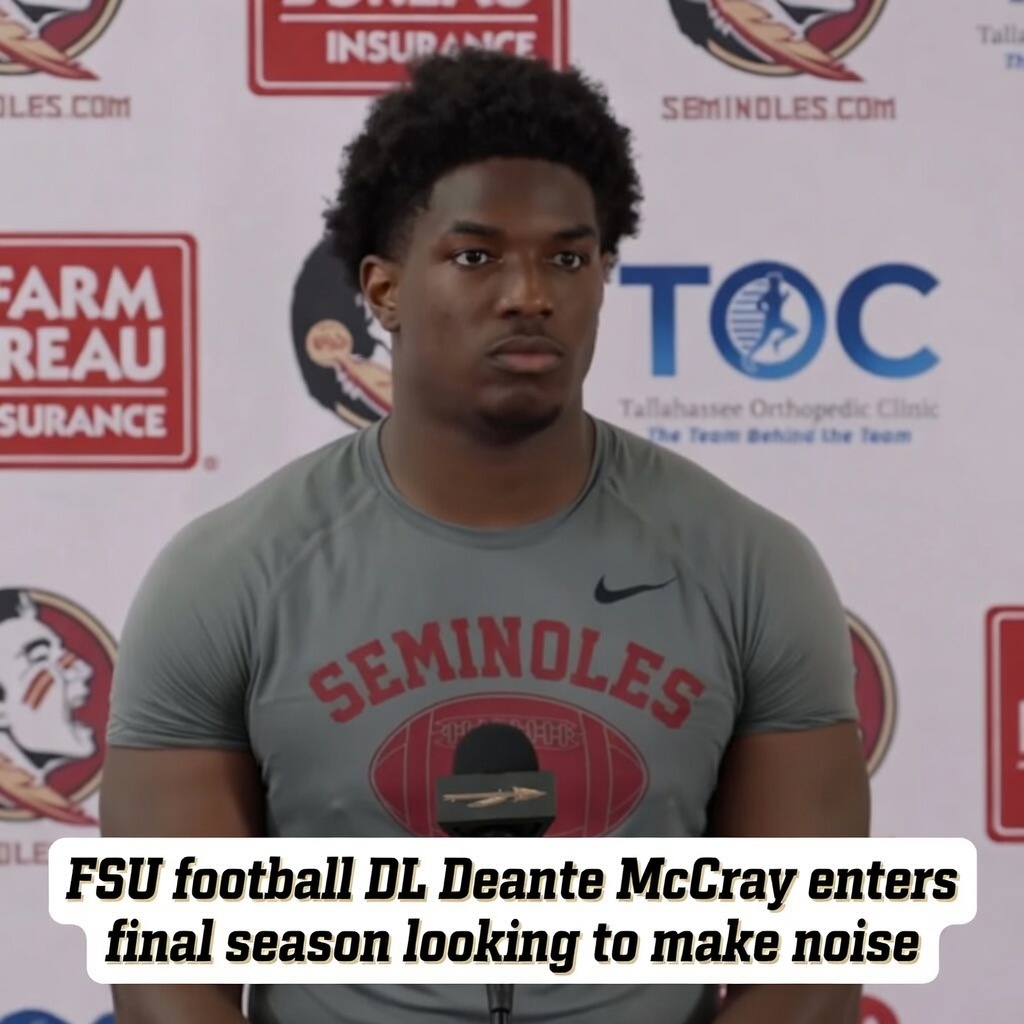
Florida State football DL enters final season looking to make noise

It’s only his second year at Florida State, but Deante McCray already carries himself like a veteran on the Seminoles’ defensive line. In many respects, he is. Despite spending just one season in Tallahassee, the former Western Kentucky transfer has three years of college football experience and has accumulated 129 career tackles, including 12 tackles for loss. No other player on Florida State’s defensive line brings that level of production.

McCray expects to elevate his performance even further in 2026.

“I learned a lot last year,” McCray said as Florida State continued its second week of spring drills, as noted in an article by On3Sports’ Corey Clark. “I learned a lot about what it actually takes to be a D-Lineman. I learned a lot from Coach [Terrance] Knighton, and how to be an aggressive D-Lineman. Just attack and be relentless. Being relentless was the biggest thing I learned. Don’t let nothing stop you in your tracks. Being a more effective pass-rusher for sure. (source)

“He helped me hone in on my run-stopping skills as well. I’m grateful for that. I plan to dominate this season. That’s what I plan to do to help this team to a championship.”

To reach that level, McCray will need to surpass last season’s production. In his first year of Power 4 football, he appeared in 12 games for the Seminoles, making two starts and finishing with 25 tackles, 4.5 tackles for loss, and one sack.

He demonstrated that he belongs at this level, serving as a consistent presence in the defensive line rotation throughout the season. This year, however, McCray aims to be more than a rotational player. He is determined to earn a starting role and believes he has the potential to become a standout.

“Now, I know the defense in and out,” McCray said. “I’m flying around. No more thinking. Just wreak havoc. Make plays. Celebrate with my teammates, catching wins and help bring this team to championships. Like I said, I’m ready to dominate. I’m more comfortable than I’ve ever been here, and I plan to showcase that this year.”

McCray has been working at multiple positions along the defensive line, embracing versatility, though he expects most of his playing time to come on the interior.

When asked about his offseason goals as he approaches his final season of college football, his focus remained straightforward.

“Just keep getting better,” McCray said. “Because I can always improve at something. Even if I’m doing something good, I can always improve at something. Get better at my run-stopping ability, my pass-rush ability. All of that.”

He will also benefit from another season under Knighton, a former NFL veteran entering his second year as Florida State’s defensive line coach.

“He’s succeeded where I’m trying to get to, which is ultimately the NFL,” McCray said. “So, I listen to everything he has to say as far as technique-wise, as far as get-offs, all of that. He’s taught me a lot. When I first transferred in, I didn’t even know half this stuff existed in terms of mindset, ways of thinking of getting to the quarterback.

“So, it’s been a blessing to have him as my coach.”


Thank you for reading the this article — make sure check out our YouTube channel and latest video below! 🚀

Texas gets major boost with Laurence Seymore ruling

Lawrence Seymore ruling

Texas avoided a major offseason setback and turned it into a roster win that could shape its 2026 outlook on Wednesday. What once appeared uncertain has now become a clear upgrade for the Longhorns.

The Seymore news became official when first reported by On3’s Pete Nakos, when the NCAA granted his eligibility waiver, clearing the way for him to play in 2026. The decision eliminates months of uncertainty and gives Texas a proven offensive lineman ready to contribute immediately. (source)

Seymore’s path to this point has been anything but straightforward. He has moved through multiple programs—including Miami, Akron, and Western Kentucky—navigating redshirts, transfers, and even a full season without game action due to transfer timing complications. That lost 2023 season ultimately became the focal point of his waiver request.

Rather than dragging the situation into a prolonged dispute, the NCAA approved the waiver, allowing Texas to move forward with clarity. The Longhorns now add a second-team All-American–caliber presence to an offensive line unit that continues to evolve through the transfer portal.

Seymore’s addition also strengthens a broader recruiting strategy built on experience and depth. He joins a transfer class that includes Jonte Newman, Dylan Sikorski, and Melvin Siani, giving the Longhorns multiple options in the trenches.

Timing plays a critical role. Securing eligibility early allows Seymore to fully integrate into offseason development and system installation rather than playing catch-up later in the year. That stability often marks the difference between depth and impact in college football.

For Texas, this move goes beyond filling a roster spot. It signals confidence in navigating complex eligibility situations while continuing to build a competitive foundation up front.

Now, with the waiver resolved, the focus shifts to performance. If Seymore delivers at the expected level, this decision could become one of the most important under-the-radar wins of the Longhorns’ offseason.

Diego Pavia Embracing Reputation at NFL Combine

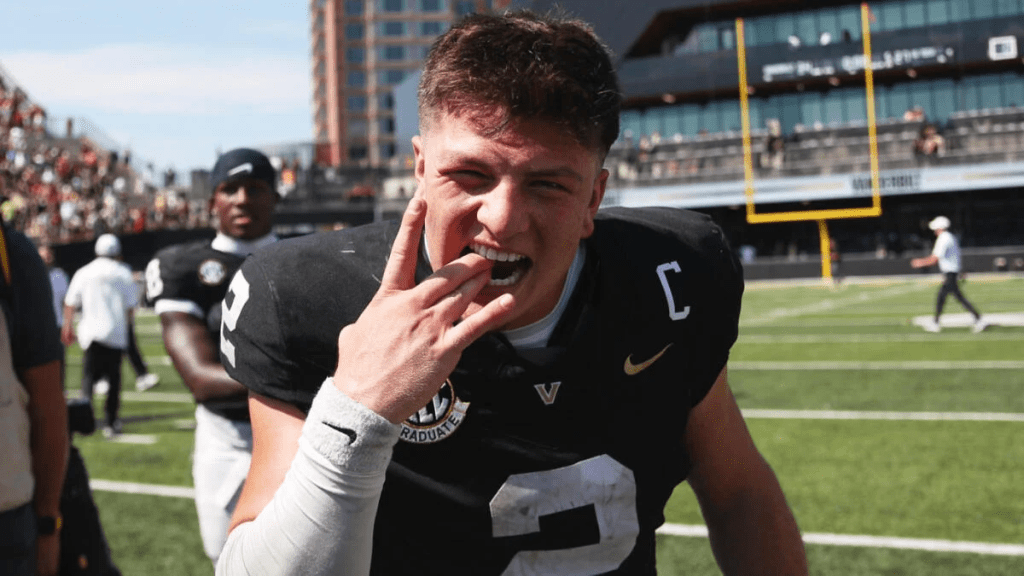
Former Vanderbilt Commodores quarterback Diego Pavia is not softening his stance as he transitions from college football to the NFL.

At the NFL Combine, Pavia made it clear that outside opinions do not shape his approach. The draft prospect confirmed he plans to throw for scouts Saturday and addressed the criticism that followed him throughout his college career.

“One thing about me is I don’t care what people think about me,” Pavia told ESPN’s Stephen Holder.

Polarizing but Productive

Pavia led Vanderbilt to a 10-3 record in 2025 — the first 10-win season in program history. His play elevated the Commodores into national relevance, but his outspoken personality and social media presence drew attention as well.

After finishing as Heisman Trophy runner-up, Pavia faced backlash for posting a message that included “F-All THE VOTERS” before later issuing an apology. He maintains that much of the criticism stems from media narratives designed for engagement.

Critics aside, Pavia believes his edge is part of what made him an effective leader.

“I feel like a lot of teams love the tenacity, the fight,” he said. “The life of an underdog, that’s for sure. And, so, they ask questions. But you go back, you look at my record, ain’t nothing on my record.”

Size Questions Remain

NFL evaluators will also weigh Pavia’s physical profile. Measuring under 5-foot-10, he falls below traditional size benchmarks for the quarterback position.

Still, he dismissed concerns by pointing to his performance against elite competition.

“I would just say turn on the tape,” Pavia said. “It’s not like we’re not playing these guys that are going first-round, second-round [picks] on Saturdays in the SEC. So, the SEC and the Big Ten probably have the most guys getting drafted in the first, second round. So, we’re playing those guys and ain’t nothing going to change.”

Built on Being Counted Out

Pavia credits his confidence to a career path that began in junior college before climbing to SEC prominence. He argues that being overlooked fueled his development.

“I just want everyone to know what’s true about me is I’m humble and I get my confidence from my process. And if you saw how much I put into this, you would see where I get my confidence.”

As draft boards take shape, Pavia remains unapologetically himself. For teams searching for competitiveness and resilience, that authenticity may matter as much as measurables.

Lincoln Riley Details Jayden Maiava’s Offseason Growth Focus for 2026

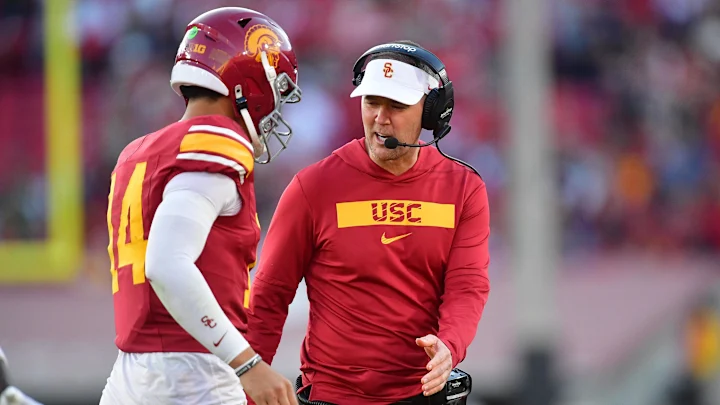
USC Trojans head coach Lincoln Riley brings back his quarterback for the 2026 season. Jayden Maiava is settling in for another year in Los Angeles, his third with the program. As any QB in college football, there is going to be some room for improvement this offseason. But Riley thinks one of the biggest challenges for Maiava will be getting connected with the new USC skill position guys.

“One of Jayden’s biggest challenges this year is we’ll be very different in the wide receiver room and the tight end room,” Riley said in an interview with On3’s J.D. PicKell. “Getting in sync with those guys will be a big, big part of it.”

Impressive true freshman Tanook Hines will be the leading returning receiver for USC. Riley took NC State‘s Terrell Anderson out of the NCAA transfer portal after he put up over 600 yards in the ACC last season. And then the Trojans are bringing in some highly-skilled high school players, highlighted by Santa Ana (CA) Mater Dei tight end Mark Bowman. Fresh faces all around, outside of Hines, for Maiava to work with.

But Riley is just happy to have some stability at quarterback. He admitted having the same guy back there for three seasons is not all too common these days. Between the NFL Draft and players lacking patience, only to transfer out, Maiava has sort of become the exception.

The growth has been incredibly evident throughout the years as well, at least for Riley. Watching film from Maiava’s early days at USC and to now is apparently different. Riley says similar jumps can be made in the near future, even with all this experience.

“He grew up so much during the offseason a year ago,” Riley said. “Just watching him, the player this last year vs. what he was two years ago. It’s almost like watching two completely different people. I just feel like this guy’s got a huge ceiling. I feel like he can make another jump, just like that. He was already one of the best quarterbacks in the country this year. I’m excited for it.”

Jayden Maiava played in 13 games last season for USC, throwing for 3,711 yards, 24 touchdowns, and 10 interceptions. Riley used Maiava on the ground every once in a while, calling for 54 carries. Those went for 157 yards and six touchdowns. If Riley’s offseason expectations come to fruition, we are going to see even better numbers in 2026.

Will Notre Dame Meet Expectations This Season?

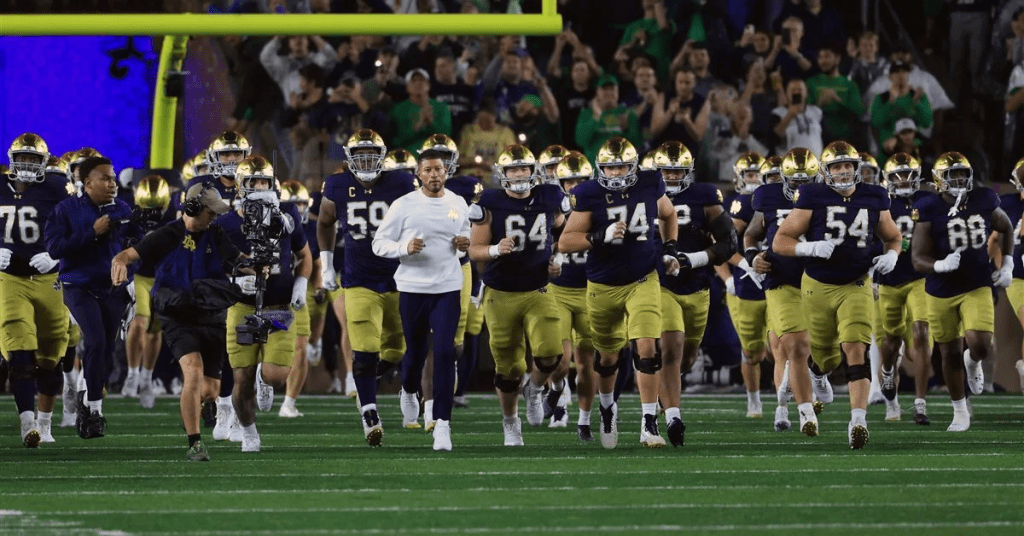
The Notre Dame Fighting Irish enter the 2026 season with something they have not always handled well: overwhelming expectation.

Every offseason brings familiar criticism. Detractors recycle the same talking points — join a conference, the schedule is soft, the program is overrated. Some of those arguments fade quickly under scrutiny. One, however, continues to follow the Irish year after year: the label of “overrated.”

The History Behind the Narrative

From 2006 through 2016, Notre Dame often entered seasons ranked highly and exited with disappointment. Blowout losses in major bowl games and uneven finishes created ammunition for critics. Preseason optimism frequently failed to translate into postseason validation.

Since 2017, that storyline has shifted. The Fighting Irish have posted multiple top-12 finishes, reached the College Football Playoff, and remained consistently competitive on the national stage. The program no longer fits the version of itself that struggled to meet projections a decade ago.

Still, perception lingers longer than performance.

Expectations Reach a New Level

According to early betting markets, Notre Dame currently sits among the favorites — and in some cases the outright favorite — to win the national championship. That type of spring momentum almost guarantees a top-five preseason ranking.

And with a top-five ranking comes a clear standard: compete for a title or fall short of expectations.

Those are the stakes.

If Notre Dame opens the season ranked inside the top five, the margin for error disappears. A single slip becomes magnified. A close loss fuels the “overrated” narrative once again. Fair or not, that is the environment the Irish will navigate.

Can the Irish Deliver?

Recent seasons suggest the foundation is stronger than in years past. Recruiting has improved. Depth has stabilized. The program has shown resilience in big moments rather than shrinking from them.

But meeting expectations in college football demands more than consistency. It requires finishing the job.

If Notre Dame reaches the playoff and wins on the sport’s biggest stage, the conversation shifts permanently. If it falls short, the cycle restarts.

The question is no longer whether Notre Dame belongs in the discussion. The question is whether this roster can convert hype into hardware.

Because in 2026, for the Irish, anything less than legitimate national championship contention will feel like unfinished business.

Deion Sanders Calls for Oversight as NIL Reshapes College Football

College football’s postseason turbulence has reignited debate over the sport’s rapidly shifting power structure, with financial disparity now at the center of the conversation.

As NIL spending, revenue sharing, and the transfer portal continue to reshape roster construction, concerns have grown among coaches and administrators that the system lacks meaningful oversight. Accusations of tampering, contract disputes involving star quarterbacks, and ongoing legal challenges to NCAA eligibility rules have only amplified calls for reform.

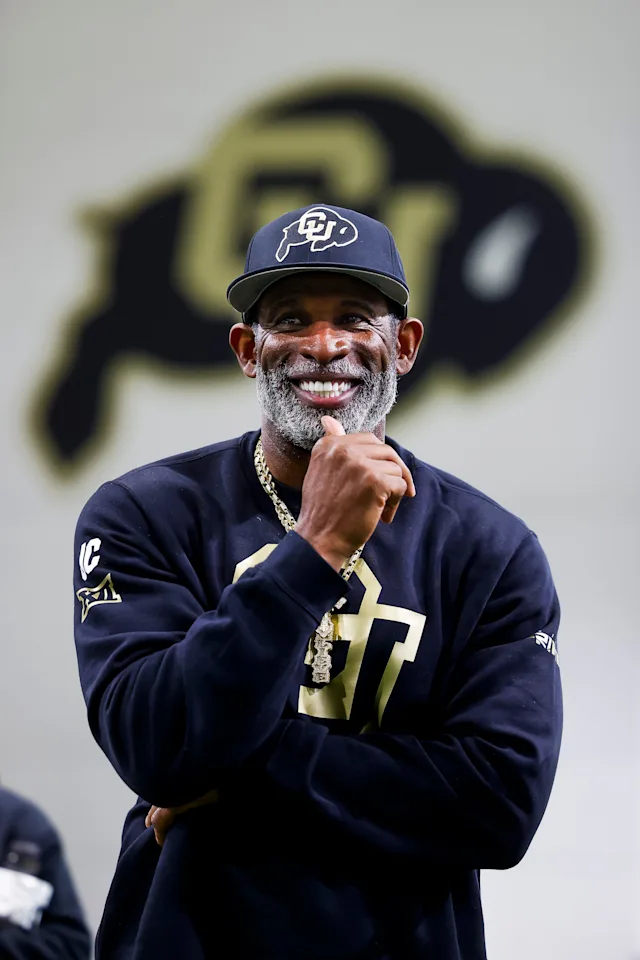
Deion Sanders added his voice to that growing chorus Friday, openly questioning the sustainability of the current NIL landscape during an appearance on First Take.

Sanders argued that unchecked NIL spending has created an uneven playing field, allowing a small group of well-funded programs to separate themselves from the rest of the sport.

“It’s tough, but I don’t think what NIL is presenting is sustainable,” Sanders said. “You see the same teams winning and winning because of the finances some boosters and donors can give. That needs to be fixed.”

The fourth-year head coach emphasized that while athlete compensation is long overdue, it requires structure and accountability to prevent competitive imbalance.

“I love it that the kids can be compensated,” Sanders added. “But there should be rules and guidelines for that compensation, to hold them accountable.”

Those concerns have intensified since last summer’s House settlement effectively dismantled the NCAA’s traditional amateurism model and ushered in direct revenue sharing. In the months since, the gap between college football’s financial elite and the rest of the field has widened dramatically.

Programs such as Indiana Hoosiers, Miami Hurricanes, and Texas Tech Red Raiders have leveraged massive NIL resources to aggressively rebuild rosters through the transfer portal. This offseason, Lane Kiffin reinforced his “Portal King” reputation by guiding LSU Tigers to the nation’s No. 2-ranked 2026 transfer class, featuring 40 incoming players.

Spending figures illustrate the divide. According to On3, 2024 CFP champion Ohio State Buckeyes operated with an NIL budget near $35 million. Miami followed at roughly $30 million, with Texas Tech exceeding $28 million. Even newly crowned national champion Indiana reportedly sat just under $20 million.

Where Colorado Buffaloes rank financially remains unclear, though Sanders’ comments suggested the program operates well below the sport’s biggest spenders.

Until formal governance or centralized oversight emerges, college football’s financial arms race shows little sign of slowing. For now, Sanders’ message reflects a growing belief across the sport: compensation is here to stay, but regulation may be the only path toward competitive balance.

UGA DB KJ Bolden Named to Way-Too-Early All-American Team

Georgia football is set to return significant experience in 2026. The Bulldogs leaned heavily on a young roster in 2025, yet still captured their second straight SEC Championship before seeing their season end in the Sugar Bowl. It marked the second consecutive year Georgia exited the postseason in its opening playoff game, a result that shapes both expectations and urgency moving forward.

One of those returners, KJ Bolden, is already drawing national attention and is widely viewed as one of the top defensive players in the country. That projection was reinforced Tuesday when On3 named him to its Way-Too-Early All-American Team.


Bolden enters his third season with Georgia having already logged more than 1,000 snaps in his career. He played 482 snaps across 14 games as a freshman in 2024, then followed that with 596 snaps as a sophomore. That total likely would have been higher if not for a first-half ejection for targeting late in the Florida game.

He wrapped up his sophomore campaign as Georgia’s second-leading tackler, finishing with 76 total tackles, 2.5 tackles for loss, and five pass breakups, along with two interceptions. Bolden also made his presence felt on special teams, blocking a punt against Marshall in the season opener.

As a freshman, he showed similar all-around impact, totaling 59 tackles, two tackles for loss, one sack, a pass breakup, a forced fumble, and an interception.

Coming out of high school, Bolden arrived with elite credentials. He ranked as the No. 1 safety in the nation according to the On3 Industry Ranking, a composite metric that aggregates evaluations from all major recruiting services. He also finished as the No. 14 overall prospect nationally and the top-ranked player in the state of Georgia, earning a five-star designation by the end of the cycle.

He’ll anchor a secondary that Georgia strengthened through the transfer portal. The Bulldogs added veteran safeties Khalil Barnes from Clemson and Ja’Marley Riddle from East Carolina, both of whom will compete with younger options for the role next to Bolden.

Georgia also upgraded at corner by bringing in playmaker Gentry Williams from Oklahoma, while returning experienced corners Ellis Robinson IV and Demello Jones. Sophomore STAR/nickel Rasean Dinkins, who started the final two games of the season, is back as well, giving the Bulldogs depth and versatility across the secondary heading into 2026.

Oregon HC Dan Lanning doubles down headed into season

Dan Lanning isn’t hiding. He’s not spinning. He’s doubling down.

After one of the most painful ends to a season in recent college football memory—a 46-point dismantling at the hands of Ohio State in the Rose Bowl College Football Playoff quarterfinal—Oregon’s head coach is going all in.

“We’re close,” Lanning said at Big Ten Media Days, clearly still believing in the process that built Oregon into the nation’s top-ranked team for much of last season. The loss? Historic and humbling. But for Lanning, it’s not a breaking point. It’s a turning point.

And it has to be.

One Loss, One Identity Crisis
Oregon entered the 2024 postseason as the nation’s No. 1 team. They were dominant, confident, and led by a record-breaking quarterback in Dillon Gabriel. But when the lights came on in Pasadena, everything unraveled. Ohio State struck early—scoring on the third play of the game—and never looked back.

It felt eerily familiar. Lanning’s first game as Oregon head coach in 2022 ended with a blowout loss to eventual champion Georgia. The Rose Bowl collapse brought those ghosts roaring back.

Outcoached. Outplayed. Out of the title race.

But this time, Lanning isn’t running from the result.

“Doubling down is continuing to work your ass off at practice,” he said. “It’s getting necessary sleep. It’s continuing to run when your body says no. That’s who we are.”

A Rebuild That Never Stopped
In just three years, Lanning has stacked 35 wins and turned Oregon into a recruiting powerhouse. They claimed a Big Ten title in their first year in the conference. They beat ranked teams. They built NFL-ready rosters.

Still, the Rose Bowl loss exposed something raw: a program still one rung away from true elite status. Lanning’s response? Expand leadership. Harden resolve. Protect the core.

He avoided major portal losses. He brought in key additions like offensive tackles Isaiah World and Alex Harkey, and dynamic running back Makhi Hughes. He expanded a leadership retreat from a small group to 35 players.

“Great teams are led by coaches,” he said. “But the best teams are led by players.”

The Quarterback Question
Replacing Dillon Gabriel’s 63 career starts isn’t easy. But the Ducks are betting on talent—and upside—with sophomore Dante Moore. He’s raw, with just five career starts, but the tools are there.

And with one of the most experienced offensive lines in the country and elite skill players around him, Moore won’t be asked to carry the team—but he’ll need to grow fast.

Pain as Fuel
Senior linebacker Bryce Boettcher, who passed on pro baseball to return to Oregon, hasn’t forgotten that New Year’s Day collapse.

“It drives you,” he said. “It’s hard to explain how it ended. But that’s not something you ever forget.”

This team won’t forget. But they won’t be defined by it, either.

The Road Ahead: No Excuses
The Ducks will be tested immediately. Trips to Penn State and Piscataway will challenge their focus and resilience. The pressure will mount again. The ghosts of Pasadena will linger until proven otherwise.

But Lanning has no interest in nostalgia or regret. His message is clear: don’t run from failure—build on it.

“What happened last year has nothing to do with the future,” he said.

And just like that, Oregon is back on the clock.