Tag: Chicago White Sox

Munetaka Murakami Homers in First Three MLB Games, Offers White Sox Instant Star Power

Munetaka Murakami

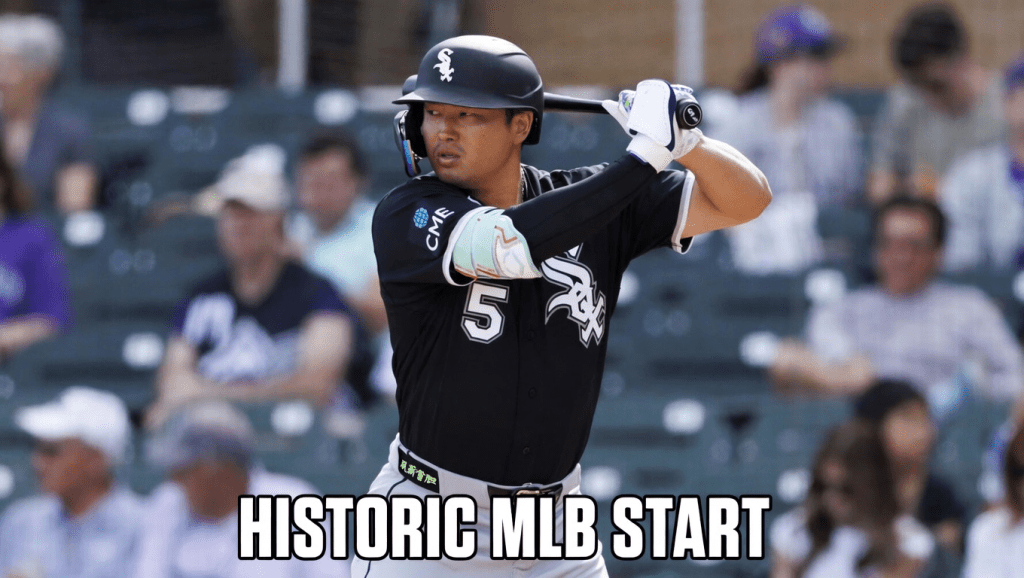
Munetaka Murakami needed only one series to show why the Chicago White Sox pushed so hard to bring him over from Japan. The 26‑year‑old slugger homered in each of his first three MLB games against the Milwaukee Brewers, offering instant middle‑order thunder to a rebuilding club that still left American Family Field with more questions than answers.

Opening statement in a blowout

Murakami’s run began on Opening Day, and it came in classic “too little, too late” fashion on the scoreboard. With the White Sox trailing 14–2 in the ninth, he turned a 1–1 pitch from Brewers right‑hander Jake Woodford into a 384‑foot shot to right field, leaving the bat at 103 mph for his first major league hit. Even in garbage time, the swing showed the same calm setup and explosive finish that made him a record‑setting star in Nippon Professional Baseball and hinted that his power would translate immediately.

Murakami’s Game Two Blast Rewrites White Sox History

Two days later, Murakami wasted no time proving the debut wasn’t a one‑off. In game two he unloaded on a pitch from Brewers starter Chad Patrick, sending a projected 409‑foot blast to straightaway center for Chicago’s lone run in a 6–1 loss. That second homer pushed him into the franchise record book as the first White Sox player ever to homer in each of his first two MLB games and only the second Japanese‑born former NPB player to pull off that feat in the majors.

Historic Game 3: Third Straight Homer for the White Sox

By the March 29 finale the Brewers knew exactly who they couldn’t afford to let beat them, and it still didn’t matter. Murakami turned another mistake into another solo homer, his third in as many games to open the 2026 season, giving Chicago its most consistent source of offense in an otherwise frustrating series. The White Sox again failed to stack much around him and dropped the game and the set, but their new import left Milwaukee with three home runs in three games and one of the hottest starts to an MLB career in recent memory.

What Murakami’s Start Means for the White Sox

Three games is a tiny sample, and solo shots in losses don’t fix the standings, yet there’s real signal inside Murakami’s first few days. He has already shown the ability to punish velocity, drive the ball to multiple parts of the park and maintain his strike‑zone plan even as opponents begin to nibble. For manager Will Venable, the immediate takeaway is simple: the White Sox finally have a true middle‑order bat to write in ink, a left‑handed anchor capable of reshaping game plans and giving a long‑suffering fan base a new star to rally around.

Enjoy the content? Stay locked in with OutOfSightSports for daily highlights, real talk, and bold takes that keep the game alive. 🗣️

Catch more action and insight on our YouTube channel below ⬇️ đŸš€


Mets Add Left-Handed Arm in Deal With White Sox

The Chicago White Sox have traded left-handed reliever Bryan Hudson to the New York Mets in a cash transaction, first reported by Joel Sherman of the New York Post. The Mets later confirmed the move, along with a corresponding roster adjustment.

Chicago designated Hudson for assignment last week to clear space for outfielder Austin Hays. To make room on their end, New York placed right-hander Reed Garrett on the 60-day injured list. Garrett underwent Tommy John surgery in October and is expected to miss the entire 2026 season.

Hudson split last season between the Milwaukee Brewers and the White Sox. He opened the year in Milwaukee’s bullpen but struggled with command early, issuing nine walks in just 8 2/3 innings. That stretch led to a demotion to Triple-A, followed by a brief return in May. Milwaukee ultimately designated the 28-year-old for assignment in July, after which Chicago claimed him. Hudson appeared in four games for the White Sox.

Despite his uneven 2025 campaign, Hudson’s recent track record provides upside. He was a key contributor to Milwaukee’s bullpen during its dominant 2024 season, when the unit led the National League in ERA. Hudson posted a 1.73 ERA across 62 2/3 innings, finished second on the team with 14 holds, and recorded six wins. While advanced metrics suggested regression—most notably a .148 BABIP and a 94.2 percent left-on-base rate—he established himself as a reliable late-inning option.

Last season, however, control issues resurfaced. Hudson logged a 57.9 percent strike rate across 16 major league appearances, while his velocity dipped across his arsenal. His four-seam fastball averaged 90.5 mph, and both his sweeper and cutter lost effectiveness. Those trends were reflected in his Stuff+ rating, which fell from 100 to 94.

For New York, the move addresses a potential need in the bullpen. As Sherman noted, the Mets may require another left-handed reliever if A.J. Minter is not ready for Opening Day while recovering from surgery to repair a torn lat. Brooks Raley currently stands as the primary southpaw option, with most of the projected bullpen leaning right-handed.

The trade gives the Mets a low-cost opportunity to evaluate Hudson’s rebound potential, while the White Sox continue reshaping their roster ahead of the season.


White Sox Trade for Jordan Hicks Signals Bullpen-First Strategy in Rebuild

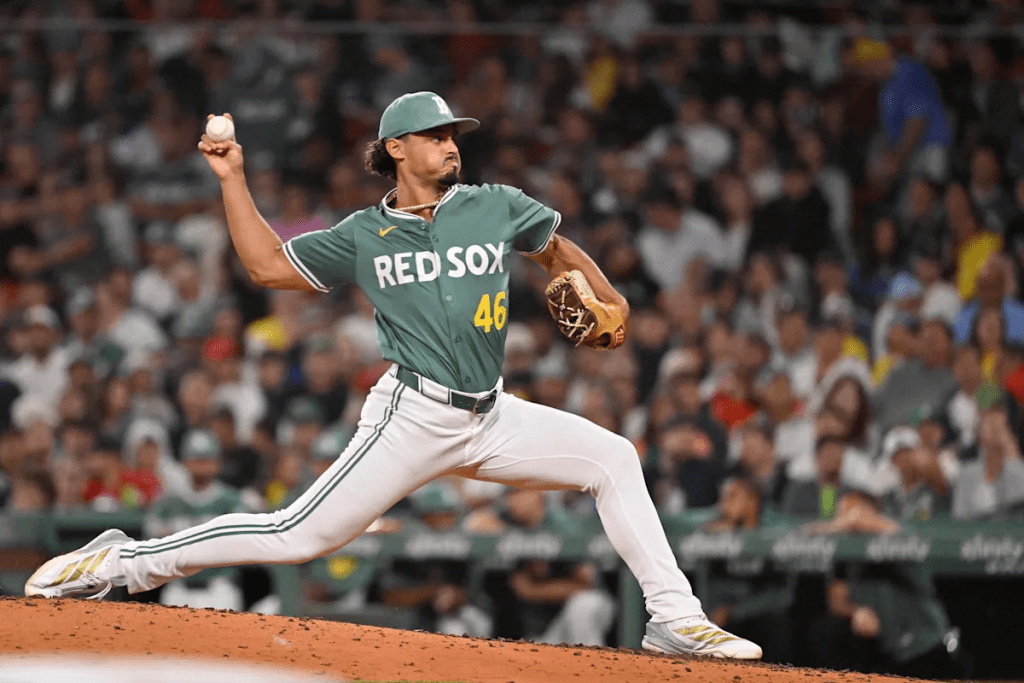
The Chicago White Sox continued reshaping their roster Sunday by acquiring right-hander Jordan Hicks and pitching prospect David Sandlin in a trade with the Boston Red Sox, reinforcing a bullpen-first strategy as the organization advances through its rebuild. (Source)

Chicago traded Minor League pitcher Gage Ziehl and a player to be named later to Boston in exchange for $8 million in cash. The financial element proved critical, as Hicks is owed $24 million over the next two seasons, mitigating the payroll hit for a White Sox team that is carefully managing flexibility during its rebuild.


Why Jordan Hicks Fits Chicago’s Plan

At 29, Hicks has one of baseball’s hardest fastballs and recent experience in both starting and relief positions. Last season, he had a 6.95 ERA in 34 appearances for the San Francisco Giants and Boston. After starting 29 of 42 games for San Francisco since 2024, Hicks has returned to the Red Sox’s bullpen full-time.

That role matters in Chicago. The White Sox are not positioning themselves as immediate contenders, but they have prioritized stabilizing late innings. Hicks now joins a bullpen mix that already includes Seranthony Dominguez, with Sean Newcomb and Chris Murphy also potentially factoring into relief depth.

For a rebuilding club, Hicks offers two clear paths: short-term leverage innings or a midseason trade chip if his velocity-driven profile rebounds.

David Sandlin Adds Needed Upside

The more understated piece of the deal may be Sandlin. Ranked as Boston’s No. 8 prospect in MLB Pipeline’s most recent organizational update, the right-hander adds swing-and-miss upside to a White Sox system still reshaping its pitching identity.

Sandlin’s strikeout ability and athletic delivery give Chicago another developmental arm capable of rising quickly if command gains hold. In a rebuild, controllable pitching depth matters as much as headline names.

Gage Ziehl’s Departure and the Financial Angle

Ziehl, 22, ranked No. 14 in the White Sox system, departs after a solid 2025 Minor League season. He went 7–6 with a 4.12 ERA across 22 games (21 starts) at three levels. Originally selected by the New York Yankees in the fourth round of the 2024 Draft, Ziehl reached Chicago via last summer’s deal for Austin Slater.

Chicago’s willingness to move Ziehl reflects a broader organizational pivot: converting surplus or mid-tier prospects into major-league bullpen arms while reallocating payroll efficiently. Some of the savings from the $22 million sent out in the Luis Robert Jr. trade to the New York Mets helped facilitate this move.

What This Trade Says About the White Sox

The White Sox are not chasing a quick fix. Instead, they are assembling functional pieces that stabilize the roster while keeping future options open. Adding Hicks strengthens the bullpen immediately, Sandlin deepens the pitching pipeline, and the financial structure maintains flexibility.

This was not a splash for headlines. It was a calculated step in a methodical rebuild—one that values arms, options, and adaptability over shortcuts.

Thank you for reading! If you enjoyed this piece, make sure to follow OutOfSightSports and check out the latest episode of the OutOfSightSports YouTube Series for more in-depth breakdowns and original sports storytelling below!